



A market economy
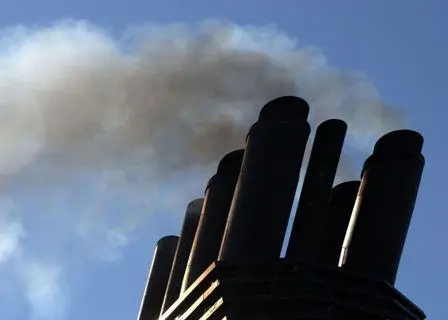
Mr Aitken explains that while you might think that the market will correct itself as people decide to invest in distilling processes, you are talking about a massive amount of fuel and the oil industry as yet is in no way prepared for it. At present, 400m tonnes of HFO is burnt each year. This means there will have to be an equivalent 400m tonnes of gas oil created.
He adds, “It appears that fuel oil analysts, along with a lot of other people, are assuming this will be ameliorated because measures, such as scrubbers on the ships, will remove a lot of the pressure and help keep the price down. However, when he asked what happens if this basic premise is wrong, the answer was ‘it will be catastrophic’.”
The possible impact will reach much further than the marine sector says Mr Aitken. “Most people are pretty sure that price will go up, not just for ships, but for everyone because the market will be short of gas oil. Every Nigerian farmer with a diesel tractor or Indonesian fisherman with a diesel boat will be affected,” he says. “It doesn’t seem to have been thought through, as the effect, particularly on the developing world, could be huge.”
Johan Roos of Interferry, for one, doesn’t think scrubbers are necessarily going to be the answer for a large proportion of shortsea shipping. Six major European roro and ferry operators made an inventory of vessels that spend over half their time in ECAs, to ascertain how many would stand a theoretical chance of successfully installing scrubbing abatement technology.
The results weren’t terribly encouraging. The overall outcome of the study showed that for 60% of the operators’ existing vessels, a decision to invest in scrubber equipment was not viable.
In total 108 vessels were assessed from operators such as Brittany Ferries, DFDS Seaways, Grimaldi Group, Stena Line, TT Line and P&O Ferries. Mr Roos says, “Admittedly technological development may well overcome some of the initial barriers, but more thorough analysis may, on the other hand, very well find other technical constraints that have not been captured in this study.”
The issues are fairly straightforward to outline. While a single engine is not a challenge for a scrubber, most ferries have more than this. Two requires either two units working in parallel or one that’s capable of servicing both engines, while say, four would mean serious issues with achieving compliance.
Further, there are stability issues for some ships and more already have deadweight considerations so the scrubbers would either use up all the margins and impair original payload capacity or simply make it non-viable. Yet other vessels have space issues, and many would need an entirely new casing with impact on cargo capacity. “So, all in all, things don’t look promising for the existing fleet,” concludes Mr Roos.
Related Articles
 METHANOL
 MONITORING, CONTROL & DIGITALISATION
 MONITORING, CONTROL & DIGITALISATION