



Operators take servicing philosophies to extremes
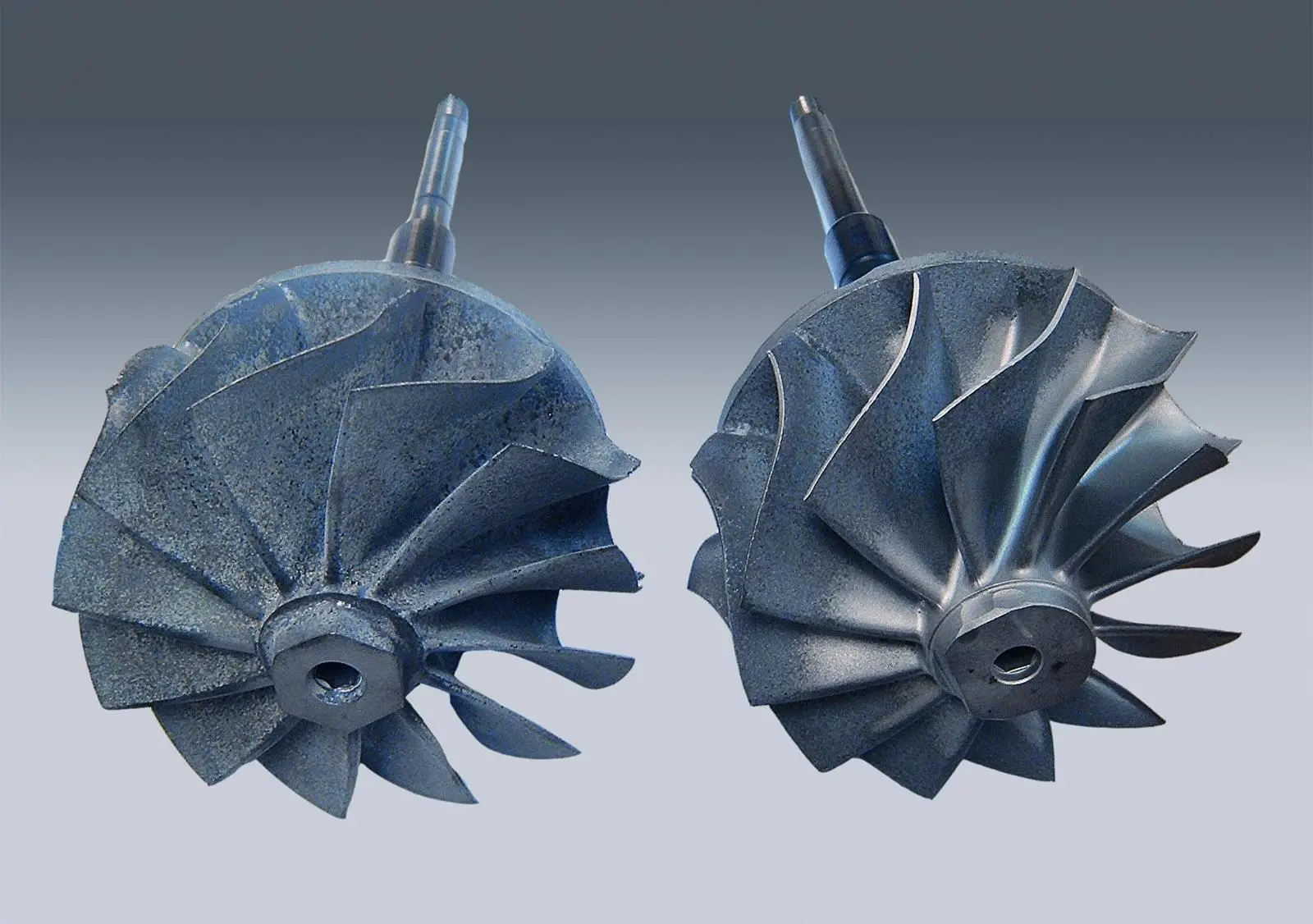
Lars Bremer, managing director of Carl Büttner Shipmanagement likes to keep turbocharger maintenance simple and follow manufacturer’s recommendations but for others in the industry, it is a hotly debated topic. “Ask 10 owners and you will get 15 opinions,” says Bremer.
Ying Gong Wei, principal chief engineer at COSCO Container Lines delegates all aspects of turbocharger servicing to the original manufacturer. “Delegated servicing adds reliability because it is based on a proactive approach,” says Mr Ying. “On the economics side, all this takes place for a fixed price which we can precisely incorporate into our annual budgets. As well as the servicing work itself, we are relieved of administrative tasks.”
The desire to use original parts is strong in the industry but thinking on service intervals varies widely. Reiner A. Jensen, senior specialist for Nordic Tanker Marine, ensures his company only uses original parts and he quite often extends the interval between overhauls although he does monitor slow steaming vessels especially carefully for the effects of poor scavenging. In contrast, Lars Lundegaard, senior vice president and head of the technical department at Norden has found it more cost effective to reduce service intervals from 12 to six months fleet-wide.
Taking it to the extreme, Wallem has one turbocharger in its fleet where the service interval has had to be reduced from 6,000 hours to 600 hours. It is a catch-22 situation for Wallem as this need reduces some risks but increases others. “As the crew are having to remove the rotor and clean it, there is more chance of errors. There is more chance of breakdowns. There is more chance of driving assembly mistakes and that is exactly what the maker is looking for,” says fleet manager, Laxman Kumar. Such mistakes means the manufacturer is then called on to supply a new turbocharger.
Kumar equates trends in turbocharger quality to light bulbs where manufacturers realised it was better for them financially to make light bulbs with a limited lifespan rather than aiming for long-life quality productions. Half the time when a cartridge is sent to an original equipment manufacturer, they will say it is beyond servicing so a new one must be purchased, he says.
Availability is another concern for Mr Kumar. A maintenance contract was entered into with one manufacturer for another turbocharger as the parts did not seem to be readily available, with fast delivery only available at a substantial price premium. As for the service agreement, Kumar says, “I have no problem with it except it increased our maintenance cost by 10 times.”
Carsten Brix Ostenfeldt, managing director of Thome Ship Management agrees that original equipment manufacturers are driving the industry towards full maintenance agreements and that precision engineering is encouraging this trend. “I think they are designing for shorter lifespans and they can most probably do it,” he says. Thome determines maintenance intervals on a ship-by-ship basis due to the effects of complications with fuels, slow steaming and different trading patterns and Ostenfeldt warns that original equipment manufacturers should maintain reasonable price settings or it will affect their newbuilding sales.
Knut Erik Fredriksen, vice president of technology management at Odfjell Management does not have comprehensive service agreements that include spares and service engineers. Instead the scope of the company’s contract is a six month notification prior to intervals which includes a quotation with expected spares needed. “This enables us to order the spares four months in advance which gives us a good price reduction. It is a win-win situation. The manufacturer can plan production better and the customer achieves better prices,” he says.
MAN Diesel and Turbo has set maintenance intervals for MAN turbochargers of 12,000 to 18,000 hours for four-stroke engines and 24-30,000 hours for two-stroke engines. As the typical operating time for a ship is 6,000h/year, the company believes this enables MAN turbochargers to run from dry dock to dry dock, normally every five years.
“Naturally fouling of a turbocharger depends very much on the operating conditions of an engine and the fuels used, and intervals for cleaning and cleaning methods may be adjusted case by case,” says spokesman Jörg Albrecht, senior manager and head of marketing. “If scheduled maintenance is carried out in a professional manner, for example by MAN PrimeServ, there is no need for additional service further to the inspections described in the maker’s manuals. Each opening-up of a turbocharger for inspection poses also a potential failure risk if not carried out in a professional manner. For this reason we do not recommend additional service in-between the intervals stated in our documentation.”
From October 2011, the ABB Turbocharging service network changed to its ‘original parts and original service’ initiative. “We have taken the decision to fit only our own original parts during all original service operations on ABB turbo chargers,” says Rolf Schweizer, head of the ABB Turbocharging service business. “This is a logical step and right in tune with the central role high performance turbocharging plays in times of stricter exhaust emissions regulations, rising fuel prices and ever higher demands for engine power and availability.”
The use of grey market parts results from a time when engines and turbochargers were not so highly loaded, highly refined or highly regulated. ABB found that parts were being fitted over which it had no control in terms of quality, but it was the first to be contacted if a problem occurred. Non-original parts can fail long before the 36,000 hour ABB exchange interval but they can also affect an engine’s rated power, fuel consumption and emissions. There is also a safety aspect to the issue, says ABB, as casings are designed to prevent parts exiting the turbocharger during a worst case failure but this cannot be assured with non-original parts.
IMO’s NOx Technical Code designates certain internal turbocharger parts as ‘NOx influencing components’. These have to be identified and listed in the technical file which the engine builder delivers with an IMO emissions compliant engine, and which must always be kept onboard the ship. During maintenance overhaul or repair these parts must be replaced by parts approved by the engine builder. This can only mean original parts in the case of ABB turbochargers. If the end user does this, IMO NOx emissions compliance will be accepted without an emissions measurement procedure, says ABB.
As well as recommending the use of original parts, Tim Roadnight, global business line lead for oil condition monitoring and lubricants at Intertek, recommends building up a history of lubricant oil quality to ensure optimum turbocharger and engine performance. As an international fuel and lubricant testing consultancy, Intertek is called on to help owners troubleshoot turbocharger problems. Roadnight says common problems are contamination from the air intake, wear elements or lubricant additives as well as low level or contaminated oil. Some problems result from engineers using the incorrect grade viscosity lubricants and all these conditions can cause compressor turbine damage, sometimes catastrophically.
“We do see fleets in the industry where they only check lubricant quality once or twice a year. If you have got historical data then you only need to test quarterly but if you haven’t got that data, then ideally you should be doing it monthly until you can monitor trends,” says Roadnight. On board monitors and in-line water monitors only provide part of the picture, he says, compared to providing a 100ml sample to a testing laboratory. Intertek introduced its Shipcare Marine Services programme in 2011, which includes comprehensive testing of fuel and lubricant quality. The service augments the recommended maintenance schedules of turbocharger manufacturers.
Related Articles
 PROPULSION
 GENERAL NEWS
 GENERAL NEWS