



BWTS order for pipelay vessel
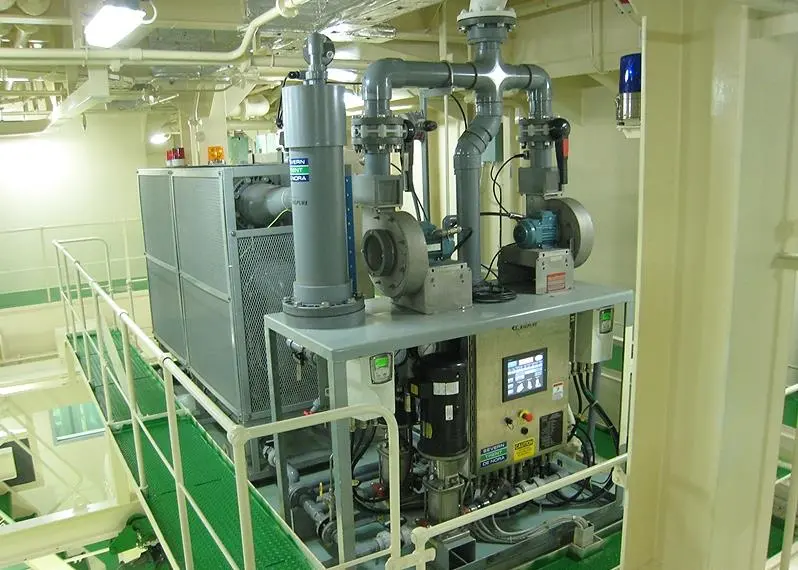
The system ordered by Singapore-based EMAS will be supplied in sub-assemblies for installation in the pipelay vessel by April 2012. The system is said to be capable of treating ballast water flow rates of up to 2,000m³/h. According to Severn Trent De Nora, this order represents the first BWTS ordered by EMAS for any of its vessels, and was selected because reviews suggested it offered superior technology and flexibility of installation in comparison with other systems evaluated by EMAS.
The Balpure BWTS is based on electrolytic disinfection principles, and is claimed to surpass IMO D-2 standards by ten-fold, in a reliable and economical system. Around 1% of the total ballast water flow is used to generate hypochlorite disinfection solution. The disinfectant generator can be mounted remotely from critical ballast systems, while the system approach requires treatment only during the uptake of the ballasting cycle, which the company says requires significantly less electric power when compared to competing technologies.
“In recent months, Balpure has been selected for use across different vessel types, attesting to its flexibility and suitability for the diverse marine market,” said Jim McGillivray, Balpure general manager for Severn Trent De Nora. “We have just completed installing Balpure on two Japanese built and owned bulk carriers in January 2012 and have a healthy pipeline of enquiries for our system. We are expecting a very busy year ahead.”
The system is claimed to be virtually maintenance-free, employing proprietary self-cleaning electrodes that eliminate the need for chemical and mechanical maintenance. In third-party tests carried out by GL Noble Denton, Balpure was shown to have no adverse effect on coated steel, naval bronze and copper-nickel alloys.
Related Articles
 ALTERNATIVE FUELS & LUBRICANTS
 GENERAL NEWS
 GENERAL NEWS