



Valve seat removal for the future
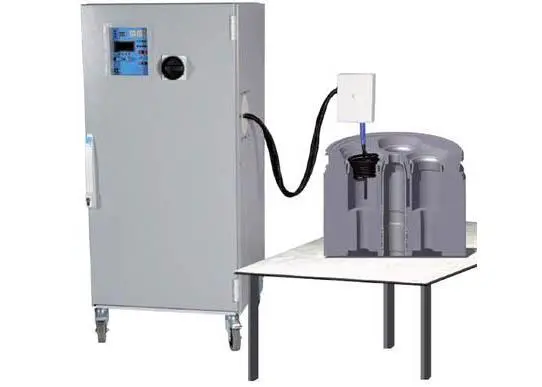
According to Chris-Marine, replacement of valve seats in a four-stroke engine can often prove time-consuming and difficult, with high risk of causing expensive damage to cylinder heads. Current valve seat replacement methods often use a large variety of alternative tools, some even home-made. The two companies have responded to the challenge of producing an effective and fast method of handling such tasks.
The result is the multi purpose induction (MPI) heating unit, which is claimed to heat and shrink precisely even the most stubborn metal parts without risk of heat damage to the surrounding material. MPI is therefore considered particularly suitable for removal of valve seats in cylinder heads, reconditioning of turbocharger shafts, shrink-fitting, stress relieving or any other operation involving heating of metal objects.
Sales director at Chris-Marine, Jens Groth says: “We have experienced a great interest in the MPI from many of our key clients as it enables them to save both time and money”.
Mr Groth says that traditional methods of replacing valve seats entail time consuming machining of the seat pocket after extraction of the valve seat in order to accommodate the oversized replacement seat. This operation can take around four working hours and can normally only be carried out twice during the lifetime of the cylinder head.
MPI uses induction heating to generate heat directly into the valve seat, enabling it to be extracted with a special tool without using force. Using MPI is thus claimed to not only be simpler and quicker, requiring no subsequent machining of seat recesses, but the number of times that valve seats can be replaced is virtually unlimited, saving cylinder head replacement costs (around $50,000 for a typical 32cm bore four-stroke head).
The estimated time from heating up and extracting the valve seat in each cylinder head on a typical engine is seven minutes per seat, resulting in a time saving of 3.5 hours over traditional methods.
The system is said to offer additional environmental benefits through avoiding the use of open flames, which produce soot, noxious gasses and heat loss to the surroundings.
Related Articles
 ALTERNATIVE FUELS & LUBRICANTS
 GENERAL NEWS
 GENERAL NEWS