



Lubrication dangers of slow steaming
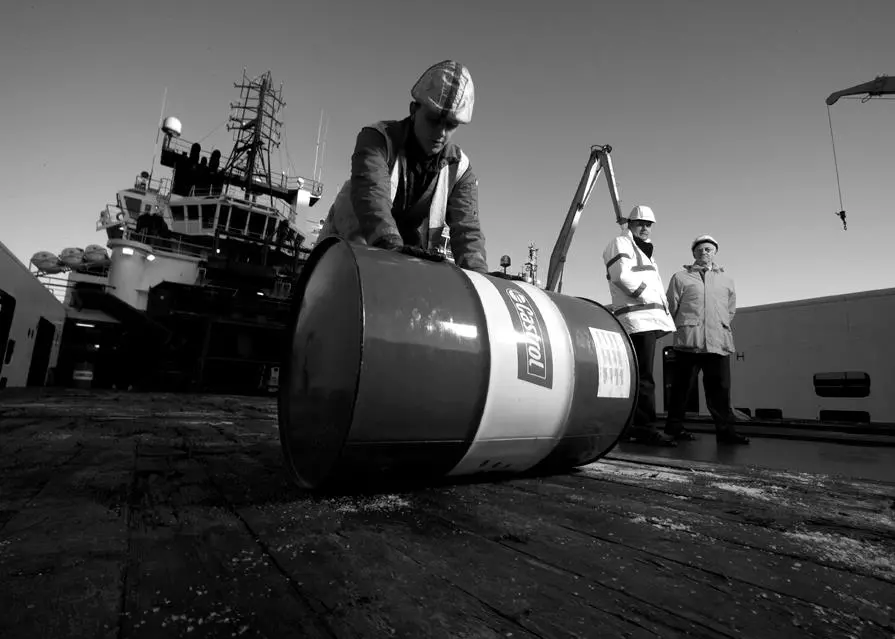
Drawing on OEM reports and its own engine performance tests, Castrol says its conviction is now stronger than ever that optimum performance, when slow steaming, can only be achieved by having a range of cylinder oils available for the customer.
The company says its research and development, OEM recommendations, market trends, legislation and, most importantly, customer feedback have all contributed to the development of its latest cylinder lubricant, based on the realities of slow steaming, fuel sulphur content and low feed rates.
Castrol’s investigations suggest that each vessel should use a cylinder lubricant based on its predominant operating conditions. While a 40BN cylinder oil suits vessels predominantly operating in ECAs, cylinder oils of 70BN and above are better suited to those vessels regularly slow steaming in open waters, to ensure piston ring packs and liners remain in excellent condition.
“The idea of a single, mid range cylinder oil solution for all vessels as sulphur limits are reduced may be seductive, but our field evaluation shows this does not offer the best margin of safety,” says Paul Harrold, Castrol technology manager marine and energy lubricants.
“Slow steaming has complicated traditional assumptions concerning engine performance because marine engines are not designed to operate below 85% power for prolonged periods. At lower loads, the cylinder oil’s feed rate is reduced, reducing the available BN to neutralise acids and reducing the oil film thickness. This can mean lubricants degrade, increasing the potential for acidic corrosion and increased wear rates. Lower engine operating temperatures caused by slow steaming further increase the risk of cold corrosion,” says Mr Harrold.
For owners, this could mean unscheduled and costly maintenance. Castrol warns that some cases may require liner and ring reconditioning or replacement.“Replacing liners on a 14-cylinder engine could cost over $1 million,” Mr Harrold points out.
“Higher BN lubricants provide greater neutralisation and hence better corrosion protection across the fuel sulphur range while slow steaming.”
OEMs confirm there is no need to change the cylinder lubricant if operating in an ECA for around 10–14 days. Castrol’s experience has shown that using a high BN product for even longer is often acceptable when operating in an ECA, especially when slow steaming.
Furthermore, Castrol’s research suggests that fears of the use of high-BN cylinder oils leading to deposits and bore polishing may be unfounded. “Reducing speed by only 3 knots will have the same impact in ash reduction as changing from a high to a low BN lubricant. When you think that operations in the ECA involve port visits combined with the current climate of slow steaming, most vessels will naturally reduce their speed,” says Mr Harrold.
On this basis, Castrol is confident that owners specifying higher BN cylinder oils do not necessarily have to change lubricant when visiting an ECA.
“We are not suggesting that a ship has to carry a range of products,” suggests Mr Harrold.
“In fact, the majority will carry only one, depending on their engine and voyage operating pattern. We have a 40BN for prolonged operations in ECA, while our existing 70BN cylinder oil has proven itself in intermittent ECA operation. For the most severe applications of optimised feed rates and slow steaming we would consider recommending 80BN cylinder oil for many customers. Our position is that only by having a comprehensive range of cylinder lubricants to choose from can vessel operators maximise machinery performance and provide the highest margin of safety,” he says.
With this in mind, Castrol has extended its Cyltech range of cylinder lubricants for two-stroke crosshead engines to include and 80BN oil, Cyltech 80 AW, which is now available in the marketplace. Castrol says this premium product forms a logical next step in assuring ship owners that the right lubricant is available to meet vessel needs in all operating conditions. The company claims that its Cyltech brand offers the widest choice available from any lubricant supplier, spanning the 40BN to 80 BN range.
“Our customers face ever tightening regulations on the environment, but also new operational challenges brought about by slow steaming,” says Luigi Tedesco, Castrol Marine CEO. “Cyltech 80 AW offers a proactive response to new industry realities.”
Mr Harrold concludes: “Any imbalance between cylinder oil feed rate, BN and power compromises engine efficiency. Slow steaming may bring lower lubricant feed rates and, when higher sulphur fuels are used, a higher lubricant BN protects the engine against potential damage. It also limits the amount of burnt cylinder oil in exhaust gases, thereby cutting emissions.”
Related Articles
 PROPULSION
 GENERAL NEWS
 GENERAL NEWS