



New TQC roughness gauge
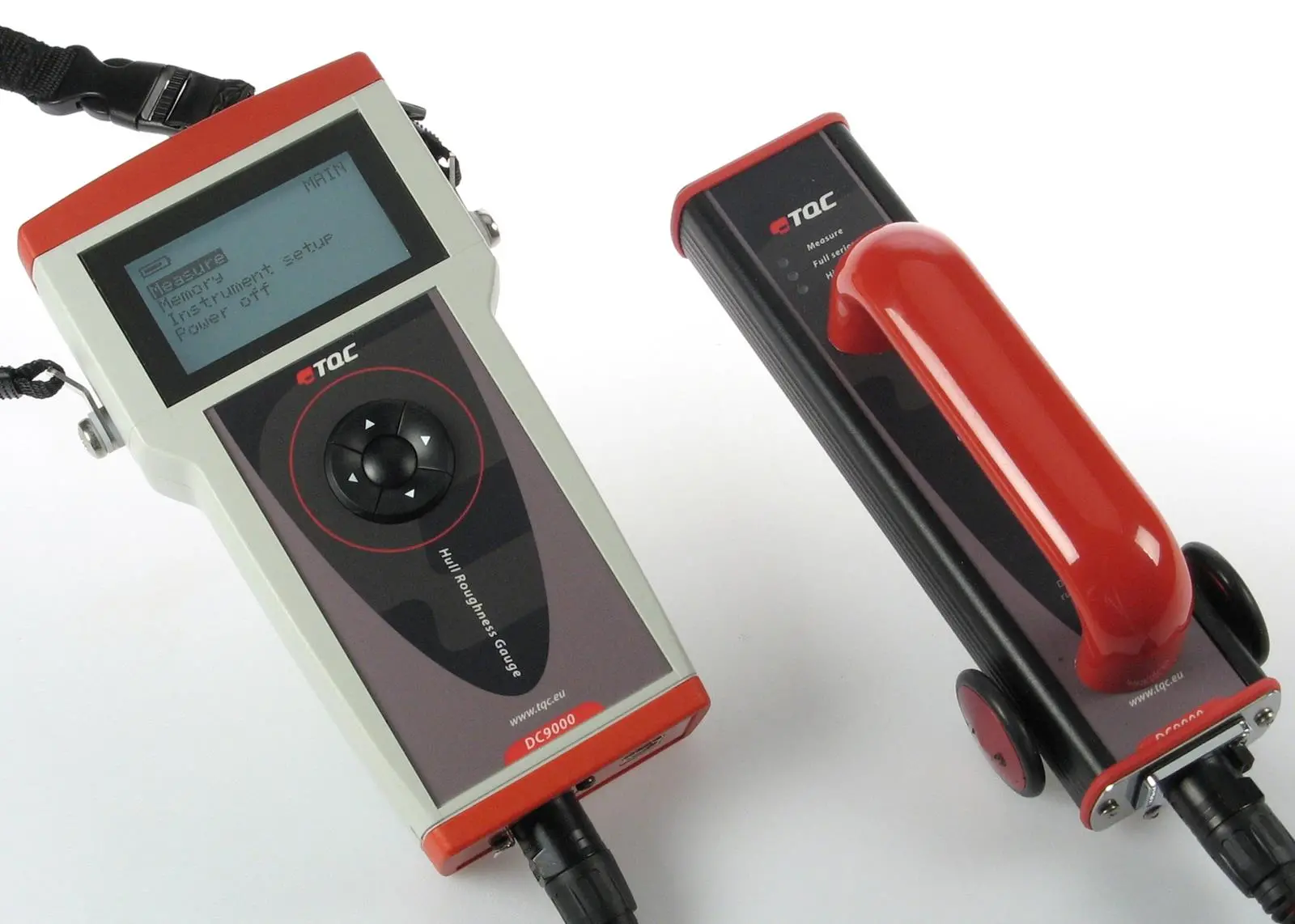
The gauge is said to exceed current standards used for hull roughness surveys. Fully equipped with an easy to operate four-way directional push button and graphical representations, the gauge measures roughness during in-docking and out-docking surveys, stores the data internally and can then be connected to a computer via USB.
Kevin de Kreij, product developer, TQC, told The Motorship: “A smooth hull saves money, ship operators are being told, while paint companies have been introducing new technology and products. Ship operators tend to be confused by all the claims and counter-claims regarding anti-foulings. But owners must be able to weigh the cost of hull roughness against the expense and timing of maintenance schemes, an equation requiring detailed understanding of hull roughness and its measurements.”
The TQC hull roughness gauge enables the correct application of anti-fouling paint.
So the measuring and controlling of a hull’s roughness is extremely important when it comes to maintaining a vessel. The typical roughness of a new AHR ship is approximately 120 microns. This can deteriorate considerably to 300-400 microns due to corrosion or bio-fouling. Increased roughness of a ship’s hull increases the frictional resistance of the ship – meaning the power, fuel consumption, operating cost and CO2 emissions also rise.
Related Articles
 ALTERNATIVE FUELS & LUBRICANTS
 GENERAL NEWS
 GENERAL NEWS