



An X-Bow in the wheelhouse
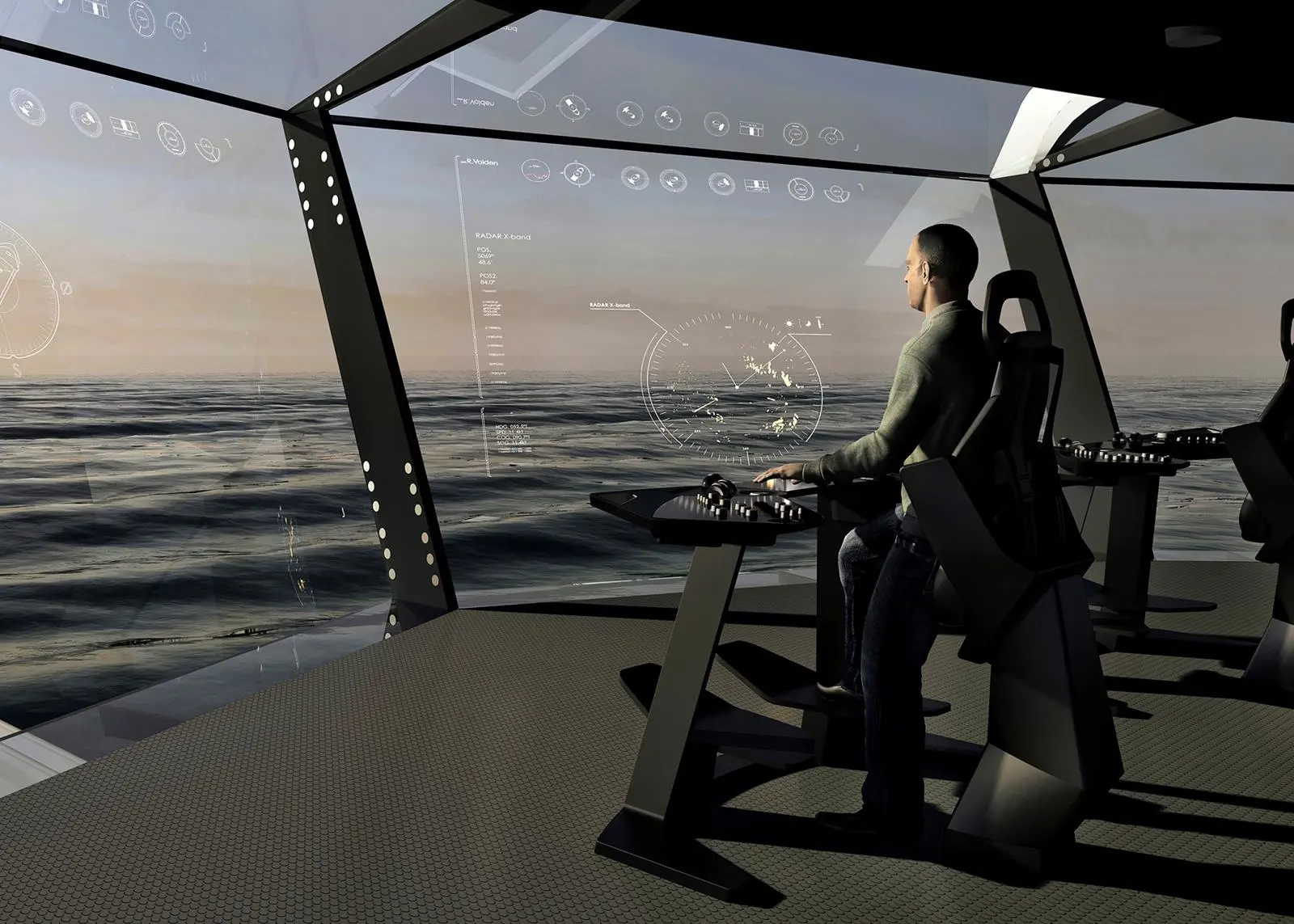
Ulstein Bridge Vision is claimed to offer a catalogue of user-focused innovations, including Gesture-controlled infographics displayed on bridge windows; a system that automatically adapts to the individual user’s preferred setup; and a new breed of user-defined ergonomic work stations.
Tore Ulstein, head of market and innovation and chairman of the board of Ulstein Group, explains that increased safety and simplicity have been the guiding principles and motivation behind the development: “We have succeeded in our goal to develop a user-friendly bridge with a simplified user interface, and I believe Ulstein Bridge Vision can become an innovation on par with the X-Bow hull line design.”
Various parts of the Ulstein group worked together on the concept, and brought in outside assistance from the likes of the Oslo School of Architecture and Design (AHO). “Together, we’ve created a human-centred operational environment for the future ship bridge,” says product manager of Ulstein Power & Control, Arne Ove Rødstøl. “Our focus throughout has been on the user, and the concept includes work space designs and new ways to interact with bridge systems.”
The new work stations are claimed to offer ergonomic benefits through the combination of seat design, with multiple sitting positions, and a new console design. The new bridge adapts both the workspace and software setup to the individual user’s requirements. One significant feature is the use of optical projection, allowing vital information to pop up directly on the windows (full frame head-up display) on the aft bridge and on seamless monitors directly below the windows on the front bridge. Operators can then access controls and information by using touch-commands and gestures.
“Captains often say that the most important information is outside the ship. The beauty of Ulstein Bridge Vision is that you do not have to choose between internal and external information because both can be viewed simultaneously,” Rødstøl says.
Related Articles
 ALTERNATIVE FUELS & LUBRICANTS
 GENERAL NEWS
 GENERAL NEWS