



In-situ crankshaft annealing process is GL-approved
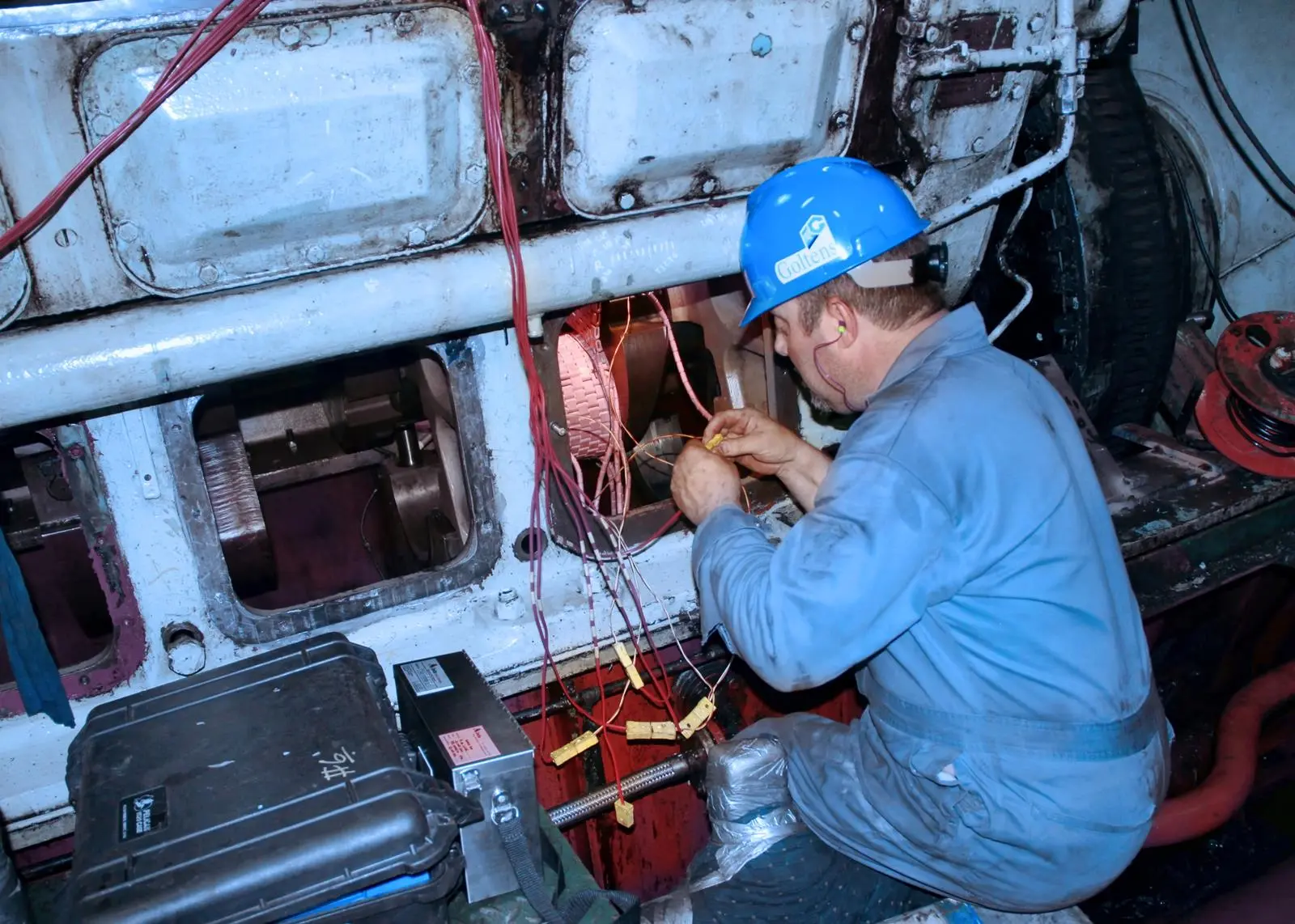
This certification follows a formal review by Germanischer Lloyd of the crankshaft annealing process and related governing documents and procedures.
The approved procedure is designed to reduce excessive hardness in damaged crankshaft journals through annealing (heat treatment) of the crankshaft with a minimum amount of material removal. The process is specifically targeted at salvaging crankshafts that would otherwise be condemned and require replacement due to the severity of the hardness exceeding engine maker specifications.
Restored to service
Goltens says its experience has demonstrated that this hardness can be significantly reduced to within acceptable limits and that, after annealing, minor finish machining can restore the machinery to service with significantly less loss of crankshaft diameter, as well as the avoidance of costly shaft/equipment removal and replacement.
Goltens performs annealing on many large and medium diameter crankshafts around the world annually and has recognised that it is critical to have standard, proven methodology and processes to ensure consistent results for its customers.
“This certification is the culmination of years of research and development and successful applications across a wide range of engine makes and models in the field and in the workshop by our technical teams,” says Paul Friedberg, president of worldwide services for Goltens. “Obtaining Germanischer Lloyd approval is validation that our process is safe, repeatable and effective in repairing crankshafts that would otherwise likely have been condemned. Further, the fact that approval covers our global network of stations and not one location demonstrates the value of our investments in consistent tooling and repeatable processes.”
Goltens entered the annealing marketplace after witnessing many needlessly condemned crankshafts every year. The historical lack of acceptance for annealing crankshafts in the marine market resulted in millions of dollars in unnecessary downtime, repairs and crankshaft purchases. Goltens undertook a deliberate process of extensive workshop trials to refine the process. The company claims to have repeatedly demonstrated that hardness can be successfully removed and that minor finish machining can restore the machinery to service with significantly less shaft diameter loss.
Annealing in action
A recent example of the successful application of this process, coupled with Goltens’ single point cutting tooling, is where Goltens’ In-Situ Machining and Annealing teams restored the crankshaft of a Sulzer 12 ZAV 40S four-stroke engine.
During the running in of new big end bearings and bearing housing aboard a cruise ship cruising in Alaska, the ship’s diesel generator No5 experienced a casualty, which resulted in damage to crankpin journal No2.
Goltens met with the cruise line’s management and a consultant on the client’s side and agreed upon a repair, which consisted of the crankpin journal No2 machining to the next feasible undersize, as well as lapping and blue fitting of the remaining crankpin journals.
Onboard inspection revealed that the crankpin journal was damaged all around its surface, with scoring and bearing material welded to it. Additionally, technicians found a large area in the bottom side of the journal with hardness values as high as 600HB (Hardness Brinell). Run-out measurements showed a maximum deficiency of 0.08 mm.
After assessment, 2.0mm of material from the 348.0mm journal was machined until the damaged journal surface was clean of foreign material and cracks. Despite that, the high hardness values remained. The customer decided to machine down another 2.0mm to see if the hard area would get smaller and the hardness values would get lower. At a diameter of 346.0mm, the hardness values and area were still out of the maker’s specifications.
Goltens proposed performing its crankshaft annealing procedure to save the shaft within the maximum undersize diameter and hardness values given by the engine maker.
The annealing equipment was mobilised to Alaska, and the engine was prepared for the procedure. Once the annealing was completed according to the procedure submitted to the customer and Lloyd’s Register, the crankpin was machined down to a final 5.0mm undersize, leaving the diameter at 345.0mm. Post-annealing hardness was measured under 300HB.
According to Goltens, its full spectrum in-situ machining capabilities and tested annealing process reduced the hardness of the ship’s crankshaft to acceptable levels, saving it and avoiding a costly replacement and unnecessary downtime. The vessel was kept in operation throughout the process and was restored to full capability in a cost-effective and efficient manner.
Related Articles
 PROPULSION
 GENERAL NEWS
 GENERAL NEWS