



Clean collaboration: meeting regulations requires joint approach
On 1 January 2013, the IMO will add a new chapter to MARPOL, detailing the mandatory Energy Efficiency Design Index (EEDI), which will start at baseline and rise over three phases to 30% below baseline by 2025. At the same time, regulatory bodies in different states are working to introduce Emission Control Areas (ECAs).
For engine manufacturers, demand for more fuel-efficient propulsion systems that help owners comply with new emissions regulations have led to a number of promising new technologies. But according to Trond Skaufel, managing director of Pon Power in Scandinavia, getting the best results often requires closer cooperation with owners and other suppliers.
As a distributor for Cat and MaK Engines to the maritime and offshore segment, Pon Power offers a range of proprietary engine technologies, like Cat’s Acert technology, and Mak’s M46DF, a new marine dual-fuel engine platform. But Mr Skaufel says that the company is increasingly open to working with other stakeholders to achieve better results, faster. “Many of the most significant developments in engine technology over the last few years have emerged out of joint development projects,” he says. “In today’s market, we cooperate to innovate.”
Mr Skaufel explains that while existing technologies can meet the baseline requirements for EEDI regulations, new technologies are needed in order to comply with future emissions and sulphur targets. And while some in the industry seek a cure-all technology, Pon Power is not putting all of its eggs in one basket. “As a distributor of Cat and MaK engines ranging from 8kW to 16,000kW, Pon Power realises that the operational profile of a vessel will largely determine which technologies are most suited to achieving compliance, while not compromising on performance,” he says. “To achieve this, we have to work closely with owners.”
Per Jahre Nilsen, technical director at Pon Power, says the company has benefitted from long experience working with Scandinavian owners. “We operate in a region where emissions regulations were first implemented and shipowners tend to be very conscious of their green profile,” he says. “Our goal has always been to match the solution to the vessel and its operational profile.”
This approach led not only to the development of the Bluedrive PlusC variable drive diesel-electric propulsion system developed in cooperation with Siemens and Østensjø Rederi, which owns a mixed fleet of PSVs and tugs. “We recognised that offshore supply vessels require a far greater range of movement, speed and power than merchant ships,” says Mr Nilsen. “Studying exact operational requirements of these vessels led directly to the development of the variable power principle underpinning Bluedrive PlusC,” he says. The result is an engine that includes a selective catalytic reduction (SCR) catalyst that can operate over the load range of 6% to 100%, resulting in a fuel reduction of around 10% and an emissions’ reduction of around 80%.
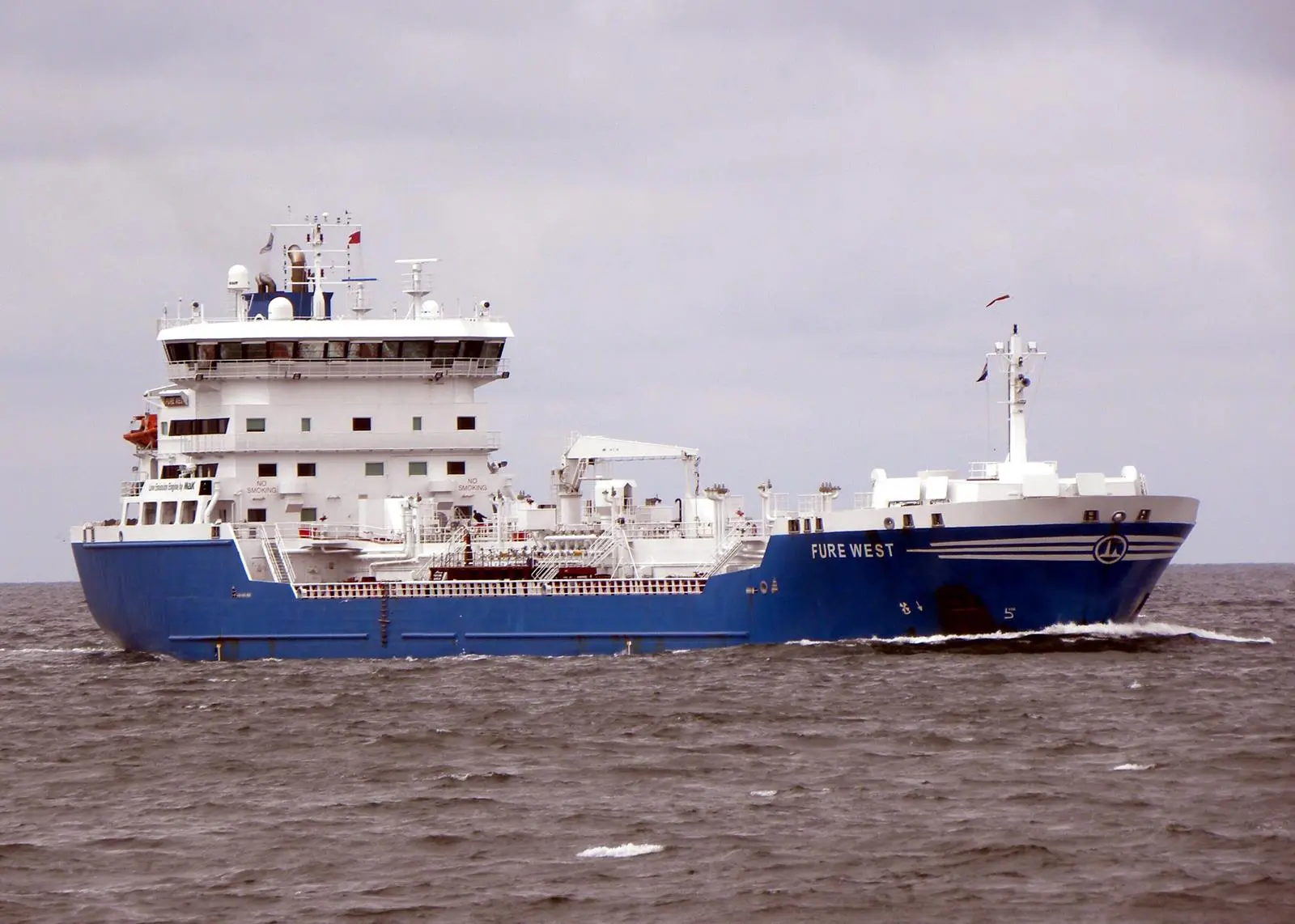
The company is currently involved in another development project in cooperation with the Swedish-based Furetank, which operates a fleet of nine product and chemical tankers, as well as several other companies including Preem, Sweden’s largest oil company and classification society Bureau Veritas. The goal of the project is to convert the diesel engine on Fure West, a 17,557dwt oil and chemical tanker, to run on LNG — the first time this has been done with a MaK engine. The conversion will virtually eliminate SOx emissions and particulate matter and reduce other emissions such as NOx and CO2, enabling the ship to comply with both EEDI and the 2015 North European ECA limits.
The main engine, a MaK 7M46DF, has an output of 6,300kW at MCR and 500rpm, and the vessel also runs three 920kW Catepillar 3508 low-NOx auxiliaries. To further reduce harmful emissions, the main engine will be fitted with an SCR system. Pon Power is leading the conversion and is currently testing a prototype engine.
The LNG tank’s 580m³ capacity will enable it to run for 10 days without refuelling. The vessel will have two other bunker tanks for fuel (700m³) and marine diesel oil (114m³). The dual fuel engine will enable the vessel to switch easily between the three fuel tanks during operation.
Mr Nilsen explains that dual fuel offers many of the advantages of a full LNG system, without the bunkering infrastructure issues. “Dual fuel enables an operator the flexibility to switch between fuels depending on the operational profile and adds redundancy,” he says. “These factors can make dual fuel more than a stop-gap on the way to full LNG.”
The vessel is scheduled to be back in operation on 1 January 2015 and Lars Höglund, CEO of Furetank looks forward to seeing the end-result. “We are confident that the solution will meet emissions requirements, while not compromising on performance and once the conversion is complete, it will be business as usual for Fure West,” he says. “We are always looking to stay ahead of regulations, and if required, are willing to consider powering our vessels on LNG alone in the future, provided LNG bunkering infrastructure is in place.”
Whatever one thinks about the increasing wave of emissions regulations, it is clear that solutions are needed, fast. And viable technologies are more likely to emerge through engine manufactures and owners working together, than working alone.
Mr Skaufel is adamant that Pon Power will continue to reach out to the industry. “We strongly believe that this is the way forward and remain open to collaborations in the future,” he says.
Related Articles
 PROPULSION
 GENERAL NEWS
 GENERAL NEWS