



Water jacket cooling for propulsion and thruster motors
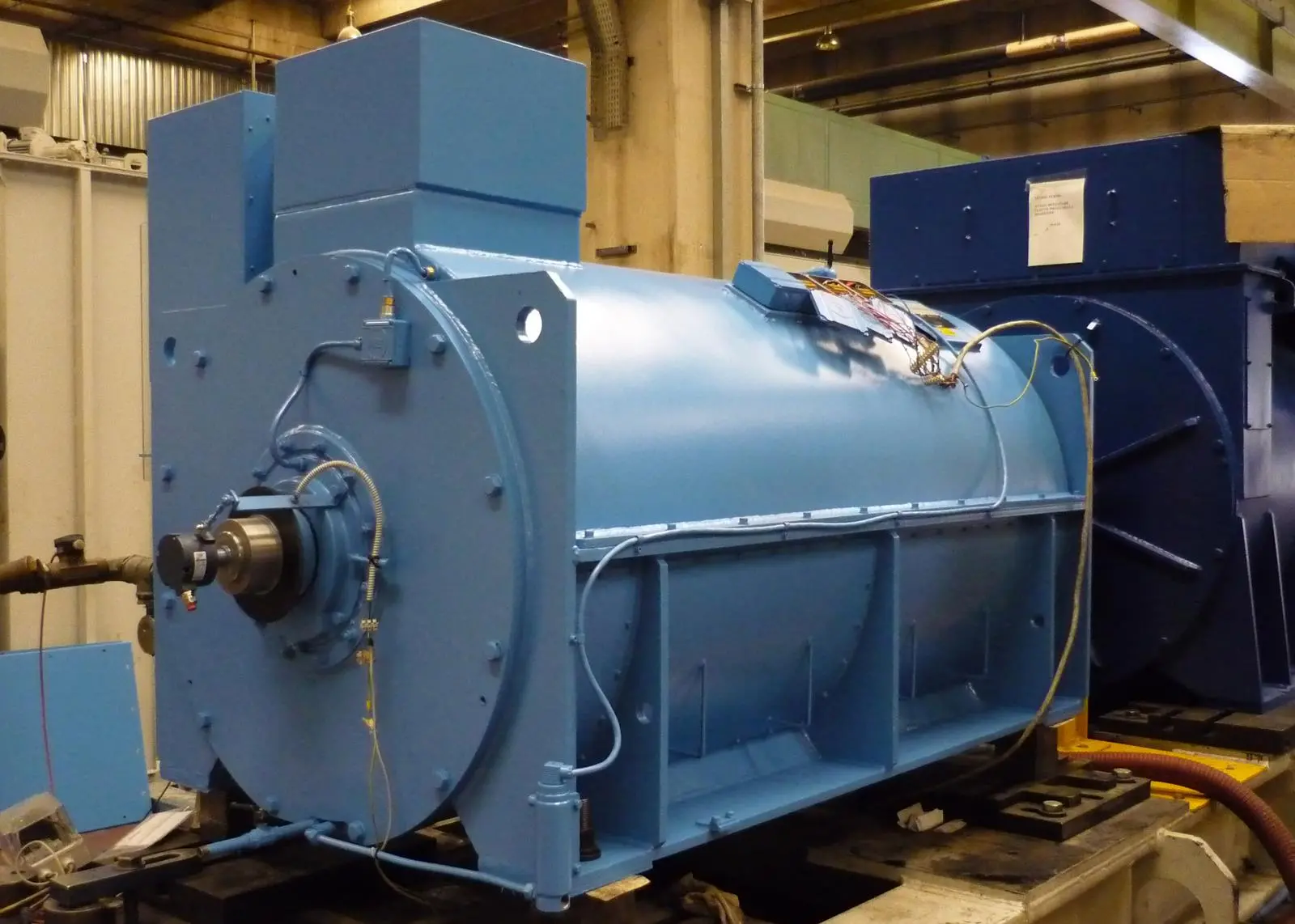
The shipping industry has gradually been adopting diesel electric and hybrid power concepts to provide power for propulsion and positioning as well as on-board electricity requirements, in its quest for higher efficiency, lower operational costs and better environmental performance. This, according to Marelli’s technical director Gianluca Stanic, is all part of the trend to optimising ship design using techniques such as FEM simulation and 3-D modeling resulting in smoother operation, safer navigation, better use of onboard space, greater reliability and improved availability as well as enhanced fuel economy. As cleaner fuels such as gas are adopted, shipowners, builders, designers and classification societies are all seeking cleaner, more efficient and more cost-effective shipping.
Today’s variable speed electric motors provide benefits in terms of space-saving, low ambient and structure-borne noise and reliability. At the same time they have to be designed and engineered to high standards to comply with complex marine requirements.
Marelli Motori first introduced the water jacket motor in 2001. The integral water jacket coolers provide high power output in a more compact size when compared to traditional designs, where the heat exchanger is installed on the top of the motor frame. Mr Stanic explains that due to the typical propeller load versus speed profile, the motor is self cooled and the water jacket provides a natural sound silencer in turn reducing both emissions and structural vibrations.
Mr Stanic says that the company has carried out detailed mechanical 3-D FEM verifications to avoid potential resonances throughout the operating speed range. Bearings, end bells and fixing locations – both horizontal and vertical mounting -, and shaft arrangements have been verified in worst-case scenarios, to take static and dynamic ship roll and pitch motion into account.
The potential effects on windings, including voltage peaks and voltage gradients, and on rotor circulating currents, of using variable speed drive technology have been considered and appropriate design solutions adopted to take these into account. Mr Stanic points out that the effectiveness of the design is demonstrated by the fact that DNV has issued approvals for the whole range under variable speed service.
Further design optimisation has been carried out on water flow and cooling effectiveness, and these were verified by trials at various speeds and loads, up to full load, carried out at Marelli’s own test facility.
Because the design requires no additional blowers and the water jacket circulation system effectively minimises power loss, the efficiency of the motors is increased. The water jacket design has further advantages in terms of lower structure-borne noise levels, while the power density, compact design and straightforward installation benefit naval architects and shipyards.
“Wherever a conventional motor may not fit a narrow room or space saving is of the essence , water jacket motors represent the best power solution,” says Mr Stanic. He continues: “Numbers do not lie: after endurance and validation tests, the market success of jacket motors is proven by increasing power rating, sales and recent accreditation by DNV type approval certificate.
The company’s reference list shows sales in excess of 1,000 units so far, a figure that is expected to rise sharply as development of higher-power motors, up to 4MW, continues.
Related Articles
 PROPULSION
 GENERAL NEWS
 GENERAL NEWS