



DNV takes hybrid leadership
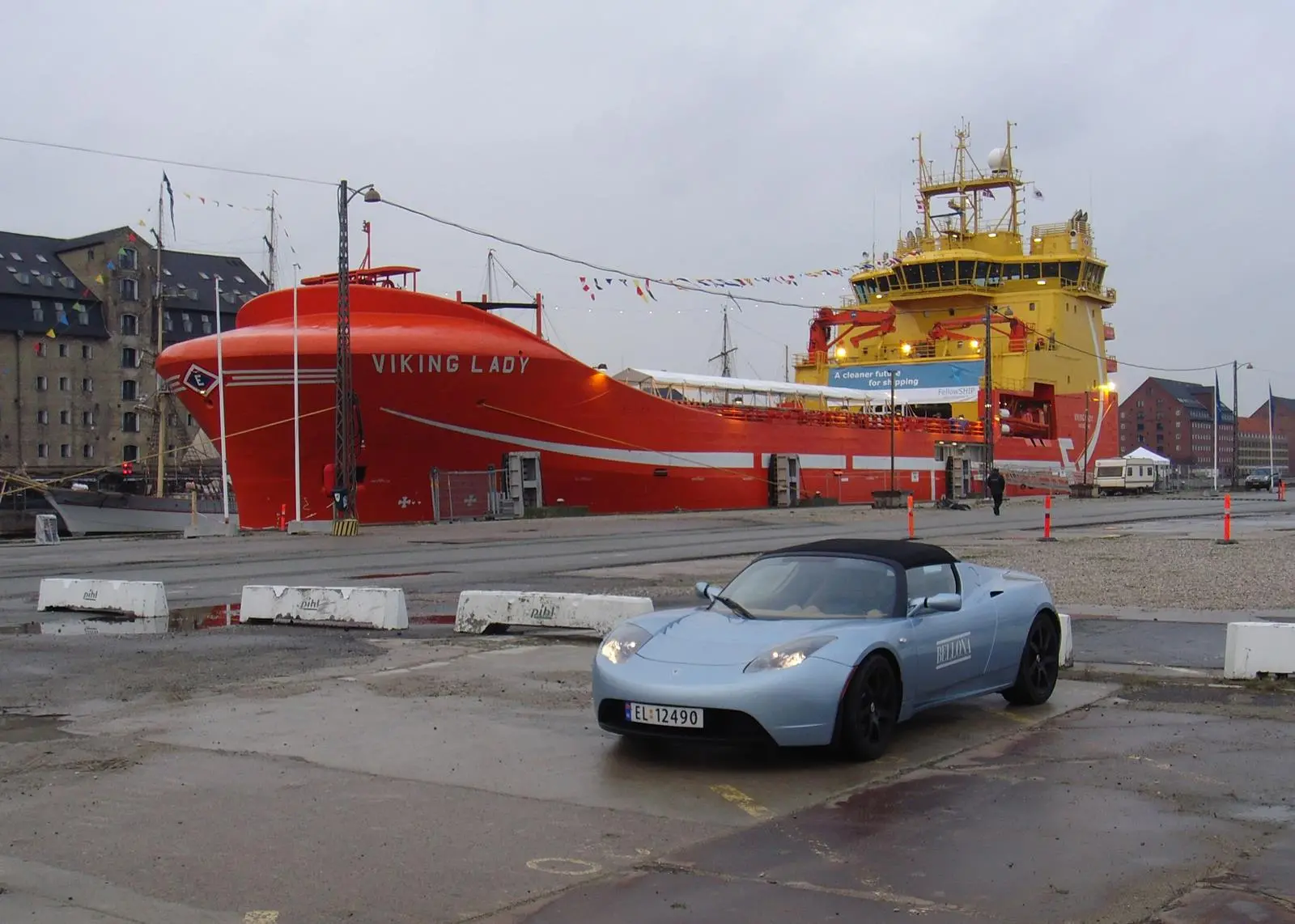
The Oslo-based class society recently held a seminar on hybrid and battery-powered ships, led by Narve Mjøs, director of battery projects at DNV. Mr Mjøs points out that 15 years ago, Norway had identified opportunities for gas-fuelled ships, an area where it is now the front-runner. “Electricity stored in batteries on board ships is another opportunity in the future energy mix and another technology race has started. We have been running that track for a while already,” he said.
Remi Eriksen, CEO of DNV Maritime and Oil & Gas says that tough times, like those being experienced at present in shipping, often drive innovation. “The Norwegian maritime industry is at the innovation forefront, and the world looks to Norway for technology and best practice. Innovation is not only something the industry wants. It is also necessary for survival.”
The first hybrid offshore supply ship, where the normal diesel- electric (or, in this case, gas-electric) plan is supplemented by batteries, will soon start operation, when Viking Lady, owned by Eidesvik Offshore, has a battery package installed. Later, Norled will install a battery package on board an existing diesel-electric ferry, in advance of the operator’s fully electric ferry. The Edda Ferd, owned by Østensjø, is another hybrid vessel with battery and diesel-electric propulsion that will start to sail in 2013.
DNV points to the energy-saving potential of hybrid systems, particularly with DP operation on offshore vessels. And when in harbour, the vessel should be able to simply use power stored in the batteries, which again will have a positive impact on the environment. Additional benefits are related to the reduction in the machinery maintenance cost and in noise and vibrations.
“Hybrid ships are similar to the well-known hybrid cars, like the Toyota Prius,” said Mr Eriksen. “A major advantage of these ships is that the payback time on additional investments is expected to be two to four years compared to more than 10 years for cars.”
Recognising this growing trend, rules, tools and advisory services for battery-powered ships have already been developed by DNV. The Norwegian authorities are taking an active role, as when gas was being developed as an alternative fuel, and are pushing the maritime industry by setting strict requirements to reduce emissions, as well as offering incentives.
CLASSIFICATION OF GAS TWO-STROKES
DNV says that it has type-approved the MAN Diesel & Turbo ME-GI dual-fuel, ultra-long-stroke, two-stroke main engines as used in two 173,400m3 LNG carriers ordered by Teekay LNG from Daewoo Shipbuilding & Marine Engineering in Korea. Each ship will have two of the gas-injection engines in an innovative propulsion package which is claimed to give significant fuel savings when compared to propulsion commonly used for LNG carriers.
DNV experience from risk assessments of LNG-fuelled ships shows that a gas-fuelled main engine has the same risk level as a diesel-fuelled main engine. One reason for the low risk is that the main engine undergoes rigorous type approval and testing regimes as well as being subject to stringent rule and regulatory requirements. The electronically controlled ME-GI engines will automatically switch between burning LNG and fuel oil when power is reduced to15% load, making port-to-port operation on LNG possible.
Tony Bingham, Teekay’s technical manager for LNG, said: “We will install a revolutionary re-liquefaction plant which consumes less than 300kW. This enables us to re-liquefy any excess boil off at speeds below 15 knots. Link this capability together with DSME’s patented sealed LNG containment system and we can ensure that no boil off is burnt in the gas combustion unit at any speed. This unique design ensures that the maximum cargo is delivered to the customer at the lowest unit freight cost in the industry.”
DNV is providing full classification services for the newbuilding project, scheduled for delivery in 2016, coinciding with expected growth in the US LNG export market and a wave of increased demand for LNG carriers.
LNG BUNKERING
DNV and Korea Gas Corporation (Kogas), are to cooperate in a feasibility study on the establishment of an LNG bunkering infrastructure in Korea. DNV will study the feasibility of implementing LNG bunkering in ports in the south-eastern area, Pusan, and western area, Incheon and Pyeongtaek. The study follows on from an earlier Kogas-led LNG bunkering consultative group to build an LNG bunkering infrastructure, develop an LNG propulsion ship and improve the gas supply to coastal and insular areas. Kogas aims to expedite the development of LNG bunkering infrastructures and LNG bunkering vessels and make Korea one of the first movers in the global LNG bunkering industry.
Related Articles
 METHANOL
 MONITORING, CONTROL & DIGITALISATION
 MONITORING, CONTROL & DIGITALISATION