



Propulsion & Emissions conference success
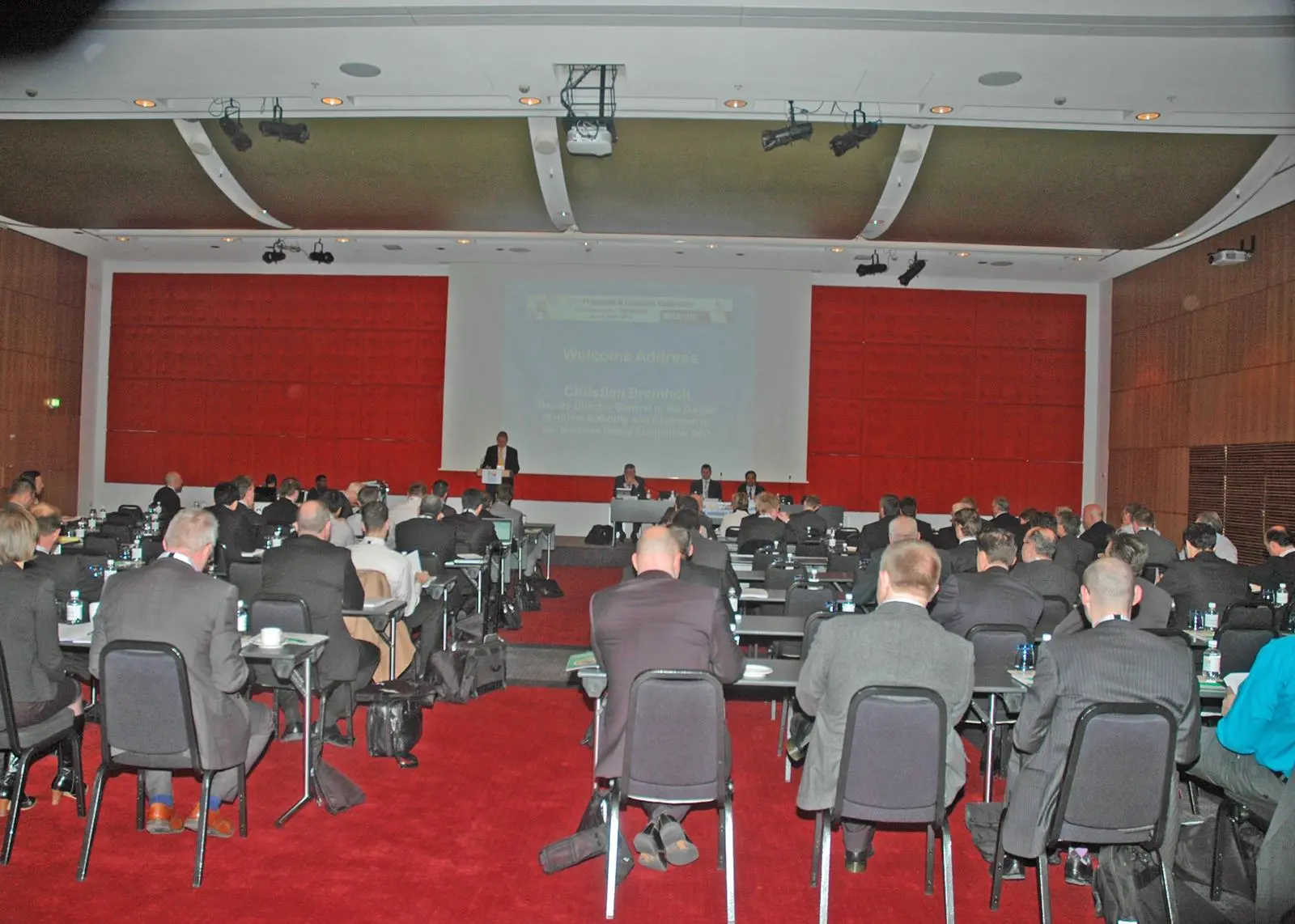
The conference gala dinner, held in one of Denmark’s oldest restaurants during the evening between the two days of discussion, was well attended, much appreciated and provided excellent networking opportunities.
The second day began with a session on the SEEMP, and how it is much more than a paper exercise – in reality it can help ship operators achieve significant savings. BIMCO, as an organisation, is very much behind the SEEMP and has produced its own manual and step-by-step guide to assist shipowners; this was described by Jeppe Skovbakke Juhl. The Danish Shipowner Association has developed a mathematical model that can be used to estimate exhaust gas emissions and the EEDI for various ship types and sizes; Hans Otto Kristensen outlined how this can be used for meeting future regulations by derating engines or changing fuel type. Actual practical experience of SEEMP implementation was the subject of a paper from Guillaume Hagi of Brittany Ferries and Martial Claudepierre of Bureau Veritas; this underlined the value of a properly-executed SEEMP.
This was followed by a session exploring some of the various methods for reducing exhaust gas emissions, starting with Mohan Mehon of Norwegian company Cool Flame Technologies, who introduced a different approach to exhaust gas recirculation as a NOx-reducing measure. Eric W Cottell of NoNox described his fuel emulsifying techniques, in which fuel is treated in a reactor before entering the engine, resulting in cleaner burn and lower NOx as well as a gain in fuel economy. Shipowner Wilh Wilhemsen has also been experimenting with emulsified fuels, the results from which were outlined by technical vice-president Per Brinchmann. Finally, we heard from Singapore company Ecospec about a scrubber solution that is capable of removing SOx without causing more carbon emissions.
Following the lunch break, Session 8 looked at ensuring compliance, with presentations from class societies ABS and GL, looking at the EEDI and IMO Tier III respectively, while the relationship between the EEDI and propulsion power requirements was the subject of a paper from Stefan Buelow of JS Maritime Partners.
The final session looked ahead to what we can expect in the near future. Helena Athoussaki of Carbon Positive described the monitoring, reporting and verification of greenhouse gas emissions, and the Danish ‘Green Ship of the Future’ project, in particular a low-emission ro-pax case study, was described by Anders Orgard. The presentations were rounded off by Tore Longva of DNV who looked forward to future emission requirements for shipping.
A Q&A session finished the event – each session had its own Q&A period but this provided an opportunity to take a view of the whole event, and its inter-linked topics. Finally chairman Jakob Buus Petersen concluded by remarking that the conferece had been a great success.
Related Articles
 ALTERNATIVE FUELS & LUBRICANTS
 GENERAL NEWS
 GENERAL NEWS