



Offshore crane R&D programme launched
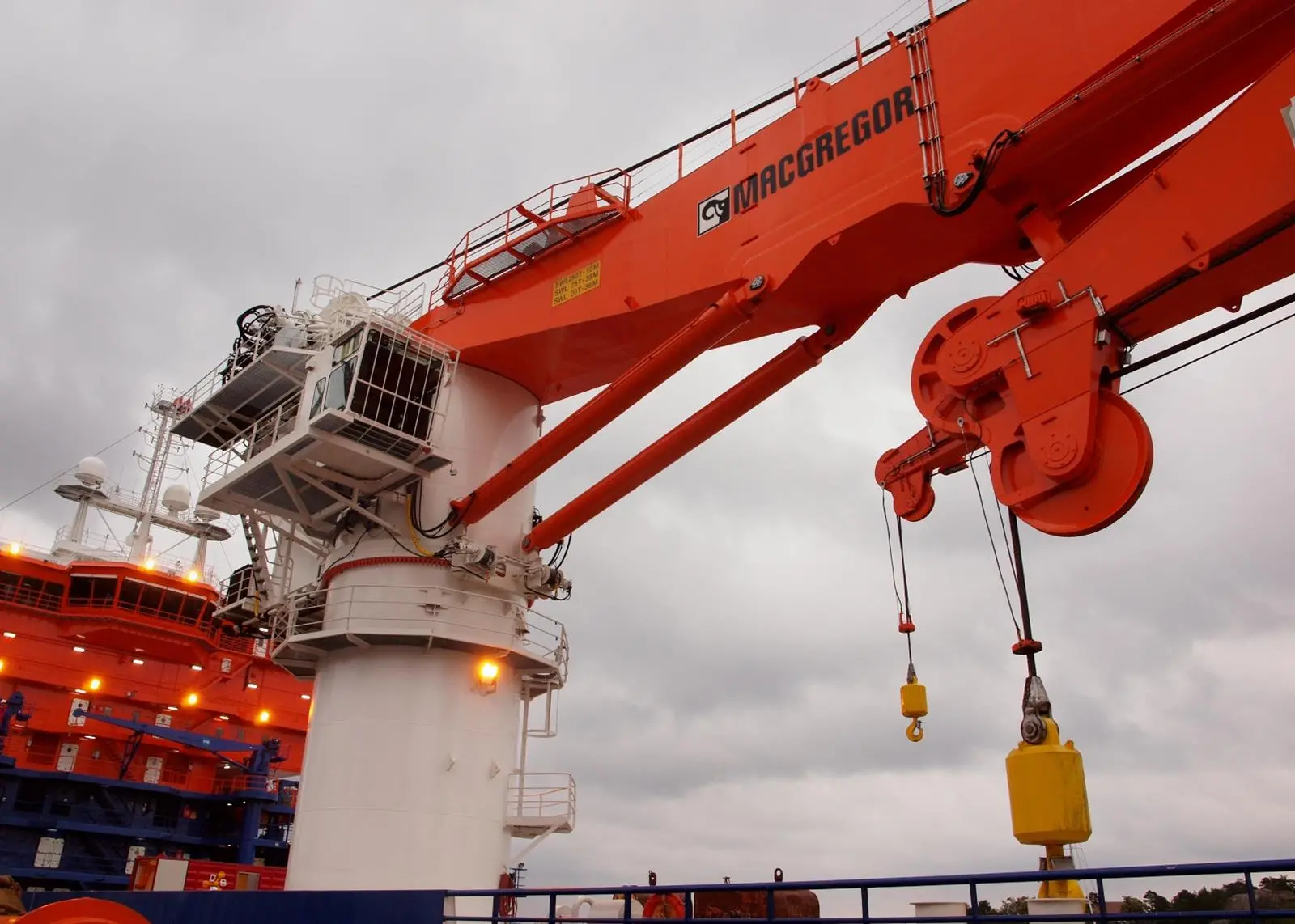
The project aims to improve methods of simulation of offshore crane operation, and provide a competitive advantage for German shipbuilding through early integration of simulation tools in crane design and construction.
Funding will come from the Federal Ministry of Economics and Technology, from the funding programme for Next-Generation Maritime Technologies, with support from the ‘Projektträger Jülich’ (PTJ). The project is named HoOK – Hochseeoperationen mit Kranen (Offshore Operations with Cranes).
“We want to develop a simulation tool which enables the optimization of the whole system of ships with cranes even at an early planning stage,” says Hendrik Gröne, managing director of HeavyLift@Sea. “Until now the simulation of crane operations on a moving ship has hardly been discussed in ship building technology studies and has not been considered in design. The existing processes for investigating the combination of cranes and ships under loads and at sea are inaccurate or not suitable for practical application. So an advance in this area is now urgently needed for the offshore sector, which is crucial for the future of German shipbuilding.”
Hamburg-based HeavyLift@Sea is a maritime engineering company with a focus on heavy cargo shipping. It will contribute experience of practical challenges. The company has software tools for creating ship designs, and answering questions relating to ship design and operation.
Mareval will coordinate the project, taking on the tasks of modelling the crane and the loads arising from the environmental conditions. ” These kinds of tools are needed in particular in order to be able to identify and enhance potential cost reductions in the installation of offshore wind farms,” said Dr.Eng. Hendrik Vorhölter of Mareval.
“We believe that the transition to energy from offshore wind farms can only succeed if more shipbuilding expertise is incorporated,” says Prof Stefan Krüger from the Hamburg University of Technology.
Related Articles
 ALTERNATIVE FUELS & LUBRICANTS
 GENERAL NEWS
 GENERAL NEWS