



Battery added to Viking Lady power mix
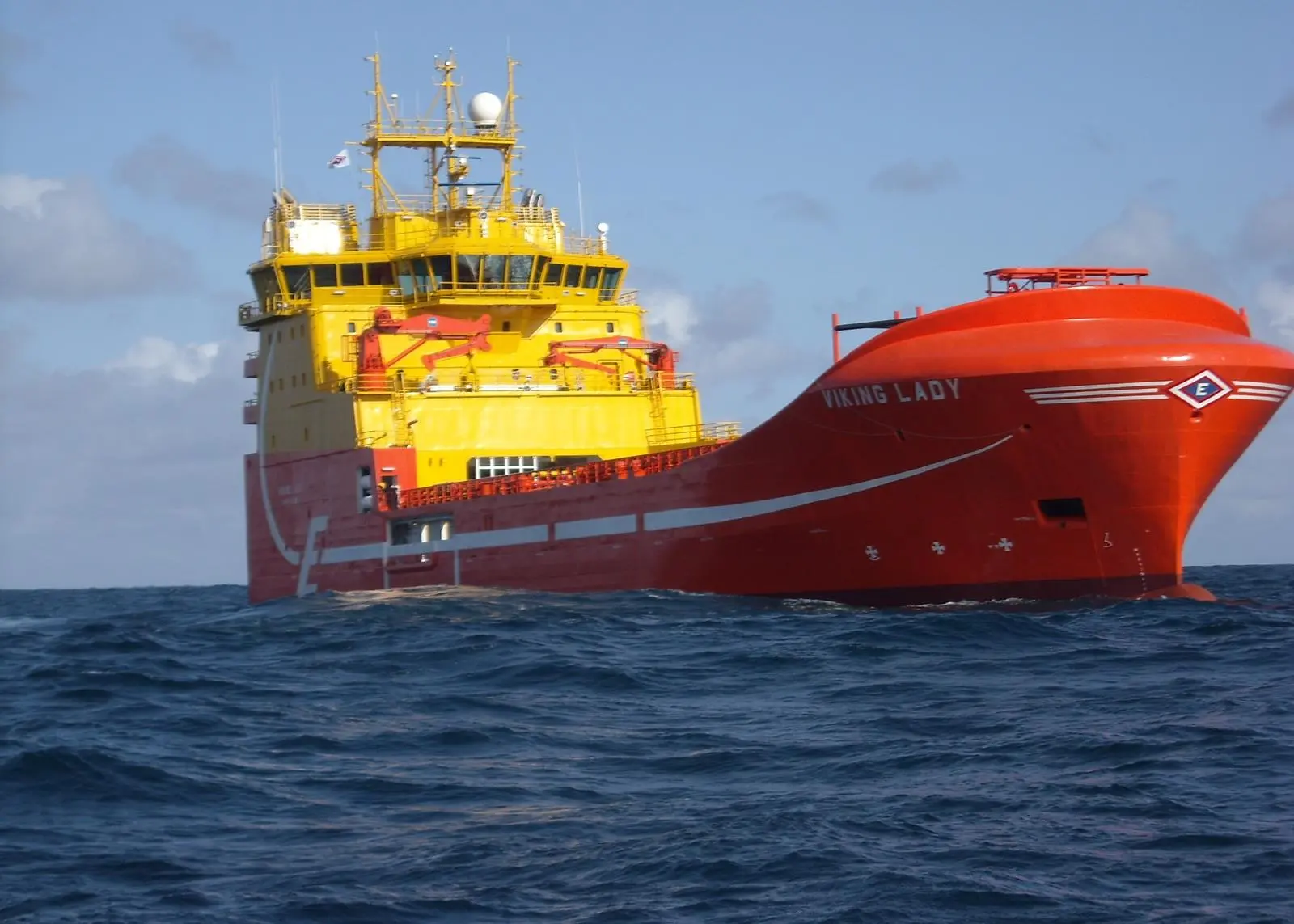
Part three of the hybrid power technology project being performed on Eidesvik Offshore’s supply vessel Viking Lady has seen a battery added to the dual-fuel, fuel cell hybrid power system. Although the power potential of the battery and fuel cell is small, the system is acting as the test bed for a hybrid power control system that could see dynamic positioning (DP) operations being carried out without the need for main engine power.
The project is being led by DNV. “One of the problems with a molten carbonate fuel cell is that it is not very responsive to load changes and on this type of ship you have a lot of load changes, especially if you are running on DP,” says project manager, Bjørn-Johan Vartdal. “Keeping steady position involves continual load changes on the thrusters and this fuel cell is not responsive enough to really handle this.”
The vessel’s main propulsion fuel is mainly LNG and the LNG-fuelled fuel cell is run continuously as it takes time to start and stop. Without the battery, the fuel cell has only been providing base load and has been operated with the vessel’s four Wärtsilä 32DF (dual fuel) engines. Viking Lady runs in DP mode for nearly half of its operating time during which time the DF engines are running at low loads and low efficiency in order to provide the redundancy required for safe DP operations.
Batteries, however, are very good at handling such load changes so the combination of the fuel cell, which is good at providing steady base load, and the battery which can take the variation, it is possible for the combination to handle all the operations of a vessel including DP with the required redundancy. In the case of the Viking Lady, neither the battery nor the fuel cell have the capacity to power the vessel in transit but the installation is being used to develop the complex power management system.
“We want to combine all three power sources in order to give maximum efficiency,” says Mr Vardal. Currently all power sources feed into same current so there is no distinction between propulsive power and auxiliary power. “In the battery, you have a limited amount of energy that you can install there. Therefore you have to run a power management system and the time variable becomes very important. It becomes an energy management system rather than a power management system because to ensure that you run efficiently at all times, you need to have enough power in the battery at all times. That makes the control system much more complex than for traditional diesel-electric systems.”
The fuel cell on Viking Lady is a 330kW cell that was installed in 2009 and has now run for over 18,000 hours. It is located in a large, purpose-built container (13m x 5m x 4.4m) and the electrical components such as transformers, converters and DC bus for the fuel cell are stored in a standard 20ft container. The total weight of the containers is 110 tonnes, but says Mr Vartdal, this could be significantly reduced in future fully integrated systems.
The fuel cell has proven to be reliable and efficient in providing continuous energy. If heat recovery is used, its maximum efficiency is 55%. “We’ve had no problem with the fuel cell. The problem is that it is very expensive and heavy, and it’s got a limited lifetime. It will probably only last around four years so the basic economy is not there yet,” he says. “However, if the costs can be reduced then you can feasibly make a case for the future because it will be more efficient and you will save fuel.” SOx and NOx emissions would also be virtually eliminated as would noise and vibration.
The economics of batteries are different, says Mr Vartdal. A 20% fuel saving could give a payback time for the battery system on a hybrid ship of around two years. “Batteries can be combined with engines in a financially attractive way already to reduce fuel consumption and emissions. Fuel cell financial viability is a bit more in the future, but that may come as well.”
Related Articles
 PROPULSION
 GENERAL NEWS
 GENERAL NEWS