



Demagnetised engines help ensure Baltic shipping safety
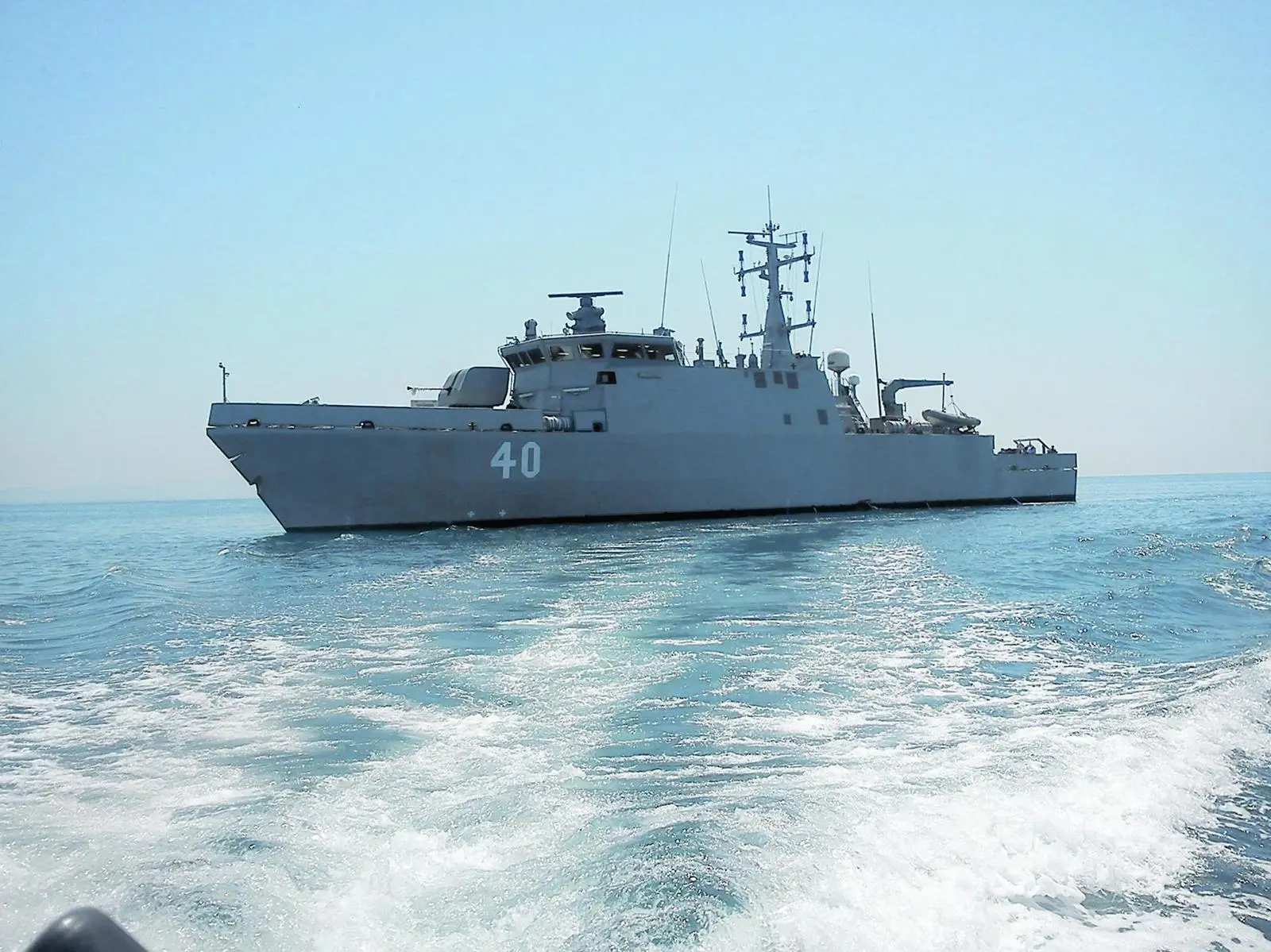
These mines are left over from WWII and seriously limit commercial fishing and merchant shipping operations. If they are not spotted and a ship happens to pass over them, there may be little chance of survival for the vessel and its crew. That is why the Finnish Navy is aiming to commission three new minehunters in 2015, at a total cost of €250 million. MTU is supplying specially demagnetized engines both for propulsion and onboard power generation on these new ships.
The Earth’s magnetic field, resulting from the magnetic attraction of the poles, is generally beneficial. Highly energised particles from the sun or space, which would make life on Earth impossible, are trapped by the magnetic field thousands of kilometres above the planet. Marine creatures, including whales, sharks and turtles use the magnetic field as a navigation aid. But this magnetism is used by sea mines for more sinister purposes. They are fitted with magnetic sensors so that they can detect when ships that they are programmed to destroy are close by. The job of seeking out mines and rendering them harmless is the purpose of a minehunter.
The Finnish Navy’s three new vessels, each 52m in length, will be powered by two 8-cylinder MTU series 396 engines. In this type of application, the performance of the engines is a secondary consideration because, when on minesweeping duty, the ships travel no faster than 5 knots. So that the minehunters can move as silently as possible through the water, the engines have double resilient mountings. And their magnetic signature has all but been indistinguishably erased.
MTU describes the build of such engines as a highly complex process, that normally involves several weeks’ work. “We need well over 100 hours for one engine,” said Albert Hagenlocher, test track manager at MTU. That is because the engine is not demagnetised all at once. Mr Hagenlocher has to demagnetise every component individually. The crankshaft, camshaft, con rods, turbocharger, cylinder heads and even individual bolts – 16,000 components for every engine, representing a lot of work by any standard. “But that is how we make sure that the magnetic signature of the components remains permanently weak,” he said.
When the engine parts are manufactured, their magnetic signature is relatively strong. A sea mine would immediately detect an engine with a magetised component in it, and explode. To weaken the magnetic signature, the test track manager passes an electrical current with a special wave envelope through the coil. The wave envelope has a total of eight variables. The frequency and maximum strength of the current flowing through the coil are two of these. Setting exactly the right wave envelope is a very precise art. “You can’t teach this,” claimed Mr Hagenlocher. He maintains it is much more a matter of experience, because every magnetic component has two different magnetic signatures – a permanent signature and an induced signature.
The permanent signature of a cylinder liner, for example, is something he can erase; but not the induced signature. That is determined by the Earth’s magnetic field, and it fluctuates constantly as well as varying between geographical regions. The Finnish minehunters are initially to be used only in the Gulf of Finland. But even that geographical limitation is far too wide-ranging. A ship that has no magnetic signature when off the coast of Helsinki can be magnetically charged again when only 150km away off the coast of Turku, and thus be detectable by sea mines. So there are coil systems installed on board. They hide the ship’s magnetic signature by creating an opposing field that counterbalances the residual signature of the ship as a whole.
MTU determines the strength of the engine’s residual signature on a purpose-built magnetic testing rig. It is housed in a shed made entirely of wood and a special type of steel. With the aid of a probe 20m below ground and numerous coils in the shed, Mr Hagenlocher can simulate the magnetic field anywhere on the Earth with just a few mouse clicks. Then the engine – with its 16,000 demagnetised individual components now fully assembled – rolls along a track through the shed on a truck. On the three computer screens in front of him, Mr Hagenlocher can see the engine’s residual signature represented at nano-Tesla levels of accuracy. By the time the engine has passed through the process, it has only a very weak residual signature that can be easily counteracted by the onboard coil systems.
That means the engine is ready for duty on the Finnish minehunter Katanpää. She is due to enter service in 2015 and start clearing mines from the Finnish coastal areas of the Baltic Sea along with her sister ships, Vahterpää and Purunpää. Commandant Heikki Vierelä is already preparing himself and his crew for the mission. Initially, the new ship will only operate in the Baltic, though Commandant Vierelä envisages international missions in five to 10 years’ time. “Here in the Baltic Sea off the Finnish coast all the mines date from the Second World War. But in asymmetrical warfare, mines are a favoured means of blockading port entrances, for example,” he explained.
Using special sensors on the ship, he and his crew locate the mines then defuse or detonate them. The MTU propulsion engines paired with Voith-Schneider propellers enable the crew to manoeuvre the vessel precisely even in heavy seas and high winds, thanks to the ability to infinitely vary thrust without changing engine speed. With the help of MTU’s Callosum ship automation system, the crew can concentrate fully on the job in hand. The system controls and monitors not only the propulsion plant but also the MTU on-board power supply, the fire alarm system and the tank measuring system. “However, the most important requirement of the engines is that they are reliable,” the Commandant adds.
Like the Earth’s magnetic field, the engines should remain unnoticed and be virtually taken for granted: quiet, inconspicuous and – above all – non-magnetic.
Related Articles
 PROPULSION
 GENERAL NEWS
 GENERAL NEWS