



Elastic shaft notation
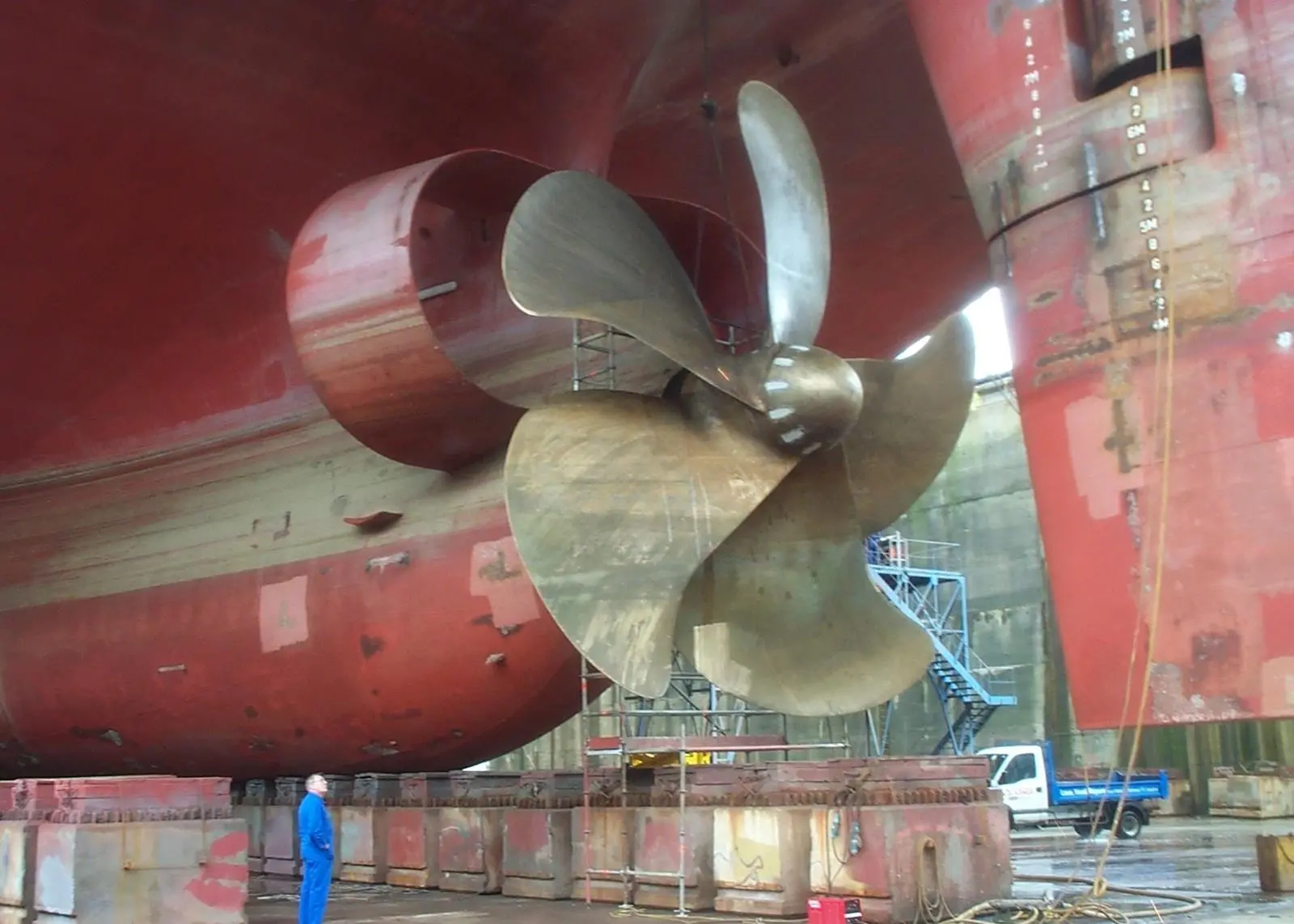
BV says that the new Electric Shaft Notation (ESA) notation will help ensure the integrity of the structure and shaft bearings on ultra-large container ships and the next generation of LNG carriers.
Jean-Francois Segretain, deputy technical director, Bureau Veritas, said: “As ships grow in size and we seek more fuel economies we are now seeing vessels with shafts handling over 20MW of power driving large diameter propellers of over 30 tonnes weight. Critical attention has to be paid at the design stage to analysing the elastic shaft alignment and ensuring that the bearings and structure match the shaft response, especially when the vessel is turning.”
He added that if this is not done, huge forces will either lead to bearing failure or excessive vibration.
The ESA notation aims to help solve incidences of both on new ships and sets out standards of how the shaft must be analysed to avoid these problems.
The notation requires full analysis of the criteria covering hull flexibility with respect to loading conditions, bearing material stiffness, shaft speed and oil film behaviour.
It will apply to vessels with shafts in excess of 750 mm diameter, or smaller shafts handling over 20 MW of power, propellers over 30 tonnes or using synthetic bearings.
The notation will be obligatory for ships meeting these conditions in our class, and will also make it available as a voluntary notation for smaller vessels and vessels not in BV class.
Related Articles
 METHANOL
 MONITORING, CONTROL & DIGITALISATION
 MONITORING, CONTROL & DIGITALISATION