



Thruster condition monitoring goes beyond vibration
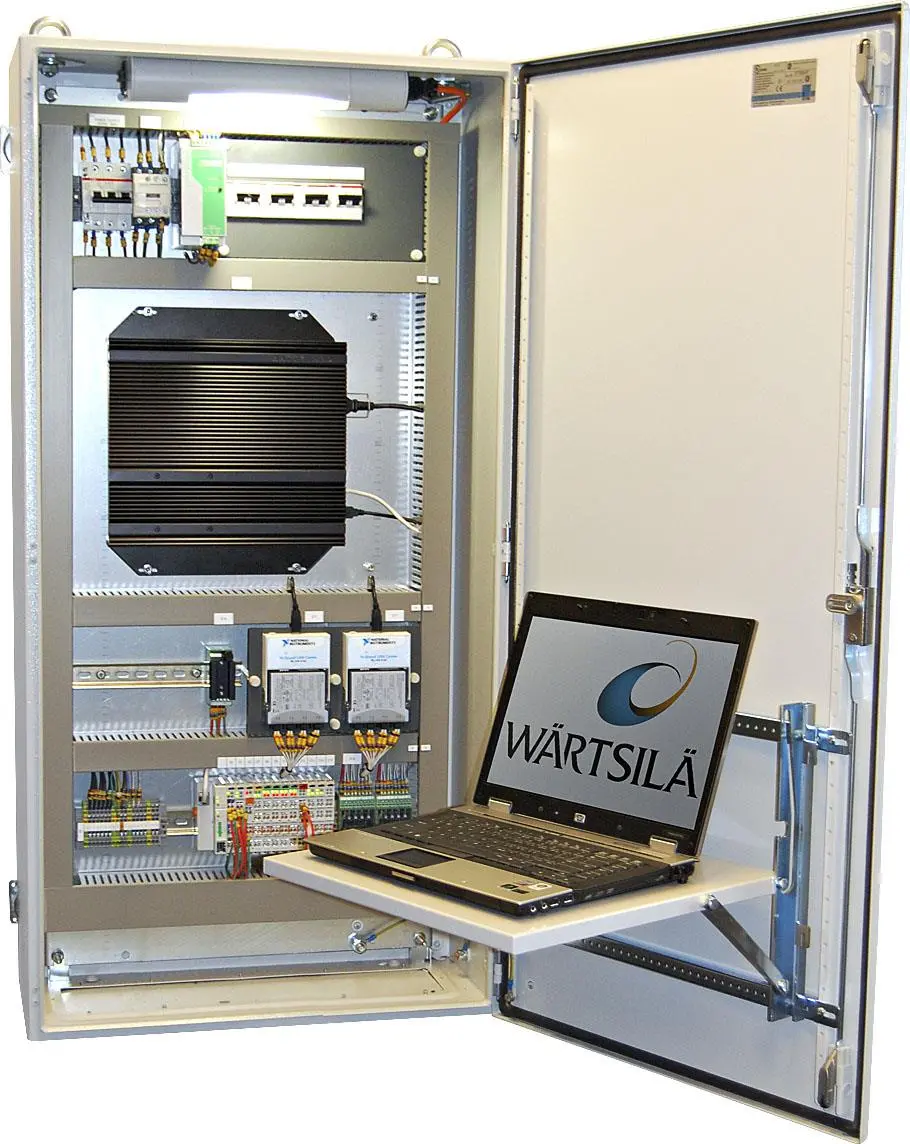
Wärtsilä established a track record for its propulsion monitoring service in 2010 when service engineers were able to advise the owners of a semi-submersible heavy transport vessel on the reason why it was experiencing exceptional wear of the thrusters’ lower gearboxes. Back in 2010, this same owner was one of the first companies to take up the Propulsion Condition Monitoring Service (PCMS), and within six months, Wärtsilä was also able to determine the reason why filters were blocking on a thruster’s hydraulics.
PCMS is virtually standard equipment now on all Wärtsilä’s steerable thruster deliveries, but it was originally designed as a retrofit option to detect all modes of potential failures that are reasonably likely to occur on propulsion equipment. In some cases, PCMS is used by owners of older tonnage to show the condition of their propulsion when they prepare for resale, says Michael van Oostrom, propulsor area manager for Wärtsilä in the Netherlands. “We are also finding that owners preparing to take up contracts in some of the world’s more remote areas are using PCMS so that they know well in advance what’s going on. If they find they need to do maintenance during the vessel’s contract period, they might instead choose to swap the vessel out. PCMS therefore gives much more operational flexibility,” he says.
Unlike other condition monitoring services, PCMS goes beyond vibration analysis, temperature sensors and the taking of oil samples, says Mr van Oostrom. “With the addition of information on machinery control systems and nautical parameters you have a picture of how the thruster is used and under which conditions such excessive vibration occurs. As a result we can advise on operational changes that can be made to prevent a minor fault escalating or to reduce unnecessary wear that can shorten a propulsor’s lifetime.”
PCMS provides continuous measurement of a range of vibrations and hydraulic pressures as well as lube oil temperature, oil water saturation and oil contamination. Additionally, to effectively monitor gears, bearings and propellers, it gathers information from the vessel’s automation system and propulsion control system including shaft rpm, torque, pitch, roll, draught and heading. It is suitable for most brands of steerable thrusters, transverse thrusters, controllable pitch propellers, electric pods, water jets and gearboxes.
Analysis data, trend lines and warnings are available on board, and data packages are transferred by email to Wärtsilä’s shoreside engineers. “Our engineers include experts in mechanical engineering, hydraulics and electronics as all these systems can come into focus when analysing equipment performance,” says Mr van Oostrom.
The build-up of a failure is normally gradual, he says, citing the example of a micro-crack in a gearwheel forging. This can usually be detected before it causes catastrophic failure of the gearing. “We don’t have many of these breakdowns, but when we see it develop, we can advise the operator to reduce load conditions while preparing for drydock or thruster exchange.”
Wärtsilä was able to advise one client on a crack in a roller bearing that became apparent during installation of PCMS, and as a result the thruster was overhauled before the end of the drydocking. Later, on the same vessel, Wärtsilä detected that high steering angles at high vessel speed led to high vibration levels and overloads. Prior to the installation of PCMS, the master of the vessel was unaware that this type of manoeuvre was having an effect on the wear of the equipment.
On another vessel, high vibration levels were found to be recurring at around 40% load during slow steaming and manoeuvring. The operator was able to minimise sailing in this condition. Similarly after detecting high oil contamination and oil water saturation levels, the operator was able to improve control of the quality of products received from its oil supplier.
Continuous oil monitoring can detect the rapid increase in contamination levels that indicate mechanical failures such as a progressing bearing fault or leakage in the oil cooler or sealing system. Other conditions that can be detected by PCMS include bearing wear, seal leakage, reduced steering performance, steering motor leakage, misalignment, imbalance, counter balance valve malfunction, rotor warp, loose connections, cavitation and flow turbulence and wind-milling.
Five-yearly visual inspection can be waived with the use of PCMS under class society terms with ABS, DNV and Lloyd’s Register, and PCMS offers value beyond practices such as having spare thrusters and changing them out at sea as five-year overhaul is still required under these arrangements. However, even with PCMS, unit lifetime must be considered and according to manufacturer’s instructions extension of overhaul is not recommended to exceed 10 years.
Related Articles
 PROPULSION
 GENERAL NEWS
 GENERAL NEWS