



Engine room simulator for Singapore college
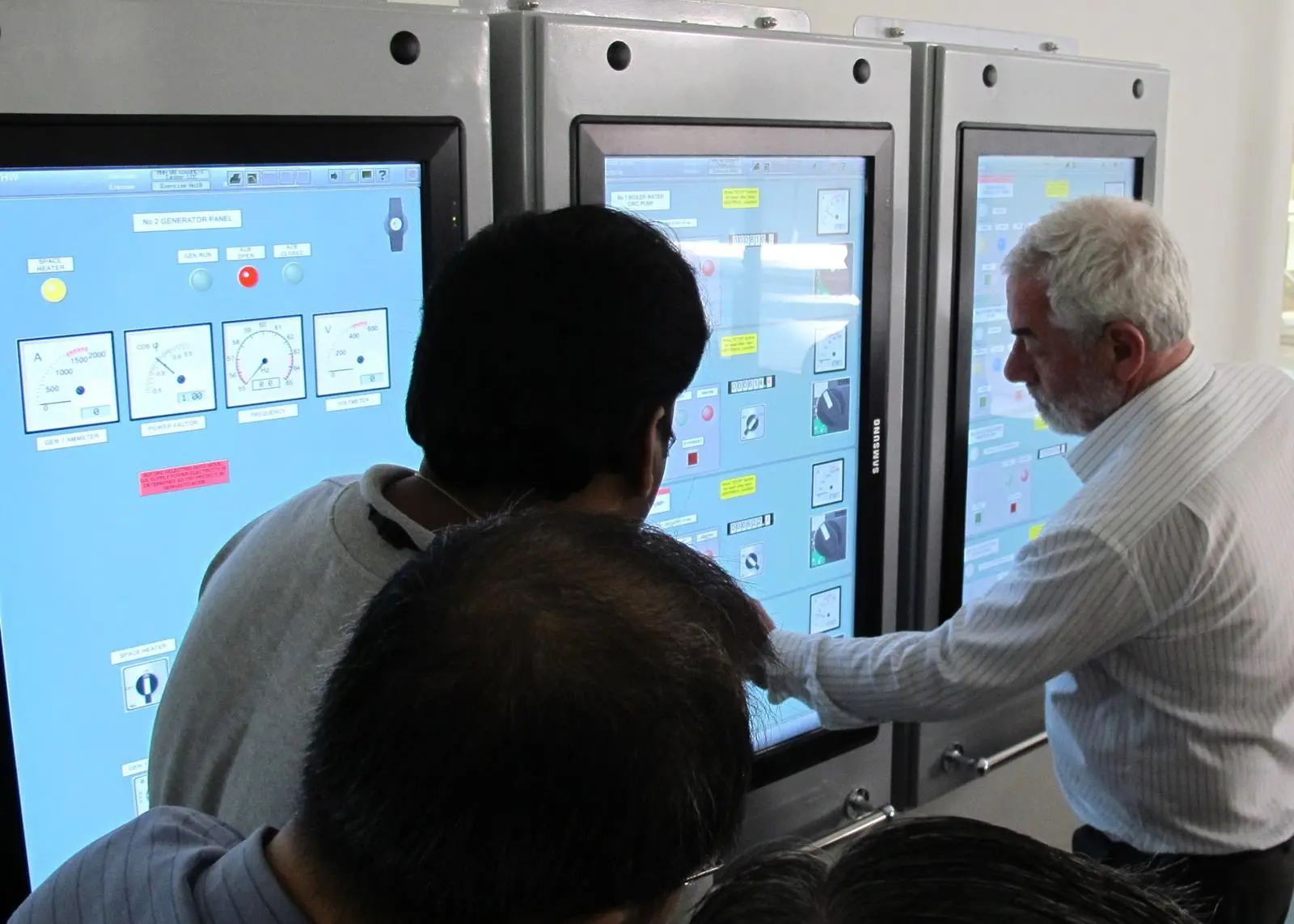
The simulator has been set up to provide training for students in operation of MAN B&W 60MC installations in tanker ships. The skills acquired during training will, according to Transas, enable trainees to minimise adaptation time onboard and reduce training time at sea. The ITE course will teach students to perform basic maintenance of electrical equipment, align, install and repair marine machinery, maintain marine control circuits, verify measuring instruments, perform quality control and assurance, design and fabricate jigs and fixtures, inspect ship systems and machinery components, supervise work on machining systems, and assist in execution of commissioning and testing activities. At the end of the course, successful trainees will receive a certificate, qualifying them as marine supervisor and foreman (mechanical).
Transas says that the simulator is configured for training in advanced operation and troubleshooting. It includes resource management training, as well as final training and certification. The new platform features 3D visualisation, allowing display of system diagrams on a multi-display video wall for monitoring and control. Operations can be carried out from the 3D visual model. The simulator is designed to comply with the latest STCW requirements and to meet the various IMO Conventions and Resolutions and IEC standards.
Graham Wagstaff, business development manager, Transas Marine International, commented: “Transas has completed the installation of a full mission engine room simulator at the prestigious Singapore Institute of Technical Education. The full mission simulator will be used to teach the operation and trouble shooting of marine propulsion, auxiliary and electrical equipment. Having identified faults in the simulator, students from the Higher Marine engineering course will carry out repairs on real equipment located in the state of the art training workshop. Transas is pleased to have assisted in the development of this unique training methodology”.
Related Articles
 ALTERNATIVE FUELS & LUBRICANTS
 GENERAL NEWS
 GENERAL NEWS