



Offshore construction gets some Mojo
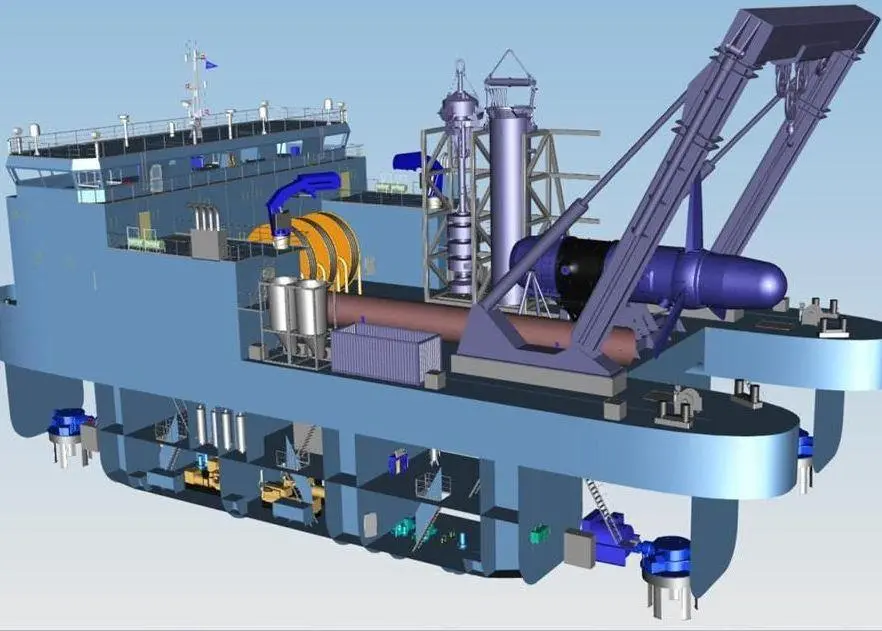
The Hi Flo 4 has been designed to operate in extreme tidal streams and significantly reduce weather delays and risks.
Steve Jerny, project co-ordinator, Mojo Maritime, said to The Motorship: “This vessel is a game changer for the tidal power industry because it doubles the speed of other dynamic positioning offshore construction vessels currently on the market.”
He added that the Hi Flo 4 will not be a solo vessel, but the first in its class. It is equipped with diesel electric propulsion
with eight main CAT C32 Acert engines of 910 kW and four electric motors of 1500 kW.
The 59.50m twin hull vessel has been designed to operate using dynamic positioning in currents of up to 10 knots in tidal streams as opposed to most other DP vessels which operate at 4 to 5 knots. This is thanks to four Voith Schneider Propellers (VSPs).
As a result, Mojo says the vessel has the potential to reduce current installation costs by up to 80% because it can operate for 90% of the operational cycle, rather than the standard 20%.
The company said that the other advantage it has over other vessels on the market is that it has a daily operating cost of £35,000 per day as opposed to around £125,000, making it a wise choice for operators.
The design of the vessel was inspired by Mojo’s work with Bauer on its BSD-3000 subsea drill and provides a safe platform for all drilling operations.
Consequently, it has the potential to operate across a wide range of offshore construction roles including offshore wind, cable laying and trenching and subsea oil and gas interventions.
As part of the agreement with Hammonia, Mojo will provide specialist offshore engineering and operations expertise.
The two companies are now working with other Technology Strategy Board project partners to appoint a shipyard and secure the first charter for the new vessel class.
Construction could begin in late 2014. The vessel has a build time of 18 to 20 months so could be completed in late 2015 or early 2016.
The Hi Flo 4 project has been made possible thanks to funding by the UK’s Technology Strategy Board.
Related Articles
 ALTERNATIVE FUELS & LUBRICANTS
 GENERAL NEWS
 GENERAL NEWS