



Norway commits to the ShipArrestor
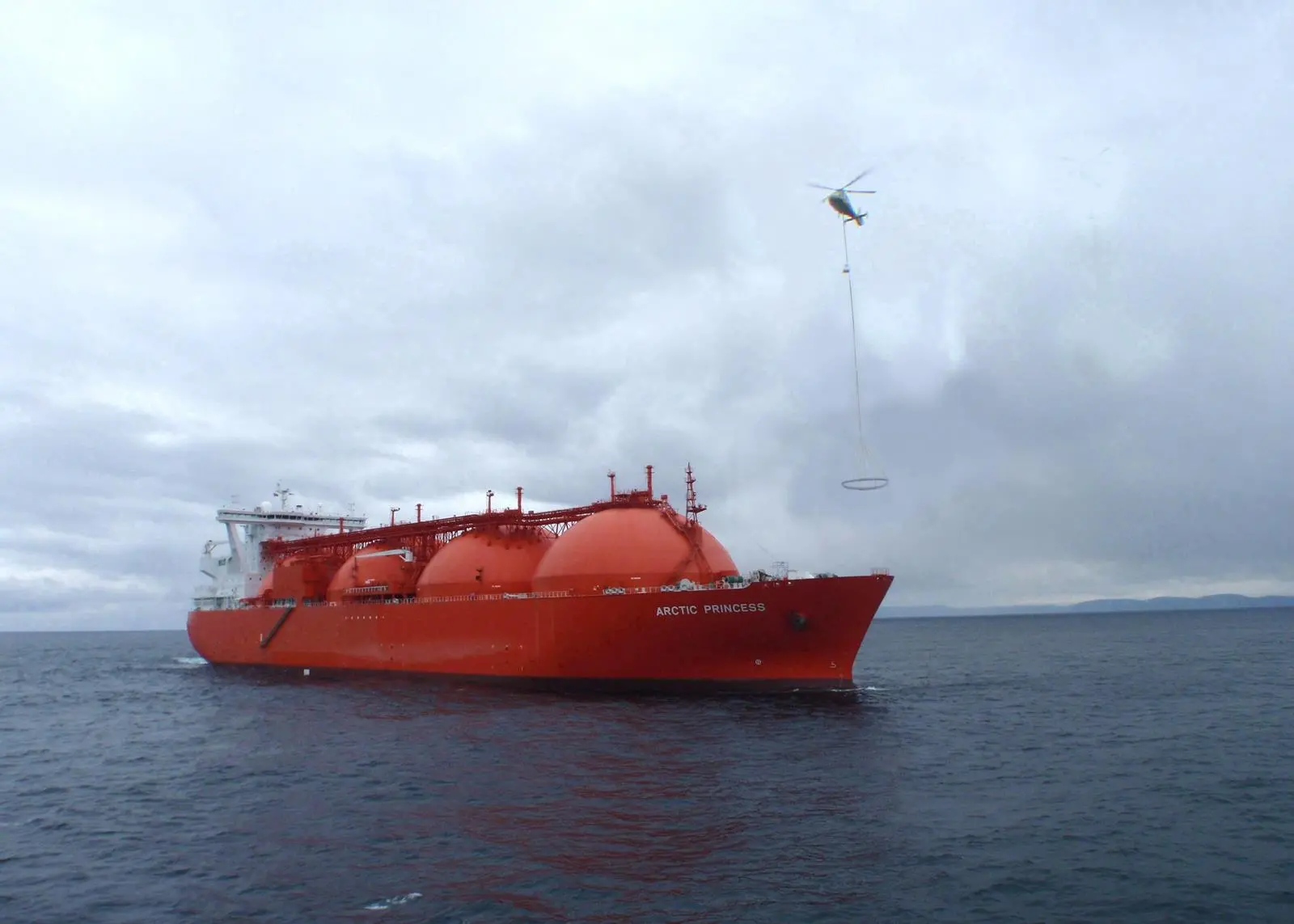
The two packages ordered are due for delivery this summer and feature sea anchors that can be deployed on ships by helicopter. The systems will help protect Norway’s coastline against the pollution and other hazards caused when ships lose engine power and drift before running aground. By dramatically slowing the ship’s rate of drift, the ShipArrestor creates more time in which it can be reached by a rescue tug. If a vessel loses power when in mid-ocean and is in no immediate danger of grounding, a ShipArrestor can be used to turn it into the wind. This will prevent the dangerous rolling that has been responsible for ships such as the Prestige and the Erica to breaking up due to the stresses of lying side-on to the waves.
The development of the ShipArrestor now means that even in extreme conditions, a connection can be restored with a ship that is drifting without any crew on board. This is achieved by a helicopter lowering the chain loop of a ShipArrestor around the winches and bollards on the foredeck of the drifting ship. The helicopter then flies upwind and drops the ShipArrestor and its towline into the sea where the package opens to release a parachute-shaped sea anchor that immediately creates the resistance needed to turn the ship’s bow into the wind. This is an operation within the expertise of any search and rescue helicopter pilot and it can work for any size of ship from a trawler to a supertanker. The anchors themselves have been developed in conjunction with Coppins Sea Anchors Ltd of New Zealand, which is a recognised world leader in sea anchor technology. Tests have subsequently shown that a 30m diameter nylon parachute sea anchor can quickly turn a 100,000 ton tanker into the wind and reduce its drift speed by 50%.
Once the ShipArrestor is in the water it also has the immediate effect of preventing the severe rolling motion that can be so damaging to the ship and to any crew remaining on board. By slowing the rate at which the ship will drift towards the shore, the ShipArrestor increases the time available for an emergency towing vessel (ETV) to reach it. The tug is then able to pick up the sea anchor and line and tow the ship out of danger. This is seen as particularly valuable for countries where a reduced ETV availability means that longer passage times may be needed for the nearest tug to reach the drifting ship.
The ShipArrestors were developed in Oslo, Norway, by salvage specialists Miko Marine, which led a consortium of eight European organisations partly funded by the European Union. This included companies from France, Germany, Netherlands and Austria as well as the Norwegian Institute of Technology and the UK’s Ship Stability Research Centre which all applied their individual expertise to the challenge.
Related Articles
 ALTERNATIVE FUELS & LUBRICANTS
 GENERAL NEWS
 GENERAL NEWS