



Engine room fires continue to be a problem
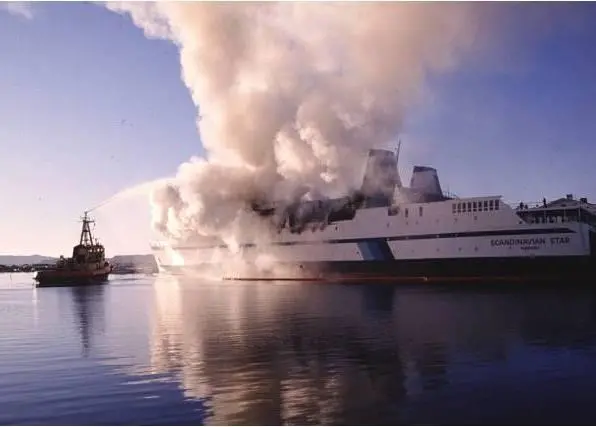
This follows a review of incidents which took place in 2013. Graeme Temple, regional director for Braemar SA’s Far East operations, said: “Last year we attended a significant number of engine-room fires – the industry is still experiencing far too many unnecessary casualties where flammable liquids in engine rooms are finding their way onto hot spots. On many of the vessels I visit, these hot spots are only too easy to find, with thermal imaging photographs readily identifying these defect.”
Despite attempts to prevent fires through protection design, Braemar says potential problems need to be detected earlier to ensure a fast and efficient first response.
According to IACS rules and after 1998, SOLAS Ch II-2 Reg. 15.2.10, all surfaces above 200 degrees must be insulated or protected in order to prevent ignition of flammable fluids. Braemar says even with this, there seems to be a continuing neglect of areas where flammable liquids can escape from high pressure (HP) and low pressure fuel (LP), HP and LP lubricating, purifier and fuel valve cooling systems.
Mr Temple added: “In reality basic maintenance is all that is required. Engine room crew should carry out regular inspection of pipes and associated fittings; they should refit brackets and lagging when carrying out maintenance; leaks should be repaired quickly before a drip becomes a spray; spares for HP fuel pipes should be available, and leakage alarm systems should be tested regularly. Prevention is as straightforward as that.”
Related Articles
 ALTERNATIVE FUELS & LUBRICANTS
 GENERAL NEWS
 GENERAL NEWS