



US and EU take different path in 2016 NOx emissions regulation
The International Maritime Organization abandoned the fixed start date for new NOx emissions control areas (NECAs) at MEPC 66. Instead, the IMO will replace the 2016 application date with flexible provisions for any NECAs established after that date.
Environmental organisation Transport & Environment (T&E) deplores the decision, saying it will negatively impact on the environment and the health of Europeans. NOx from shipping in Europe is set to exceed all land-based sources combined by 2020. The law on NECAs was adopted unanimously by the IMO in 2008 and last year the organisation’s expert review found NOx control system technology was available and that the global regulation should proceed on schedule in 2016.
Yet the change – to allow the existing North American NECA affecting newly-built ships to go ahead at that time but to have subsequent NECA start dates decided separately – was adopted without any assessment of its impact, says T&E. The rushed process also ignored MARPOL requirements that substantive amendments be circulated with a six-month notice period to allow for proper consideration.
T&E programme manager for shipping, Bill Hemmings, said: “The IMO’s decision to delay NOx regulations is a serious setback for efforts to tackle the biggest source of nitrogen oxides in Europe, which is an invisible killer causing cancer and lung disease.
“It remains to be seen whether this decision will enhance the prospects for the establishment of NECAs in the Baltic and North seas. If such applications are not soon forthcoming, it may have the reverse effect of hastening the need for retrofitting of ships serving ports in Europe in order to curb growing emissions. We urge the Baltic and North Sea countries to submit their applications for new NOx emissions control areas as soon as possible,” said Mr Hemmings.
On 16 April 2014, the members of the European Parliament (MEPs) voted to reject a proposal to monitor nitrogen oxides (NOx) emissions from shipping. This is despite the fact that shipping emissions are set to overtake all land-based sources by 2020. T&E urged EU governments not to waste this unique opportunity to monitor two of the most harmful air pollutants, NOx and SOx, as part of the proposal for monitoring, reporting and verification (MRV) of shipping emissions.
MEPs rejected the Environment Committee’s amendment to add NOx to the MRV requirement to report CO2. The Environment Committee had already excluded sulphur reporting despite the new SOx regulations that enter force in 2015. In addition, MEPs rejected the chance to monitor ship efficiency, which is a key enabler to improve the sector’s environmental performance.
Aoife O’Leary, T&E policy officer for shipping, said: “Inexplicably Liberal MEPs rejected their own policy recommendations to include NOx and joined others in seriously undermining emissions monitoring. Given that NOx from shipping in Europe is set to exceed all land-based sources by 2020, it is a serious setback to the health and environment of Europeans.”
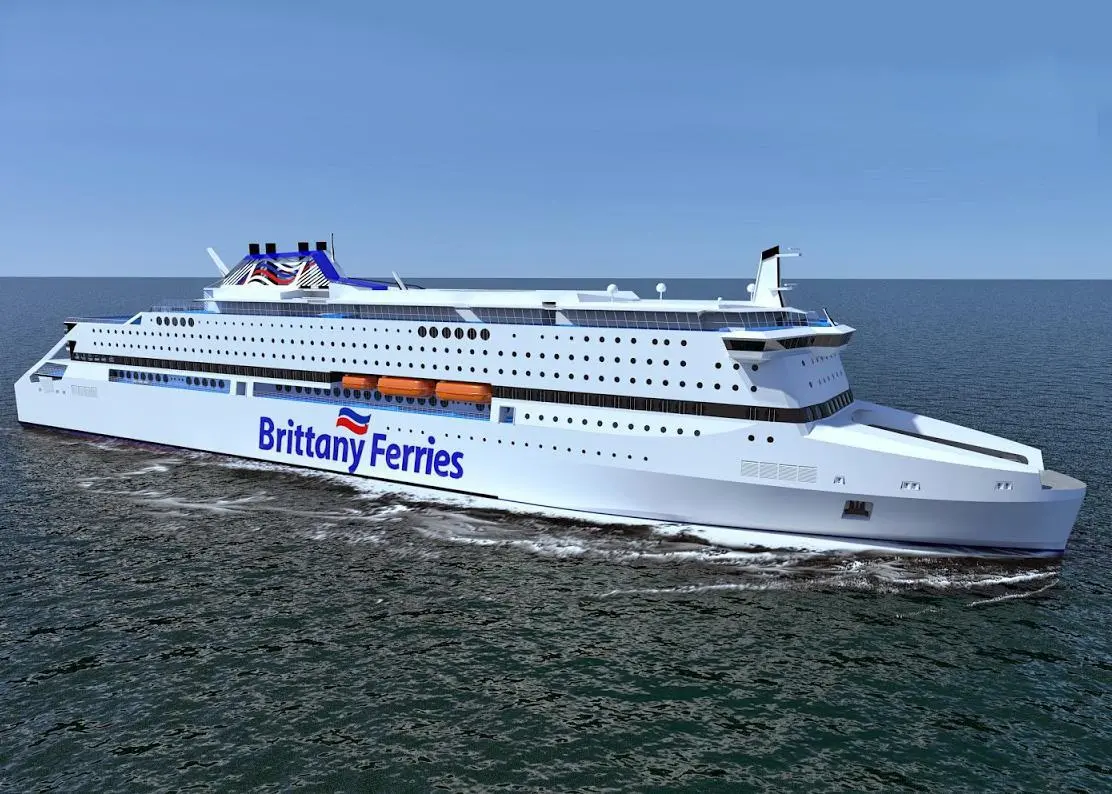
Despite this, Europe’s shipowners are acting. For example, major long-haul ferry operator Brittany Ferries has decided to switch its entire fleet to LNG power. Frédéric Pouget, group maritime, port and operations director explains, “We have two clear steps. We had to get the commercial side to add up, then we could tackle the technical issues.”
After extensive commercial and risk analysis the decision was made last year that the best way to comply with emission requirements was to switch to LNG power across the fleet. “We can’t do that in one step,” says Mr Pouget, “but we can take advantage of this move to further modernise our fleet.”
A newbuild project, code named ‘Pegasis’, will be the largest capacity car, truck and passenger ferry yet built for LNG propulsion. It will be the first passenger ferry anywhere to use membrane tanks for LNG fuel. “We need the fuel capacity for our long routes,” explains Mr Frédéric. “Pegasis will have a tank capacity of 1,350m³ of LNG, and we intend that bunkering of LNG will be no more frequent than it is now for HFO. We are also working with suppliers to set up an LNG barge solution which will service our ports as a bunker facility and deliver LNG at the same or lower price than HFO. We plan to have a very clean fleet without a commercial penalty.”
Throughout the decision process Mr Pouget has been working closely with Bureau Veritas. “We value their expertise, we need their HAZID and HAZOP studies to be sure we are safe, and we know we will get a good ship built by STX France and classed by BV,” he says.
In the US, however, the situation is different. Tier III requirements for NOx emissions will come into force on 1 January 2016 and be applicable to ships built from 1 January 2016 navigating along the coast of the USA and Canada as well as the Caribbean Sea area. In order to comply with the new requirements shipowners have to choose to either install a selective catalytic reduction system (SCR), an exhaust gas recirculation system (EGR) or use gas fuel.
None of these measures are a universal solution, according to Russian Register of Shipping (RS), as none of them satisfies the following three criteria:
- To provide efficient NOx neutralisation for the whole of a marine diesel engine’s operation and not to lead to a great amount of side products whose content in the emissions is already regulated by existing IMO instruments;
- To have no adverse effect on the competiveness of ports and marine transport as a whole; and
- To require reasonable capital and operational costs for implementation.
The use of LNG and LPG as ship fuel is promising, says RS. Among the benefits of gas as fuel are the absence of SOx emissions and significant reduction of CO2 (up to 20% compared to other types of fuel). However, a major obstacle is still the lack of well developed infrastructure for gas bunkering. Moreover, the efficiency of gas application as fuel depends on the type of the vessel, as gas requires sufficient space and therefore cuts down the ship’s cargo capacity. Therefore it is primarily reasonable to apply gas as fuel for gas carriers.
RS introduced rules for gas ships from 1 January 2014 with the additional class notation – gas fuelled ship (GFS). “The requirements are intended for ships using a mixture of various hydrocarbon gases in liquid or liquefied condition as gas fuel,” says senior principal surveyor of the RS Machinery department Vladimir Shurpyak. “Besides the sea-going ships, the requirements may be applied to the oil-and-gas production units and other offshore facilities.”
Use of hydrocarbon gases with methane content below 85% as fuel in ships is subject to special consideration by RS. If a ship is a gas carrier, except the present requirements, it shall comply with the requirements of the IGC Code and the Rules for the classification and construction for ships carrying liquefied gases in bulk. If a ship is not a gas carrier, the use of gas fuel shall be specially approved by flag state maritime administration.
Related Articles
 METHANOL
 MONITORING, CONTROL & DIGITALISATION
 MONITORING, CONTROL & DIGITALISATION