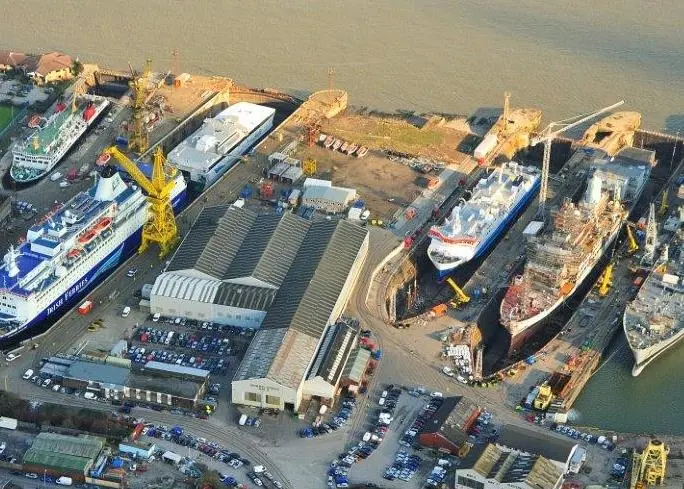
Cammell Laird says its green package has been developed to be bespoke and address the challenges faced by each individual vessel. It covers carbon emissions, airborne pollution and the spread of aquatic nuisance species, in particular MARPOL Annex VI and the Ballast Water Management Convention – all challenges that require considerable pre-planning.
Paul Ashcroft, technical manager, said: “There is not one simple solution to suit all vessels. Much depends on the type of ship, the geographical trading area, its age and operating profile. This is made harder by stretched ship management resources and the multitude of new, often competing, technologies.”
“However, because we work on such a variety of vessels, Cammell Laird is right at the forefront of these challenges. This has led us to forge excellent links with a wide range of technology providers. Those providers are working closely with our design engineers and naval architects to develop solutions with services ranging from initial feasibility studies to comprehensive turnkey retrofits,” he added.
For example, the company recently completed a fleet study on a range of vessels for a ship owner to provide work scope and drawings to achieve class approvals for modifications. These are required for future emissions regulations in the North Sea. The vessels are to be modified to allow the main engine to primarily operate on marine diesel oil rather than heavy fuel oil.
Further projects include feasibility studies for the installation of exhaust gas cleaning systems and other eco-economy measures.