



Azipods for Finnish LNG-fuelled icebreaker
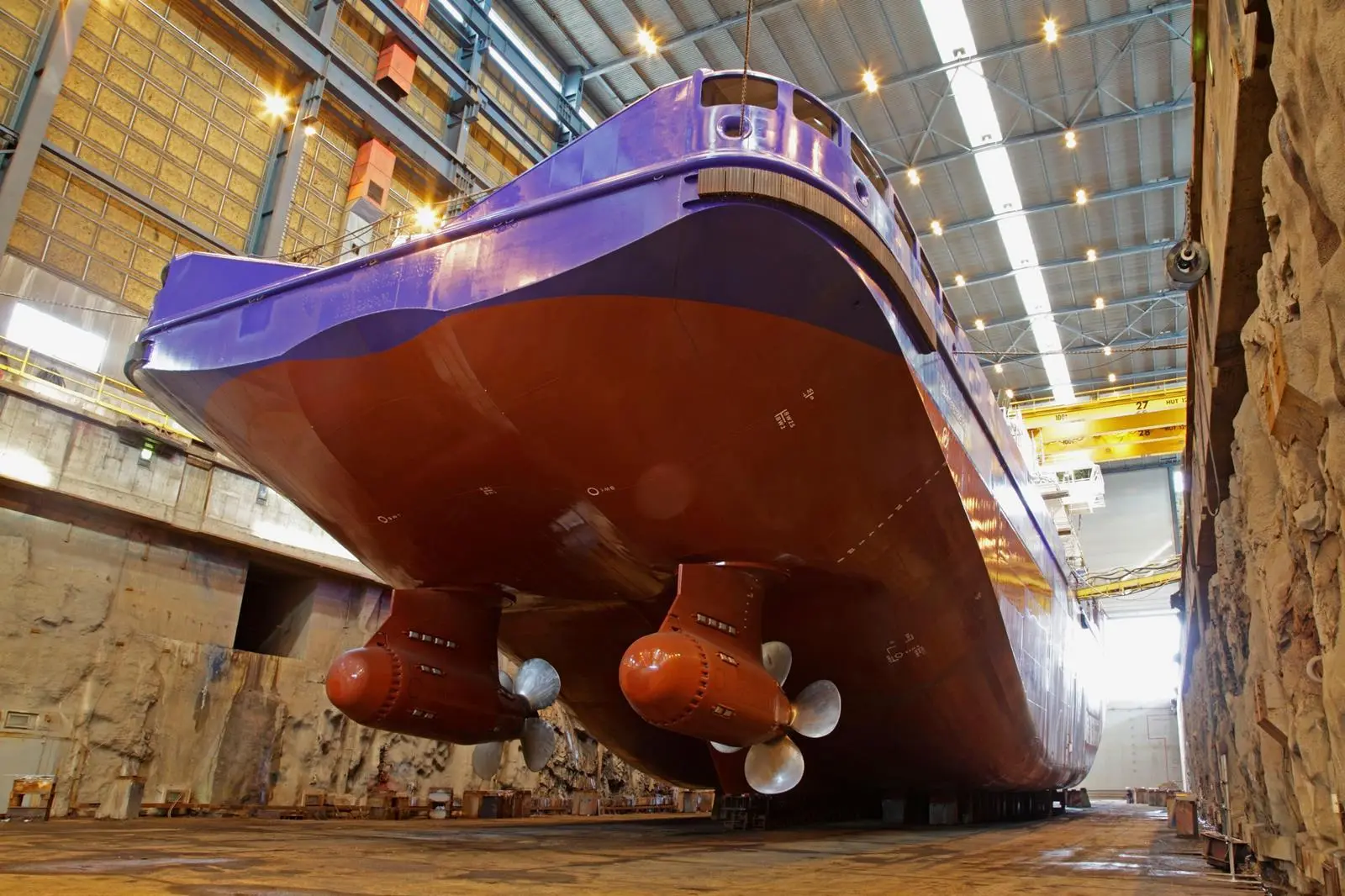
The company says that the order was won after a competitive tender process, and the ship is scheduled for delivery in 2016, after which it will operate in the Baltic Sea. It will be, according to ABB, the first icebreaker in operation able to use LNG as fuel.
A dual fuel propulsion plant has been specified, the use of gas being on both emissions and cost grounds. ABB adds that the ship’s designers, Aker Arctic Technology and ILS, were instructed to select the industry’s most advanced technologies to meet icebreaking conditions in the Baltic Sea year-round, and to perform open sea oil spill response and towing duties in summer and winter. ABB believes that the new vessel will attract worldwide attention once in operation.
Central to the vessel’s performance expectations will be its three-pod propulsion solution, with a 6MW Azipod unit at the bow and two 6.5MW units at the stern, arranged for optimised efficiency and manoeuvrability in ice-ridge conditions. ABB points out that the Azipod was originally developed in the 1980s in cooperation with the Helsinki shipyard, and the company has a track record in icebreaker propulsion stretching back even further, in fact to the Sisu in 1939. ABB has delivered its podded propulsion units to some 80 ice-going ships, some with power as high as 36MW.
“The safety of seaborne transport in the Baltic Sea is under political and regulatory scrutiny as never before, making FTA’s preference for ABB’s power and propulsion technology based on our proven references” said Heikki Soljama, head of ABB’s Marine and Cranes business unit. “Once more, the system’s performance and its ease of maintenance have proved critical factors in the selection process. It is no coincidence that the most forward-looking icebreaker designs invariably feature podded propulsion.”
Related Articles
 ALTERNATIVE FUELS & LUBRICANTS
 GENERAL NEWS
 GENERAL NEWS