



Sovcomflot signs icebreaking contract
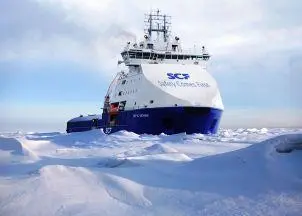
This new series of standby ice breaking supply vessel (IBSV) is a further development of the Vitus Bering series of IBSVs, while the design and technical parameters of the new vessels were specially modified to meet the needs of the Sakhalin-2 project. They are designed in accordance with all the prevailing regulations, standards and requirements of the relevant international conventions and the Russian Maritime Register of Shipping. This means they are able to operate with a high degree of environmental safety in the waters of the Far Eastern seas, which is especially important in light of the stricter environmental protection regulations.
The construction of these vessels is a joint project involving Russian and Finnish shipbuilders. Transas and Glonass will provide navigation systems.
Sovcomflot says the vessels are the most energy efficient, in terms of diesel consumption and propulsion systems. The hulls are specially designed for stern-first navigation in icy conditions. They are equipped with dynamic positioning systems and the ice class is enhanced from Ice10 to Ice15, which will ensure the safe navigation in one year solid ice of up to 1.5m thick, at a speed of 3 knots, and to keep working independently without becoming tapped in ice ridges of up to 4m thick.
The contract covers a 20-year term, during which the vessels will provide safe and reliable services for Sakhalin Energy’s platforms in the Sea of Okhotsk. They will also assist with accommodation of the offshore facilities personnel, and in an emergency, will help evacuate personnel and provide oil spill response when needed.
“The arrival of these three advanced vessels of their class in Sea of Okhotsk will enhance the safety of shipping in the area whilst minimising the associated environmental risks,” said Sergey Frank, president and CEO, Sovcomflot.
One of the main functions of the new vessels will be their on-call duty in the platform area, to provide instant readiness for responding to emergency situations with the possibility of carrying an additional 150 persons onboard during evacuations.
“SCF Group’s development strategy places a high priority on developing our operations within harsh climatic areas, involving projects and providing employment in the remote offshore areas of the Russian Arctic and Far Eastern regions,” added Mr Frank. Currently, Sakhalin-2 employs six Sovcomflot vessels, including three Aframax-type shuttle tankers, two LNG gas carriers and one IBSV.
Related Articles
 ALTERNATIVE FUELS & LUBRICANTS
 GENERAL NEWS
 GENERAL NEWS