



‘Supercharged’ electric ferry
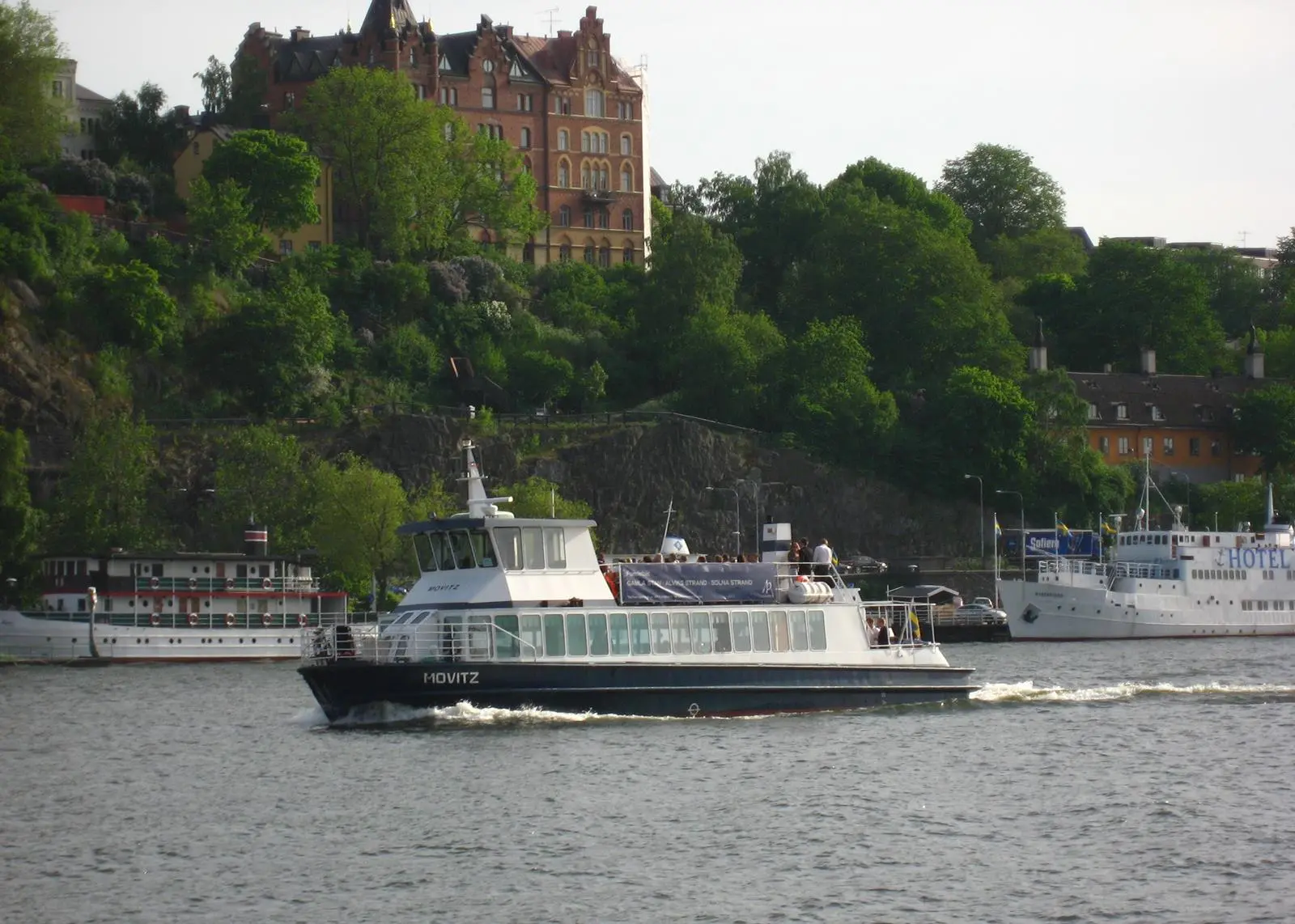
A ferry undergoing conversion in Sweden hopes to set new standards in electric ferry operation by being the first to have a newly developed rapid charging system. This will allow the ferry’s batteries to be charged quickly during the short time that the ferry is alongside between trips and it will allow it to operate all day under electric power alone.
The innovative propulsion system and charging station technology has been developed by Echandia Marine, a company that was founded with the mission to bring Swedish submarine technology to the surface. Submarines have run on electricity for over 100 years when underwater and Echandia’s CEO, Magnus Eriksson, who has been a submarine designer and engineer and a strong proponent of electric transport, set out to use this expertise in a way that he hopes could revolutionise the passenger ferry industry as we know it today. The propulsion system is designed to be equally suitable for newbuilds and retrofits. The project is supported by the Swedish Energy Agency.
The ferry concerned is owned by Swedish company Green City Ferries, which operates on routes within the city of Stockholm. Now virtually silent and producing zero emissions, the converted 23m vessel carries 100 passengers and it will be able to run for an hour on just ten minutes of charging from a special shore connection. The ferry, named Movitz, was scheduled to be operating in fully electric mode in Stockholm’s inner-city waters by August 2014, initially on a central route between Solna Strand and Gamla Stan, in the heart of Stockholm’s Old Town. Mr Eriksson says this will be the world’s first supercharged electric passenger ferry. “The launch of this converted ferry will be a momentous occasion for electric transport, for the marine industry and for Sweden,” he said.
Instead of a 250kW diesel engine using 50 m³ of diesel per year which would have emitted 130 tons of CO2, 1,5 tons of NOx and 80kg of particulates, the Movitz will have two 125kW electric motors located under the stern. These are housed in steerable pod drives that have been developed by Mr Eriksson. The pods are fully azimuthing in order to give the ferry excellent manoeuvrability. The onboard battery system used to store the electrical energy will be the latest generation of nickel-metal-hydride (NiMH) batteries from Swedish company Nilar. The NiMH batteries, of 180kW capacity, are claimed to deliver high power instantly and can be charged very quickly. Hans Thornell, CEO of Green City Ferries, estimates that the ferry will need just 90kW power to cruise at 9 knots.
The ability to super-charge the batteries for just 10 minutes and then operate the vessel for an hour is claimed to be an extremely important development for the commuter ferry industry, which normally operates to a strict timetable. Furthermore, the fast-charging ability reduces the need for large battery packs. The batteries can be fully charged during the time taken for passengers to embark and disembark.
This Swedish development is the result of eight years of research and development for Echandia Marine. Mr Eriksson comments: “This is an exciting development that will save boat operators money as well as reducing air and noise pollution and make ferry travel cleaner and more pleasant for passengers and city dwellers alike. Running costs for ship operators are expected to be up to 30% lower than for a conventional ferry and there is almost no need for maintenance. Using the pod drive will give the vessels increased manoeuvrability, making the new system an ideal solution for inner city waterways and canals.”
Related Articles
 PROPULSION
 GENERAL NEWS
 GENERAL NEWS