



Why so long for two-stage turbos?
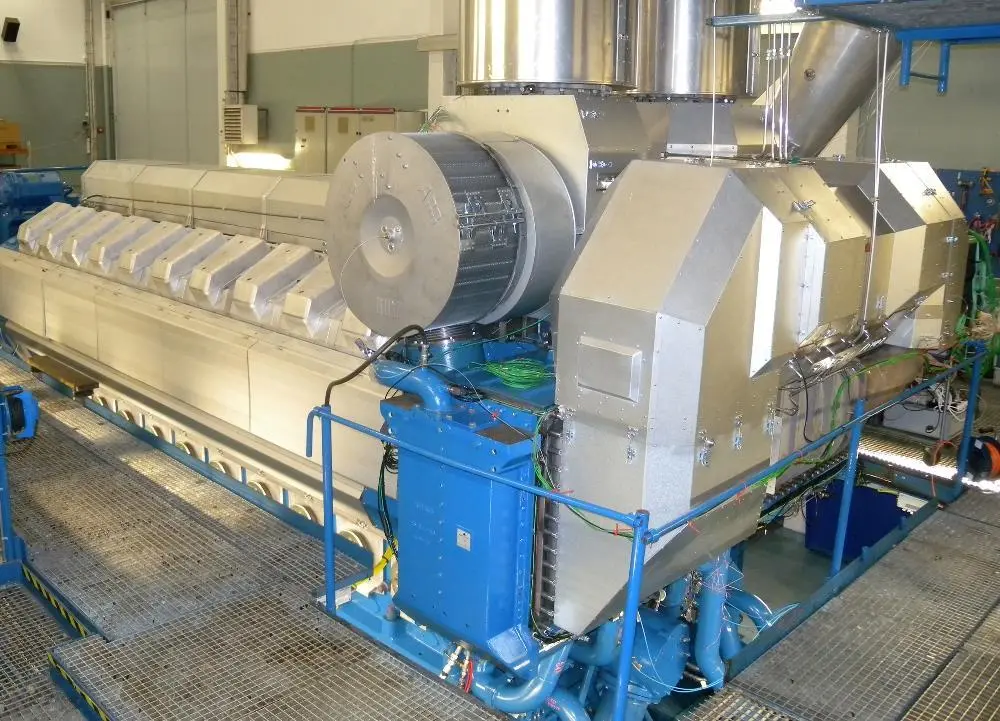
But why has it been so long to reach the marine sector?
Two stage turbocharging is not new, having been around for almost as long as single phase turbos but recently there’s been the combined pull of power density, efficiency and emission reductions drawing these items to the fore.
While Mr Bremer explains it might be some time before it is applied to the kinds of large, two-stroke engines powering bulk carriers or tankers, he sees two stage turbochargers as especially relevant to the offshore market “because for roughly the same footprint and weight you get around 20% more power and offshore support vessels are quite sensitive on both engine room and cargo space”.
Further, he notes: “Efficiency is more of an issue now that the ‘easy oil’ in shallow waters is becoming depleted and at least in some places we are facing truly huge mobile installations, many miles offshore”. He adds: “People used to be able to get by with a number of smaller boats, but now you need not just larger, but more efficient vessels.”
So, the time is ripe for two-stage turbocharged engines, especially as the oil majors are getting more interested in ‘green’ savings. But Mr Bremer admits the issue is keeping time with the engine builders; contrary to popular belief, they want consistency, not genius: “What is important to the engine manufacturers is that they do not move outside the known, proven parameters too much.”
And there is another, related issue that needs careful handling: single stage turbochargers push up the pressure by a factor of four, “but two-stage turbos result in a jump up to 8 or even 12 bar: you end up with much higher pressures in the cylinders so the bearings, pistons and cylinder head must be fit for the higher power density”.
So, he adds, “While we could deliver these turbochargers today, most engine builders are bringing up their specifications in incremental, digestible steps, changing the parameters a few percent at a time and minimising their risks.”
He concludes: “Development is a tricky thing: it’s not all about innovative ideas. Yes, we could go ahead alone but where would we be? We have to do it together, we have to learn together… this is progress.”
Related Articles
 PROPULSION
 GENERAL NEWS
 GENERAL NEWS