



Ukrainian shipbuilding on verge of crisis
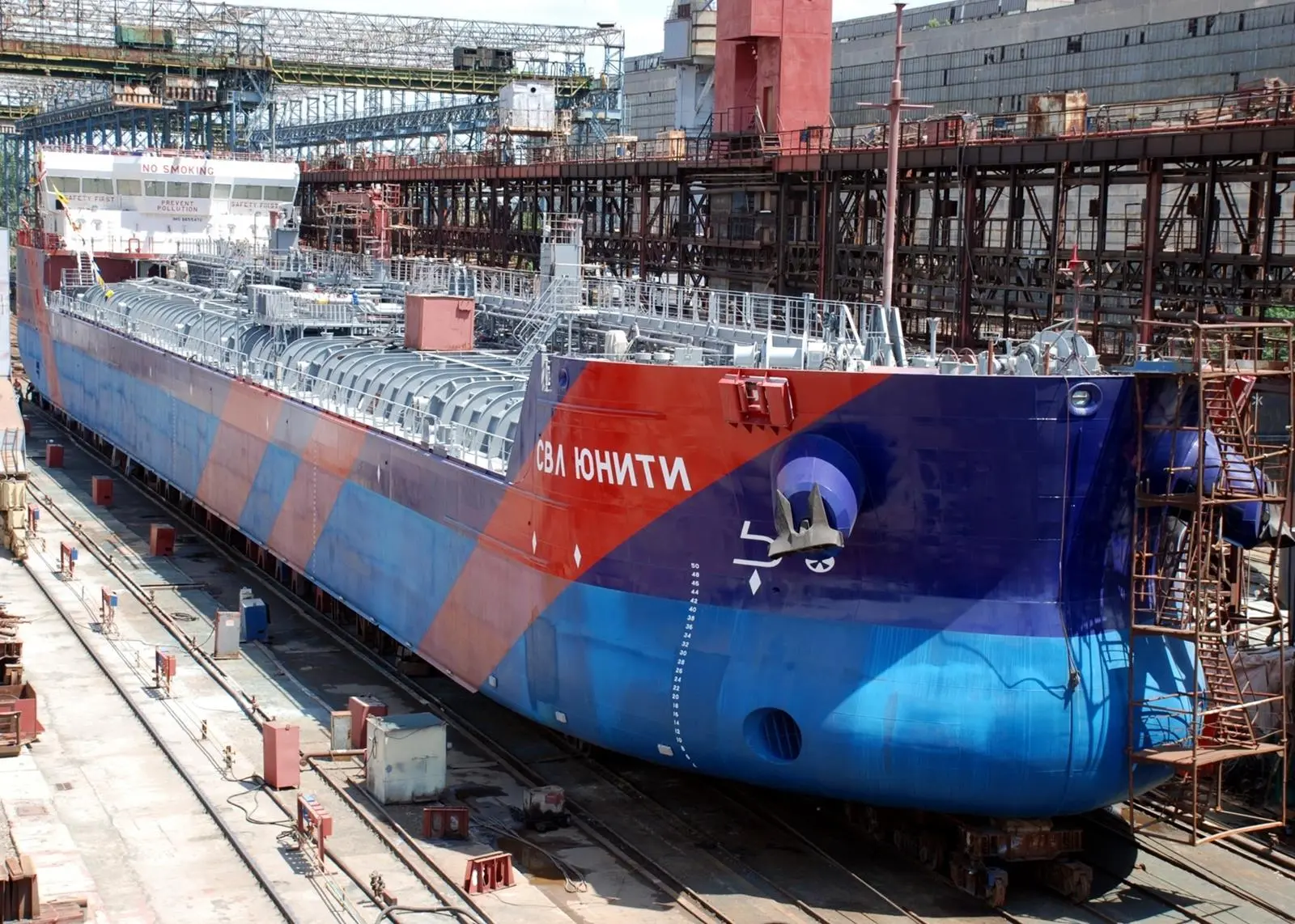
According to Alexander Vilkul, Ukraine’s former deputy prime minister, the local shipbuilding industry is on the verge of suspending operations and making massive redundancies. Vilkul said that shipbuilding output in Ukraine last year was just a tenth of annual production during the 1990s.
Ukraine accounts for around 30% of the shipbuilding assets from the former Soviet Union, according to an official spokesman for the Ukrainian Ministry of Economy, and retains a highly-skilled personnel.
Smart Maritime Group, one of Ukraine’s leading financial conglomerates and operator of the Black Sea and Kherson shipyards, valued contracts lost as a result of the current conflict at about US$200 million and growing. That figure is largely accounted for by business lost for Russian shipping companies. Many EU ship owners also prefer not to place orders on Ukrainian shipyards, in favour of Turkey or Romania.
In a recent statement Oleg Fedak, director general of Kherson Shipyard, reported that the company had lost a promising contract for the construction of fishing trawlers for Norwegian companies.
A spokesperson for the Black Sea Shipyard noted that the situation has been aggravated by the global decline of demand for vessels up to 50,000dwt – the main specialization of Ukrainian shipbuilders. Further development has also been hampered by insufficient support from the government, which is dealing with a much wider economic crisis.
Vasily Fedin, executive director of Smart Maritime Group, noted that at present Ukrainian banks provide loans with interest rates of 20%-25%, (substantially higher than many EU banks), making the domestic shipbuilding industry unprofitable. The lack of major shipping companies in the local market is another factor.
The Ukrainian government considering a suite of measures aimed at stabilising the shipbuilding situation. Among these are expected to be the removal of duties on imports of onboard equipment from the EU and the US, as well as the abolition of VAT.
The government also plans to provide tax relief and other incentives to the country’s leading shipbuilders, to be confirmed at a later date. It also plans to increase efforts to tackle corruption in the industry and to reduce bureaucratic and administrative obstacles.
Related Articles
 ALTERNATIVE FUELS & LUBRICANTS
 GENERAL NEWS
 GENERAL NEWS