



Class focus on structure and fuel
The International Association of Classification Societies (IACS) has received the final report issued in Japan by the Committee on Large Container Ship Safety (CLCSS), established in February 2014 by ClassNK and comprising Japanese yards building large container ships, shipping companies operating such ships and academic experts. It also invited the Japanese Ministry of Land, Infrastructure, Transport and Tourism and the Japanese National Maritime Research Institute as observers.
The report concludes that the container ship MOL Comfort break up possibly occurred because the sea loads exceeded the hull girder ultimate strength at the time of the casualty. IACS is to study the report as well as its recommendations, and will make public the results of this examination.
IACS had already established, at the beginning of 2014, its own expert group on structural safety of container ships, which carried out a post MOL Comfort review, also taking into account a number of previous casualties.
This work has resulted in the development of two new IACS Unified Requirements (URs):
• UR S11A which is a longitudinal strength standard for container ships
• URS 34 dealing with functional requirements for direct analysis by finite element methods, including a set of loading conditions.
This ongoing work had already taken into account the CLCSS recommendations: the URs do take into account the effect of lateral loads on bi-axial buckling of stiffened panels (a phenomenon preceding loss of ultimate) and whipping on vertical bending strength. Regarding the third recommendation of the CLCSS report (on representation of technical backgrounds), IACS has confirmed that class societies’ rules already consider the strength of the ship under specified operating and environmental conditions corresponding to its entire life.
These two important URs will be finalised in the coming months. It should be remembered that IACS Unified Requirements are minimum common technical requirements to be incorporated into the rules of each individual member and are not intended to address all the strength aspects of hull structures, which remain the function and responsibility of each class society.
Speed trial analysis
ClassNK has released its PrimeShip-GREEN/ProSTA software, making it the first society to develop software which analyses and calculates a ship’s speed trial results for Energy Efficient Design Index (EEDI) calculation in compliance with the latest IMO guidelines.
MARPOL Annex VI states one parameter to calculate EEDI is the ship’s speed in calm sea conditions based on the speed trial results. To eliminate the effects of external factors (wind, waves, current, water depth, sea temperature) and provide a way to analyse and calculate a ship’s speed in calm sea conditions, IMO assigned two methods in its Guidelines on survey and certification of the Energy Efficiency Design Index. Those were ISO 15016:2002 and the International Towing Tank Conference (ITTC) Recommended Procedures. ISO and ITTC have now worked together to create the new harmonised international standard ISO 15016:2015 which was published on 1 April 2015.
In addition to providing technical support for standard harmonisation, ClassNK has also developed support tools such as PrimeShip-GREEN/ProSTA for shipyards, owners, and the maritime industry to enable smooth adoption of the amended standard. The software enables ship designers to calculate the ship’s speed in compliance with ISO15016:2015 and reduces the workload required for EEDI calculation.
LNG bunkering
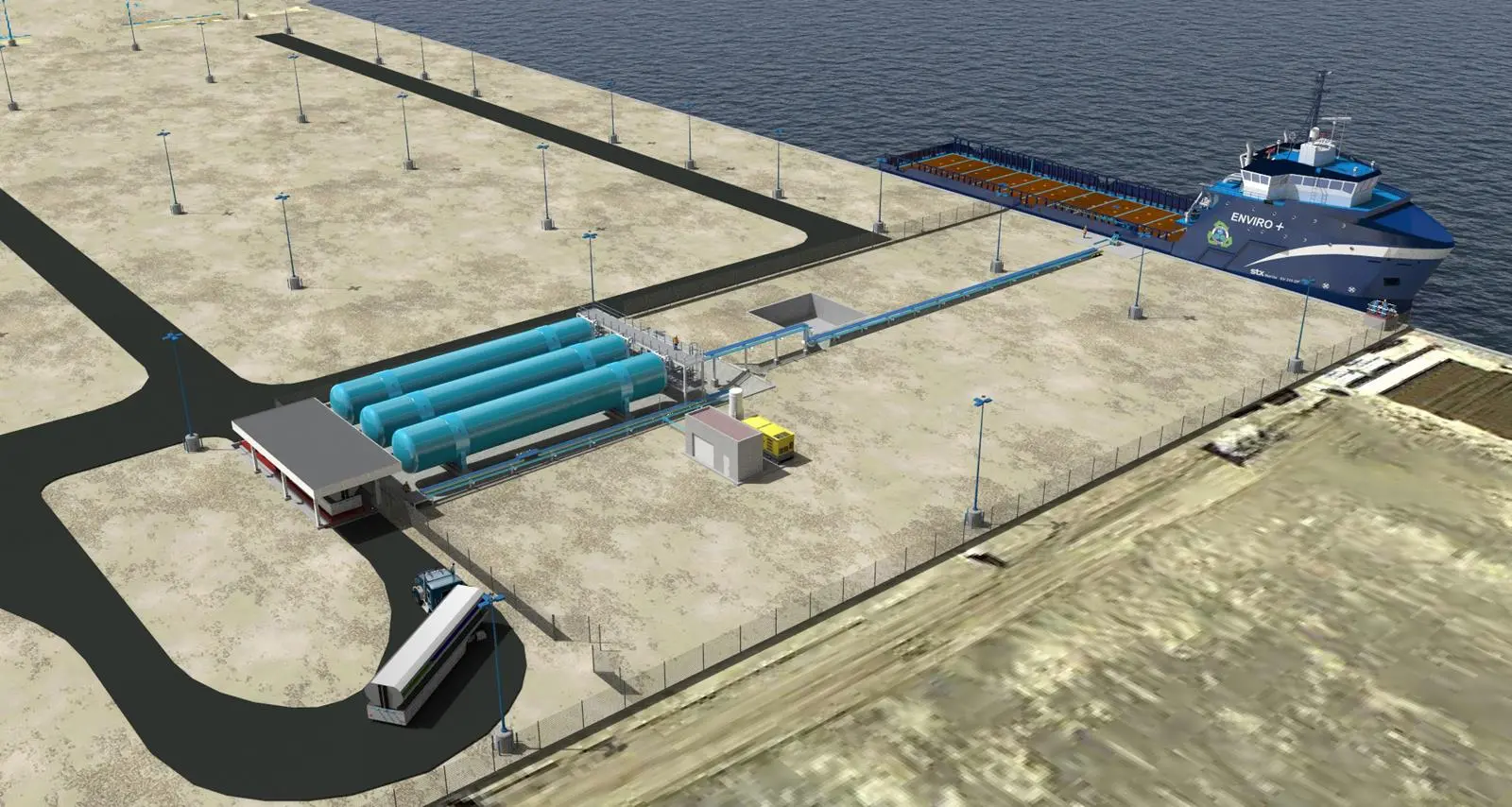
ABS has updated its guidance on LNG bunkering in North America to support increasingly rapid transition to the use of cleaner fuels. The second edition of its Bunkering of Liquefied Natural Gas-fueled Marine Vessels in North America offers new advice to owners and operators who may be looking to develop bunkering infrastructure in response to new emissions regulations.
“As the demand for LNG-fueled vessels and the supporting infrastructure continues to grow, ABS continues to offer the industries we serve with up-to-date information derived from the latest projects and our intimate knowledge of the evolving regulatory landscape in North America,” said Patrick Janssens, ABS’ Vice President, Global Gas Solutions. “Both the marine and offshore industries are committed to using cleaner fuels, and we are committed to supporting our clients and members with that technical transition.”
The first edition of the report was published in March 2014. Major updates in the second edition include important lessons learned from first adopters of LNG-fueled vessels and LNG bunkering projects, a ‘project roadmap’ guide of the associated regulatory, stakeholder and technical issues, and an in depth port directory highlighting ongoing projects and local development processes.
ABS has won the classification contracts for the world’s first LNG-fuelled containership, North America’s first LNG barge, the world’s first very large ethane carrier, the world’s first compressed natural gas carrier and the first dual-fueled OSV built in North America.
“This report captures our diverse practical knowledge in the gas sector and many of the lessons learned since our first edition a year ago. It is a valuable tool to those companies considering using or supplying LNG for fuel,” Roy Bleiberg, Director of Global Gas Solutions at ABS, says. “While it may not be suitable for everyone, LNG should be considered as a fuel source by all industry. It’s not only suitable for companies interested in the potential economic benefits or those whose ships will be trading in emissions control areas; it is also for those companies who are keen to establish and promote their environmental stewardship.”
Emissions guidance
With key dates looming – 2016 NOx compliance and a 2018 review of fuel availability ahead of a global cap for SOx emissions – Lloyd Register’s new guidelines and updated technical information supports operators’ investment decisions.
The new guidance addresses operational and in-service considerations reflecting further accumulated experience from working closely with clients, industry groups and regulators. As well as a focus on exhaust gas treatment (scrubbers) the guidance also examines the wider scope of options for SOx/NOx compliance beyond exhaust gas treatment.
Since an earlier version of this report was issued in 2012, early adopters of the technology, mainly passenger ship and ferry operators, have committed to fleet-wide scrubber implementation programmes. In the majority of the tanker, bulk carrier and container segments the uptake of scrubber technology remains slow. With shorter periods inside Emission Control Areas (ECAs), lower fuel consumption (especially due to slow steaming) and typically lower asset residual values, the business case for installing scrubber technology on deep sea tank, bulk or container ships is not, yet, either strong enough or urgent enough.
The bunker price collapse during 2014 has been another factor. While the price difference between heavy fuel and distillates has remained relatively constant, the fuel costs inside ECAs have reduced, giving operators more time to consider their options.
Fishing vessels
Fishing remains one of the most dangerous industries in the world; for example, in the US the fatality rate is 30 times higher than the average of all industries. To address this, US legislation requires that all new fishing vessels longer than 50 feet must be built to classification rules. Currently DNV GL is the only society to develop rules specifically for the US domestic fishing fleet, covering how fishing vessels are designed, built and maintained for safety.
The US is the fifth largest fishing nation in the world, with approximately 110,000 commercial vessels. This means that there are more than a hundred thousand US fishermen who have their daily work in fishing vessels that often operate in harsh conditions and rough weather.
According to Joar Bengaard who leads DNV GL’s initiative for US fishing vessels: “We have studied the main risks for fishing vessels. They include lack of watertight subdivision and integrity, shifting loads, heavy nets, flooding, fires, icing, equipment failure and structural modifications. These are all addressed in our rules. We also know that time is money for a fishing vessel, so a clear priority has been to make sure the classification process is as effective, yet as unobtrusive as possible.”
DNV GL covers some 1,000 fishing vessels. Whereas regular classification rules and processes are designed for much bigger and more complex ships, DNV GL decided to develop rules specific for US fishing vessels.
Simplifying and optimising the rules for smaller fishing vessels has been done in discussion with the industry, looking at the entire process: Design reviews, quality approvals of equipment, surveys at yards and onboard the vessels, with the object of achieving safety goals for the vessel and its crew, as well as maintaining efficient operations.
“When the US Congress mandated this requirement in 2010, a fishing vessel sank every third day. As part of the offshore and maritime cluster in the US, we have since then worked with the US Coast Guard and the fishing vessel industry to effectively address the most important risks, while translating the industry’s experiences and concerns into effective rules that balance safety and cost considerations,” says Paal Johansen, DNV GL’s regional director, Americas.
Related Articles
 METHANOL
 MONITORING, CONTROL & DIGITALISATION
 MONITORING, CONTROL & DIGITALISATION