



‘Whale tail’ wave foil shows promise
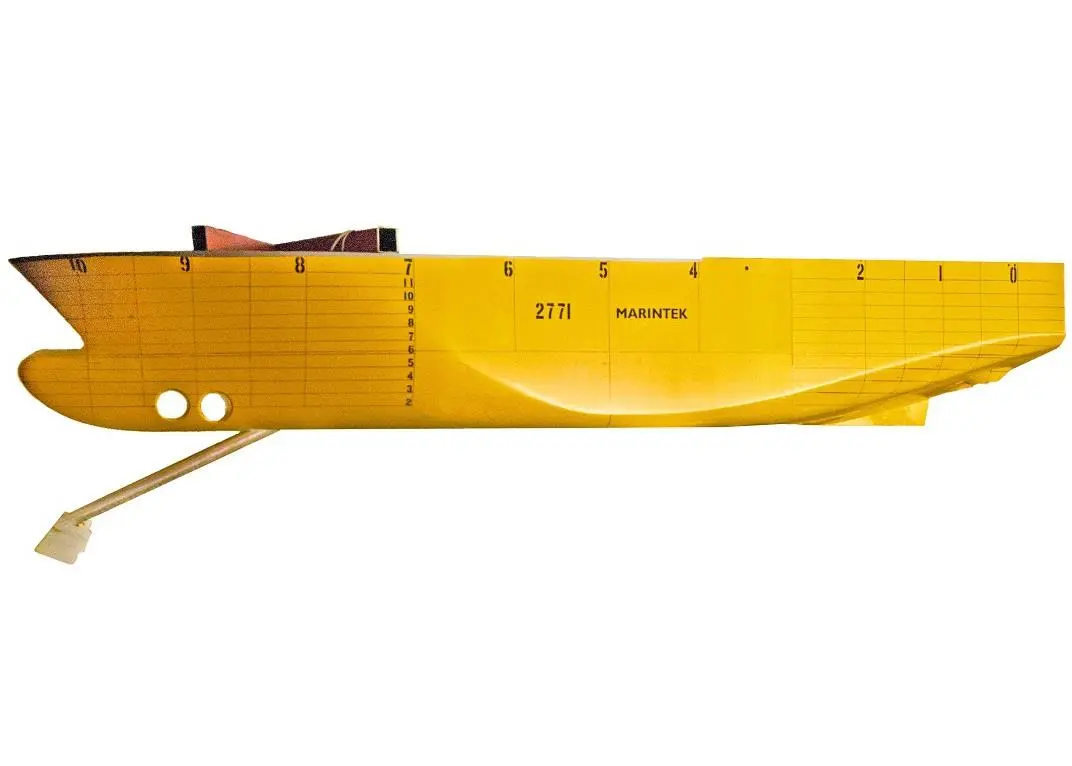
In tests using a 1:16.57 ship model, the device – two wings or fins that move up and down as waves hit the vessel, propelling it forward – has been shown to reduce resistance by 9-17% at wave heights of 3m and under. Heaving and pitching were also reduced by a similar amount.
Project leader Eirik Bøckmann, a postdoctoral fellow at the department of marine technology at NTNU, anticipated that hull optimisation for the foils would improve performance further. He added that further testing and examination of market demand is required, as well as establishing the resilience of the fins and their impact on ship stability if damaged.
The project is supported by Rolls-Royce (a long-term collaborator with NTNU and Marintek), Seaspeed Marine Consulting and fuel efficiency and carbon reduction specialist MOST. Alastair Sim, a technologist at Rolls-Royce’s Strategic Research Centre, noted that the wave foil is similar to the company’s existing roll stabilisers.
The project began in 2013. Testing in Marintek’s 200m-long tank uses cameras and advanced measuring equipment to show how the model moves, resistance against the model and how changes affect it. Since the towing tank opened at the Trondheim site in 1939 it has hosted tests on 3,000 ship models and 1,250 propellers.
Related Articles
 PROPULSION
 GENERAL NEWS
 GENERAL NEWS