



Mathieu de Tugny: Technology ‘is only the entry permit’
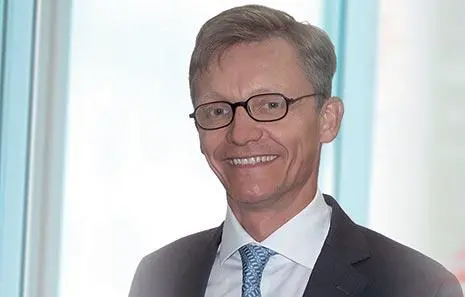
He should be forgiven: back in 1994 his first role with BV in its Electrical and Automation section coincided with the oncoming wave of research & development: “It was the early days of shipboard automation and I assumed it was the most important thing.”
While a spell in Korea helped teach him the importance of build considerations, it wasn’t till his role shifted to a commercial one that he really came down to earth with a bump: “I had to change my ideas quickly when BV appointed me containership and bulk carrier manager in 2000, as it was essentially a commercial, not technical role.” It meant not only “getting a grip on what owners really want from their ships and from class” but equally, waking up to the ever-present financial considerations.
It was the start of a big shift for de Tugny: “I began, then, to see technology as a means to an end rather than an end in itself, to realise that there are always lots of ways of accomplishing anything – and not all of them can be labelled right or wrong.”
Moreover, he says in order to help technical teams deliver what was wanted, “I had to learn to listen to shipowners, to respect their traditions and knowledge”, and adds that sharing ideas with people who have a “wide view of the market” can sometimes be invaluable.
Roles that proved to be as different as chalk and cheese followed: the first five years was spent as chief executive for Marine France, “which meant handling key long-term clients who knew BV well and had strong expectations of it”.
The second, “which lifted me completely out of my comfort zone” meant working in Houston, Texas, as Marine Chief Executive for the United States and Canada.
“I was suddenly exposed to two things: first to a lot of offshore activity and second to a market which did not know BV well and in which there were very strong competitors.” Further, his timing meant he landed at the same time as the global financial crash.
However, he says despite the parlous state of the world, the offshore side was quickly developing in sophistication especially as far as his old friends, the automated systems, were concerned. It meant doing his homework: “I had to be sure of what Bureau Veritas could do technically and to learn how to sell that to owners and yards who had no tradition of working with us.”
De Tugny is enthusiastic about living in the US: beyond giving him a global perspective on BV, he says he loved “the ‘can-do’ attitude”. However, the experience notched up another level of realism: “That was where I learnt that having good technology is only an entry permit. They key to success in shipping and offshore is building trust, the technology is simply a given…”
In 2012 de Tugny’s life saw yet another massive shift with his appointment as vice president of BV’s Marine & Offshore South Asia Zone. A particularly important arena for BV, it’s home to many major ship and rig-owning clients and the attendant shipyards. But it presented de Tugny with a very different ball game.
“It involved a massive cultural change from the US way of doing things to the Asian way,” he admits, although he’d already had some experience of providing “round the clock” assistance. However, he says while “expectations of service are very high in Asia, it’s pure energy is infectious – and it was very exciting to work in an area with fast-growing companies that hadn’t been held back by the slowdown experienced by the more developed economies”.
It was during this time that he saw the start of huge new offshore gas ventures. While he’d seen a rapid rise in ship scale before, he admits: “I always thought we were extending existing technology and experience rather than inventing new ways of doing things”.
This time, it was different. “The offshore projects made me appreciate how in fact we are really innovating technically now, pushing the frontiers of what we do and finding ways to keep innovation safe without cramping development.”
Now back in Paris, he’s kept this link, becoming senior vice president in charge of offshore activities within the Marine & Offshore Operating Group. And it’s because of, not despite, the sector’s difficulties that he believes the class societies and BV specifically can prove their worth: “Owners, yards and energy companies need to nail down as many uncertainties as possible. That means understanding the regulatory risk, controlling technical risk and having the right information at the right time to make efficient business decisions.”
In short: “The more volatile the market, the more a strong technical and risk-management partner becomes vital.” But he concludes a human touch is still necessary even in the midst of all this hard going: it’s important to deliver resources, “with a smile as well as on time”.
Related Articles
 ALTERNATIVE FUELS & LUBRICANTS
 GENERAL NEWS
 GENERAL NEWS