



Debasis Mazumdar: Business acumen alongside the safety message
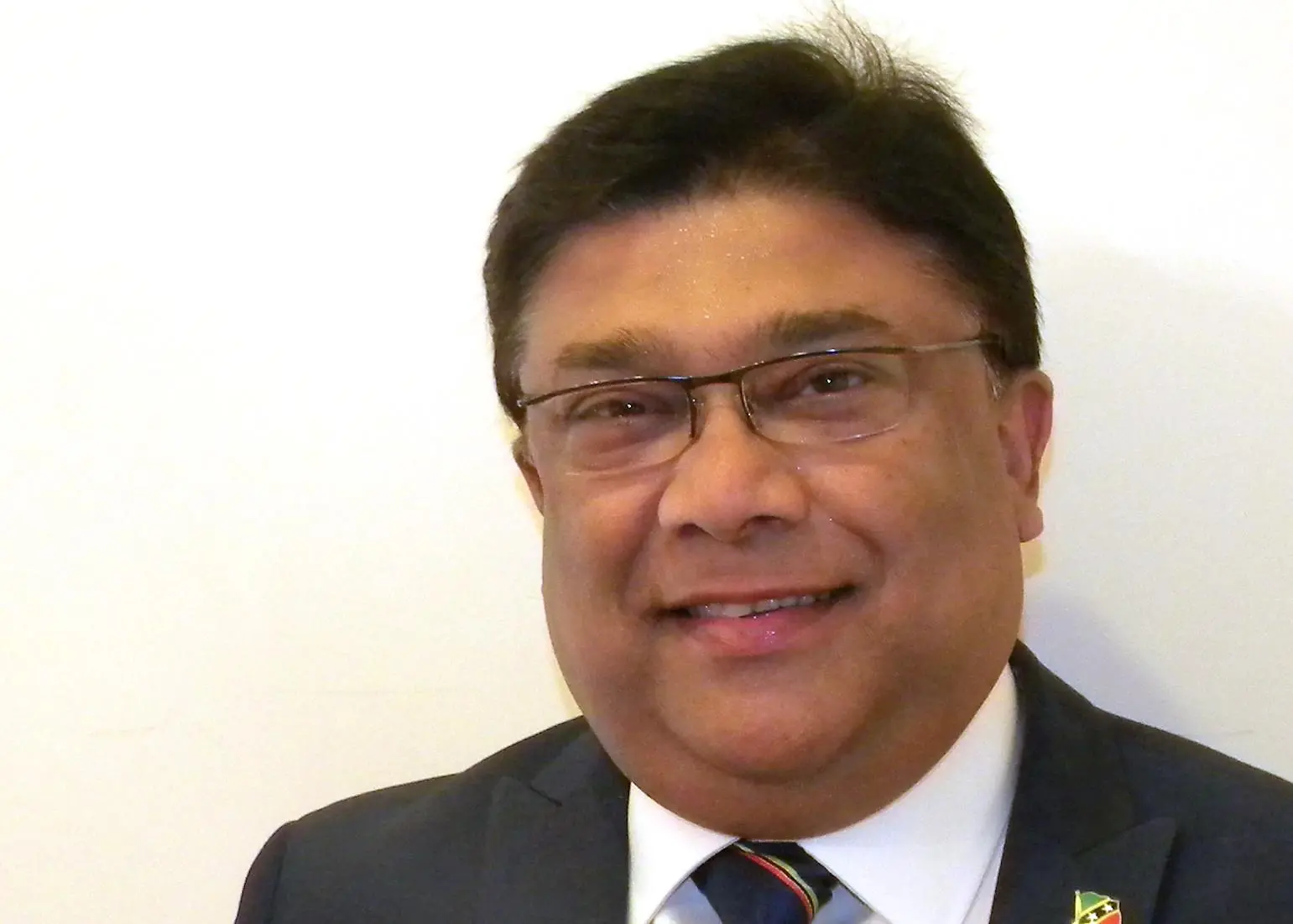
It’s a tough call. Both class surveyors and flag state inspectors “are sandwiched between the business and the standards without being able to compromise on either side” explains Debasis Mazumdar, “I had to learn how to be diplomatic but firm.”
It’s been a steep climb upward for Mr Mazumdar: he made chief engineer at the tender age of 28 and stepped into a land-based surveying job for the American Bureau of Shipping at 32 “partly in order to help with the children”. It was while he was posted to Dubai that he realised he was a good position to be proactive: “Since a classification society provides certification, I went about gaining ISO auditor qualifications so I could add to the services on offer.”
However, it was a near miss in Dubai in March 2002 that shook him, and his priorities, to the bone: “I was surveying a tanker in a dry dock that had come in for repairs when a call came through asking if I could just drop everything and have a quick look at a vessel in a neighbouring yard; that call saved my life as a few moments after I’d stepped out the dry dock gates collapsed: many people I had been working with just 20 minutes before were drowned.”
Alone in his hotel room he admits “the whole thing kept going round and around in my mind”, and while there was little he could have done at the time, it sparked a fundamental re-evaluation. “I started to think about what responsibility I had, what I could do to help save people’s lives”. Not long after he landed on the shores of the UK (with a suitcase in one hand) to pursue the meaning behind the all-too-easy phrase ‘safety culture’ but somehow determination must have shown through: just five short years later he became head of the Quality Assurance department for the UK Maritime & Coastguard Agency.
Despite this, he’s clear you need business acumen alongside the safety message. “The ISO department had been running a deficit, but I found out where the losses were, and, given my experience in ABS, I got the organisation on the right footing to certify vessels and shipping companies against the ISO 9000 and ISO 14000 standards.” The effort got results: losses turned into profits. Initiatives to support face to face meetings and a 24/7 culture – as ships still need to be registered China even if that’s the middle of the night in the UK – lead him to becoming head of the UK Ship Register in June 2011 and he had the satisfaction of seeing the UK flag reach a height of 18m gross tonnes in 2012.
Most recently he has joined a very new flag: St Kitts and Nevis. He points out that despite media conjecture, it wasn’t so much about wanting to leave the UK establishment “as being able to make more of a difference to the maritime world… Something I can help to grow by establishing strong foundations and a solid framework”.
What are the next steps? “On the financial side I need to help the organisation turn a profit. But at the same time I have to take the flag from the ‘grey list’ to the so-called ‘white list’; in fact they’re doing well in getting off the Paris and Tokyo MOU’s so-called black list – where every flag starts out – in just 10 years. It’s all about performance and some flags don’t make it even given twice that long.”
He adds: “The first thing I need to do is to get into direct communication with the ship owners: I want to be open enough that anyone can just pick up the phone and contact me. But I’m on the lookout for registrars with a technical, seagoing background; it’s much more than just an agent’s job, they will be entrusted with government authority.” Further he explains that “a lot rests on the competence of the flag state inspectors” as they will have to pick up any vessel deficiencies, preventing detentions which result in “the flag slipping back to the blacklist”.
However, he has a great deal of ambition for St Kitts and Nevis: “I don’t necessarily look just at what’s happening tomorrow, I chalk out program to look at what’s happening in five years. This tiny speck of an island has between 600 and 700 vessels, and despite its location in the Caribbean, it has all the culture of fairness and integrity you’d expect to see in London so I believe the flag has global potential; I wouldn’t be putting myself behind it otherwise.”
So, what of the future? “I’m in a position with a young organisation where I am not so tied into bureaucracy and I can be more open to the maritime world; it’s important for me to pass on what I have learned. But the biggest issue that I can see is a need to bridge the health and safety culture gap between the West and Asia. For example, if an Asian port state control officer sees a patch of oil spilled on the deck, he will probably just carefully step around it. On the other hand his counterpart in the UK would alert the captain, get it cleaned up… and log a deficiency. It’s not just a matter of abiding by the rules, it’s actually more about care and consideration for others.”
By Stevie Knight
Related Articles
 ALTERNATIVE FUELS & LUBRICANTS
 GENERAL NEWS
 GENERAL NEWS