



Advanced sensors on trial for Finferries
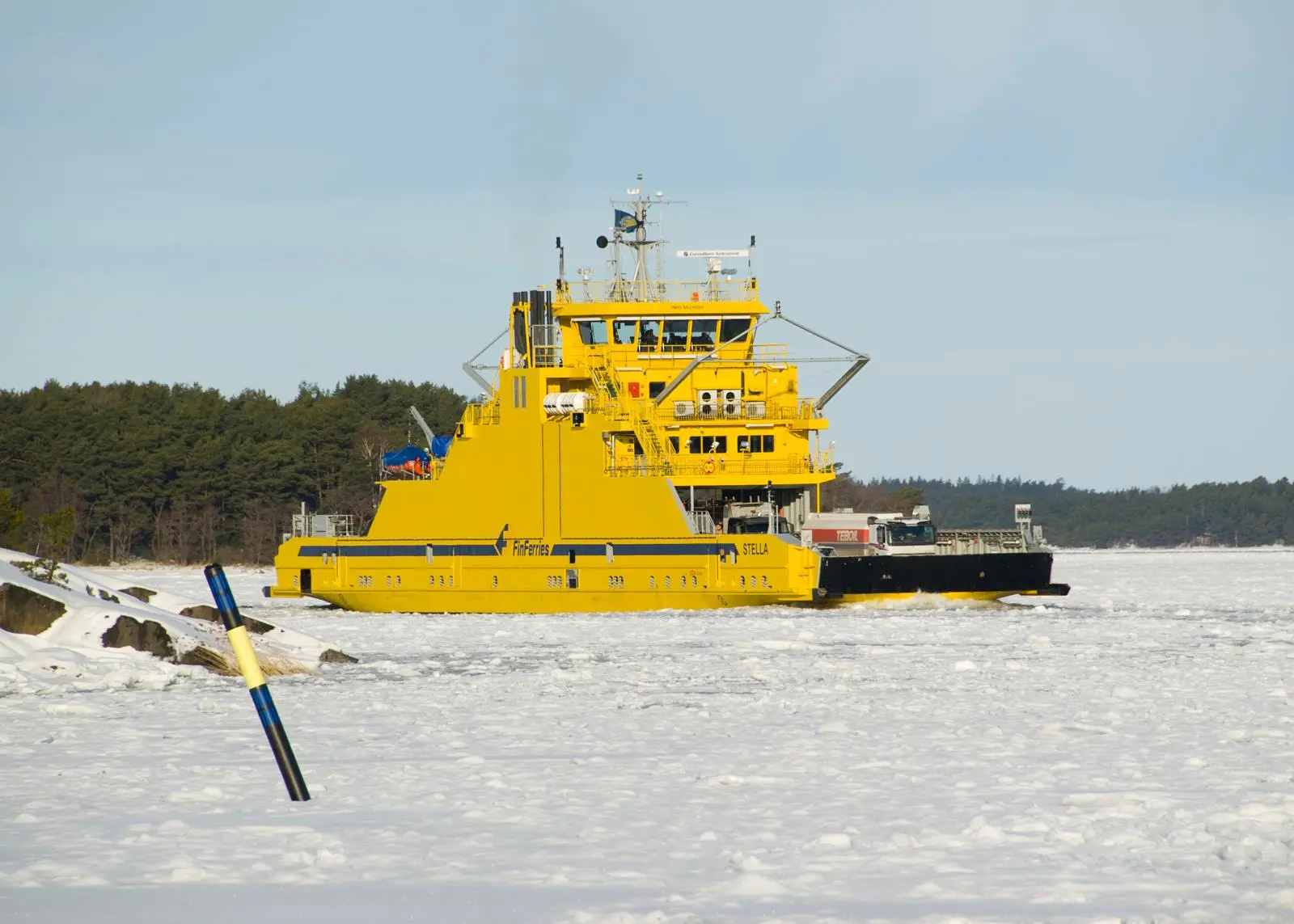
The Finferries vessel Stella will be fitted with high-tech cameras (both visual field and thermal imaging) and various radar systems, including laser guided radar or Lidar, for at least a year as part of the Advanced Autonomous Waterborne Applications (AAWA) project.
Combining the technologies is crucial to the advanced situational awareness that will be needed if the project is to succeed in launching a remote controlled and partially autonomous demonstrator vessel by 2018. The research findings will also be used when the project team starts to develop control algorithms for autonomous vessel operation.
“We will be able to capture data for a long time under different conditions,” said Jonne Poikonen, senior research fellow at the University of Turku’s Technology Research Center. “At first we will just capture the data and store it, for offline analysis so that we can develop the control algorithms for various situations.”
Finferries safety and quality manager Pasi Roos said: “Our objective is to modernise our operations, and new technological innovations and safety play a key role in this development. We want to be involved in AAWA because the decision making processes being studied are those that will reduce the possibility of human error in the future.”
The ferry operates in the southwest part of Finland. “The good thing is it operates in a diverse profile, crossing the main fairway to Turku at least once per voyage,” said Esa Jokioinen, head of Rolls-Royce’s Blue Ocean innovation team. “This means we should see [many different situations] and also the connectivity across the whole route is good, so it will purely be a sensor test.”
Roos told The Motorship that the company would wait until the results of the sensor testing before deciding whether to progress further down the route to autonomous vessels.
Finferries transports around 10 million passengers and 4-5 million vehicles a year, mainly on domestic routes, with some international commuter services in the Finland archipelago.
The AAWA project, coordinated by Rolls-Royce and with support from Finnish Funding Agency for Technology and Innovation Tekes, also involves Inmarsat, NAPA, DNV GL and Deltamarin, as well as five universities.
The Motorship will bring more detail from the AAWA conference later this week.
Related Articles
 ALTERNATIVE FUELS & LUBRICANTS
 GENERAL NEWS
 GENERAL NEWS