



Hatch cover maintenance planning cuts drydocking costs
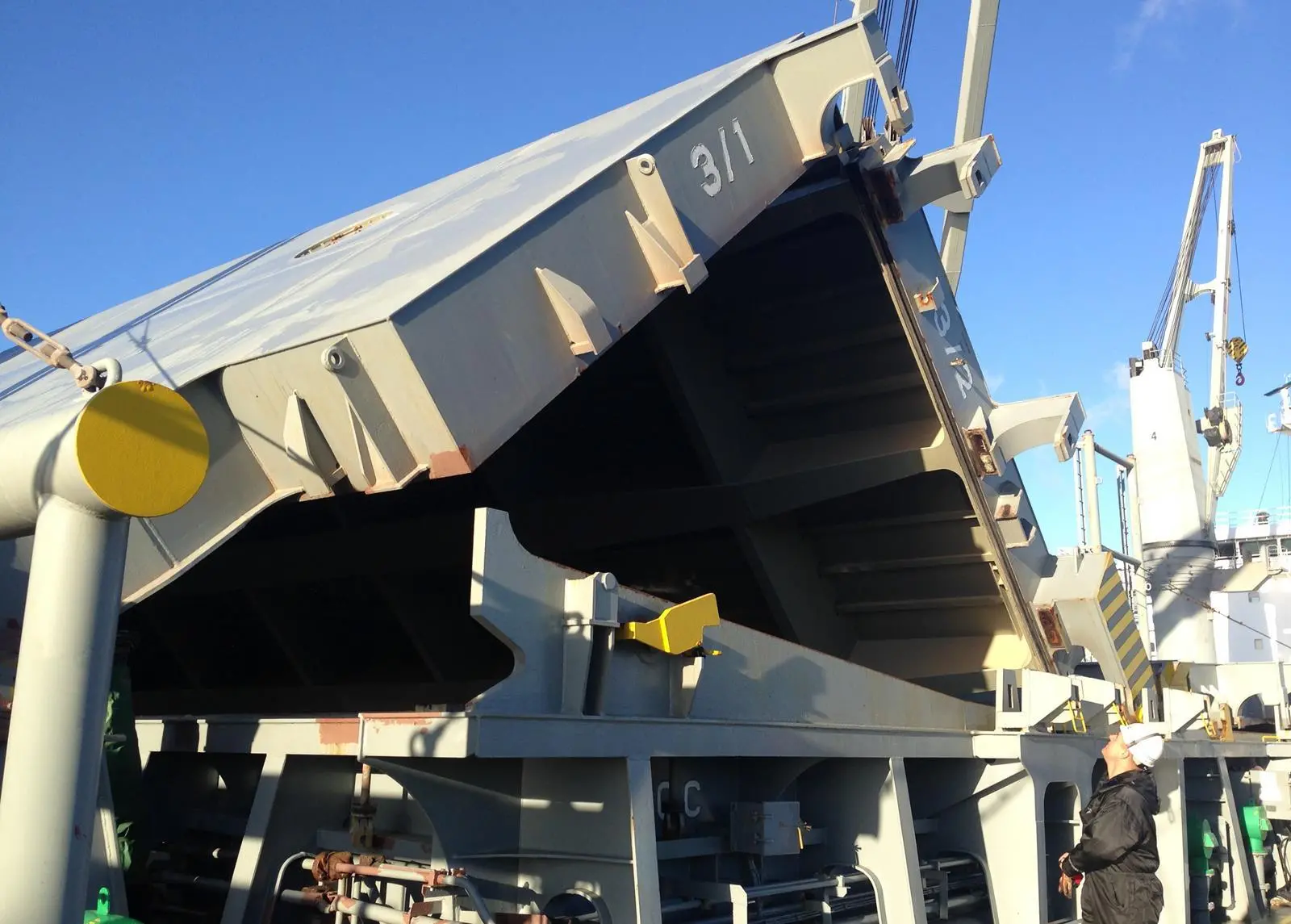
The company has seen growing demand for maintenance project management as companies seek to reduce outgoings, with hatch cover work typically representing 10-15% of drydocking costs when bigger maintenance needs to done. But it noted that some ship operators are still putting off maintenance that could save them money over the lifecycle of the vessel.
“The ten-year drydock is particularly important as the structure of hatch covers may need repair and the wear items need to be replaced by then,” said Peter Peltenburg, CEO, Cargo Care Solutions. “If the owner performs maintenance when it is needed, the hatch covers might be fine for another ten years. If they delay, the cost of work – and of extra steel needed – during future drydockings can rise quickly.”
With hatch cover maintenance representing anywhere between €200,000-400,000 for an average sized container ship (depending on type of work and the location of the shipyard), optimising cost is essential in the current economic climate. Peltenburg reported that Cargo Care Systems had carried out projects with several big ship operators.
“We have specialist expertise in this area, and know what needs doing and how long it will take,” he said. “That means we can pre-plan works for the drydocking giving the ship operator input for building the correct scope to the shipyards which in the end can avoid high unexpected costs while on the shipyard. During the repair period we manage the process, supervise the works and provide daily updates to the representatives of the operator.”
With each cover weighing up to several tonnes, and with large container ships having more than 40 covers, the logistics of removing, inspecting and repairing hatch covers can be a complicated task. Cargo Care Solutions is also in the process of compiling data to show how proper planning and performance of maintenance can save ship owners money.
Cargo Care Solutions’ project management capabilities include budgeting, parts delivery and follow up, as well as carrying out inspections (including ultrasonic weather-tightness testing) and repair work.
Efficient planning of hatch cover maintenance is also becoming more important as ship sizes increase, Peltenburg noted. Hatch covers need to be removed and stored at the shipyard, meaning that for a container ship almost the same surface area as the vessel’s main deck is needed to store hatch covers.
The ten-year drydockings of vast numbers of vessels built in the shipbuilding boom years of 2003-2008 poses another logistical challenge for ship repair yards, according to Peltenburg. To keep docking time limited it is important to build a tight schedule.
Meanwhile the company reported that its range of UltraPads (polymer hatch cover pad) has performed well since their launch in 2012. The DNV GL-approved pads are used to replace the original bronze-teflon type of hatch cover support pads. Hatch cover support pads reduce friction and stress on hatch covers and coaming structure caused by the rolling and pitching of the ship and the pressure caused by the weight of containers stacked on the hatch covers. The UltraPads are also significantly cheaper than those made from bronze, savings can go up to 40-50%
“Many of the biggest container lines use UltraPads,” said Peltenburg. “Analysis of similar products shows a lifetime of ten years. The first pads we installed are coming up for their five-year dockings and show hardly any wear. With tests showing 50% less wear then similar products we anticipate they will last for 15-20 years.”
Cargo Care Solutions is now collaborating with marine maintenance service providers Unimars Technical Services (UTS) to extend sales of its products including UltraPad. The arrangement will result in the products being made available in the Baltic States, Russia, Ukraine, Kazakhstan, Georgia, Azerbaijan and Turkmenistan.
Peltenburg added: “We are excited to expand our portfolio into new European countries. Our partnership with UTS will bring CCS’s products and services to new regions, and meets the growing need we are seeing for service teams to assist our customers during the docking process.”
Related Articles
 EMISSIONS REDUCTION TECHNOLOGY
 ALTERNATIVE FUELS & LUBRICANTS
 ALTERNATIVE FUELS & LUBRICANTS