



Fuelling future efficiencies for the UK fleet
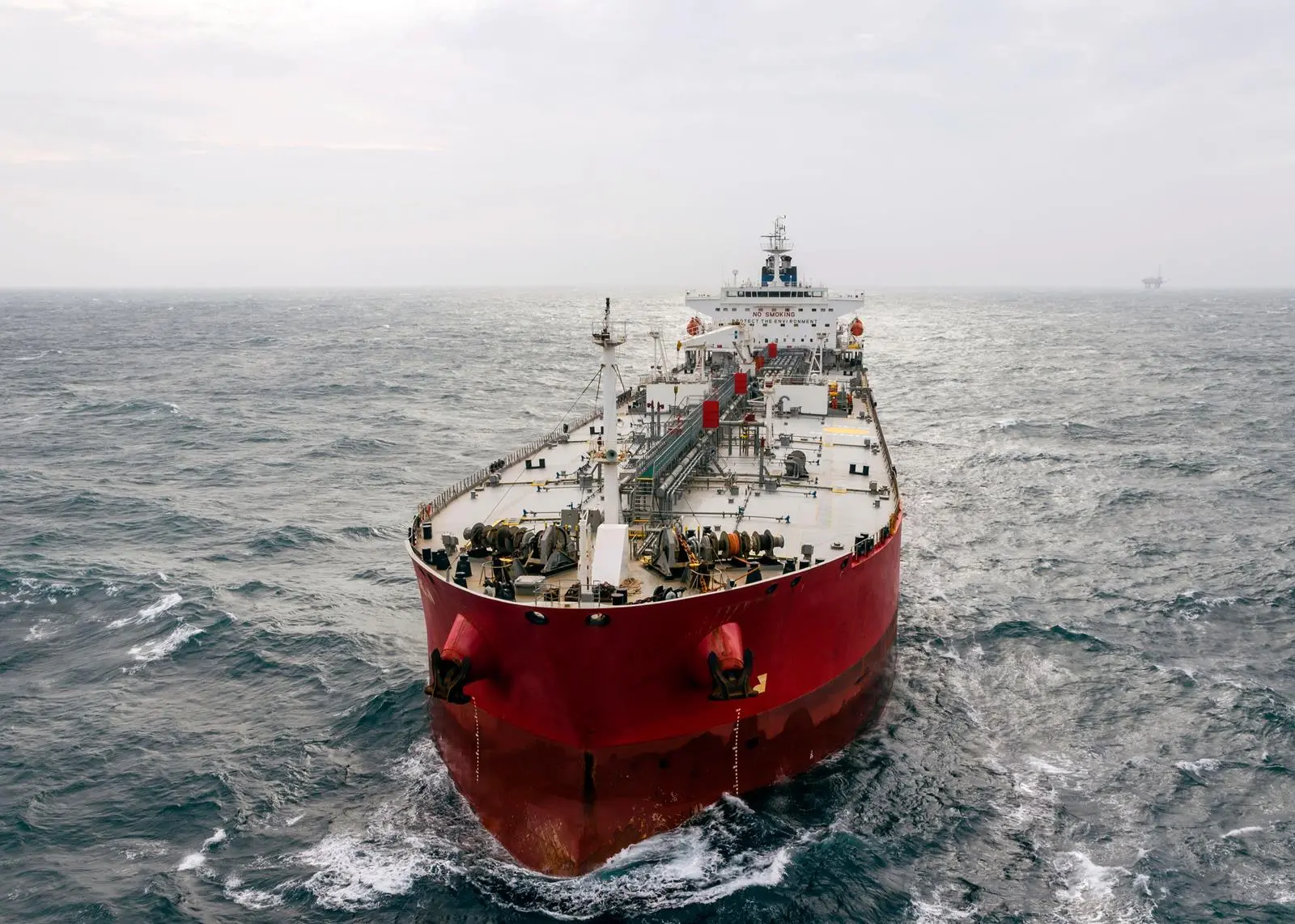
The UK’s heavy-duty vehicle sector – including ships, trucks, agricultural and public transport – account for just eight percent of the UK’s CO2 emissions. Left unchecked, that figure is projected to soar to around 30% by 2050, driven by growing transportation demands and faster de-carbonisation in other sectors. For a government that hopes to reduce the nation’s emissions by 80% by that date, that would be an unacceptable outcome.
The response, in part, is the Energy Technologies Institute (ETI), a public private partnership that includes commercial concerns (among them Rolls-Royce, Caterpillar, Shell, BP and EDF) alongside government agencies. Its aim is to research carbon-reducing technologies with the twin goals of informing UK policy and developing promising solutions. And after an early focus on sectors including energy, construction and road transport, the group now has shipping in its sights.
Over the past three months the institute has launched three tenders for technology partners in some interesting areas: high-efficiency propulsion systems, Flettner rotors and waste heat recovery systems. According to Andrew Scott, marine programme manager at ETI, those areas represent promising ground for fuel efficiencies of around 8-10% each, with the hope of generating a total saving of around 30% by combining the technologies.
“We are looking for solutions at an earlier stage of development than those commercial organisations would explore,” he says. “Those companies would look for technologies with a two to five year payback period. We are looking at technologies that might have a payback period of 15-20 years; very new concepts or, in the case of Flettner rotors for example, concepts that have been around for a while but about which we have insufficient operational, real world fuel-saving insights.”
Efficiency over decarbonisation
Those selection criteria led the institute to drop one potentially promising area – dual-fuel engines – due to the rapid strides industry players are now making in the sector. It would have been the only research avenue to touch on alternative fuels; unlike in other industries, the marine projects focus on energy efficiencies as opposed to decarbonisation – a concession to the realities of shipping that Scott and the ETI partners identified as necessary early on in the process.
In phase one of the marine project, ETI worked with Rolls-Royce and University College of London to create a shipping model focused on activity of vessels involved in the UK’s sea-based transportation market. “What became clear is that shipping is unlikely to de-carbonise to the same extent as other industries,” says Scott. “Hydrocarbons provide a very dense fuel source and emissions reductions are far more likely to come from energy efficiency.”
If some of the chosen technologies sound like old news, the difference is in the level of functionality ETI is hoping to prove through its projects. So while there are a handful of Flettner rotor projects underway – notably the Norsepower installation aboard Bore’s Estraden – there are none on ocean-going container vessels of the size that ETI hopes to trial (60,000dwt).
“We hope that by testing onboard a ship of that size – a very different proposition to a ro-ro ferry – we will be able to dispel some of the concerns about how ship operations and port operations might be affected,” explains Scott. “It’s not just about verifying the fuel savings. The operational experience we gain will be equally valuable.”
The waste heat recovery system project is a similar case in point. While such systems have been around for nearly a decade, they are mainly installed on long-range vessels because of the amount of time taken for them to warm up and stabilise. That’s fine for container ships, bulk carriers and tankers, but less useful for the short sea craft that make up the majority of the UK (and global) fleet. The ETI believes there is the potential to make significant strides in this direction.
Again, operational experience will be crucial. “We are looking for solutions that are easy to install, easy to operate and have little impact on crewing – on either the number of crew needed or the competencies required to use the equipment,” Scott reports.
Broad propulsion brief
The widest brief by far of the three projects is for the ‘highly efficient propulsion system”. There, ETI is seeking a system that can deliver fuel efficiencies of greater than 8% – a level that Scott says allows economies to be verified with confidence “above the noise” – across a wide range of vessels. This is perhaps the biggest challenge, for technology providers will need to show the propulsion system’s application across a set of vessels representative of the UK fleet, from an 87.4m long, 3,000dwt offshore support vessel/anchor handler to a 200m long, 40,000dwt dry bulk carrier. Throw in a cross-Channel ro-pax ferry, at 180m length and 9,000dwt, and it is clear that the project is hoping to bridge a chasm usually filled by a wide range of specialised propulsion systems, from single four-strokes through diesel-electric configurations to low-speed engines.
Beyond that, the specific requirements are left deliberately broad. The institute and its partners are looking for a system solution, rather than a range of additional features. And the ability to retrofit will be a critical evaluation criteria. A technology that can only be built into a new vessel will not have the wide applicability needed to make a meaningful impact on national emission reduction targets.
There is also what Scott calls ‘additionality’; projects where ETI’s involvement will have a significant impact on the speed at which solutions come to the market. As an investor in the new technologies – with £3 million earmarked for the propulsion project, for example – ETI and its commercial partners will be seeking a return on their outlay.
What form that value takes will depend on the project and party. For commercial partners, early experience of new technologies will be important, as will the prospect of holding a stake in a sellable product. For the institute itself, the value sought is slightly softer.
Scott recalls how one ETI project, in a different sector, generated a financial return for the institute when the product was bought out by a major corporation. “That’s not usual, nor is it our prime concern,” he explains. Encouraging the uptake of promising new technologies and informing the UK government’s emissions policy is of far greater importance.
“Makers in industry and government need to know what is achievable in the marine sector, and when decisions need to be made,” says Scott. “It might seem like 2050 is a long time away, but if you consider that much of the fleet is likely to be built around 2030, then you are instantly looking not at a 30-year timeframe, but at decisions that have to be taken on installations within 15 years.”
Once the current round of tenders is completed, ETI hopes to sign contracts with technology providers, trial ship operators and (potentially) charterers by early next year. Allowing a year each for construction/installation and the trial period, the first results are expected in late 2018 or early 2019.
Overall, ETI hopes that the suite of marine solutions it is looking to develop will allow for fuel efficiencies of around 30%. Combined with the insights that it will gain and share from the trials, that would represent a sizeable contribution to the emissions reduction ambitions of both the UK government and, potentially, the wider shipping industry.
Related Articles
 ALTERNATIVE FUELS & LUBRICANTS
 GENERAL NEWS
 GENERAL NEWS