



SMM moves with the times
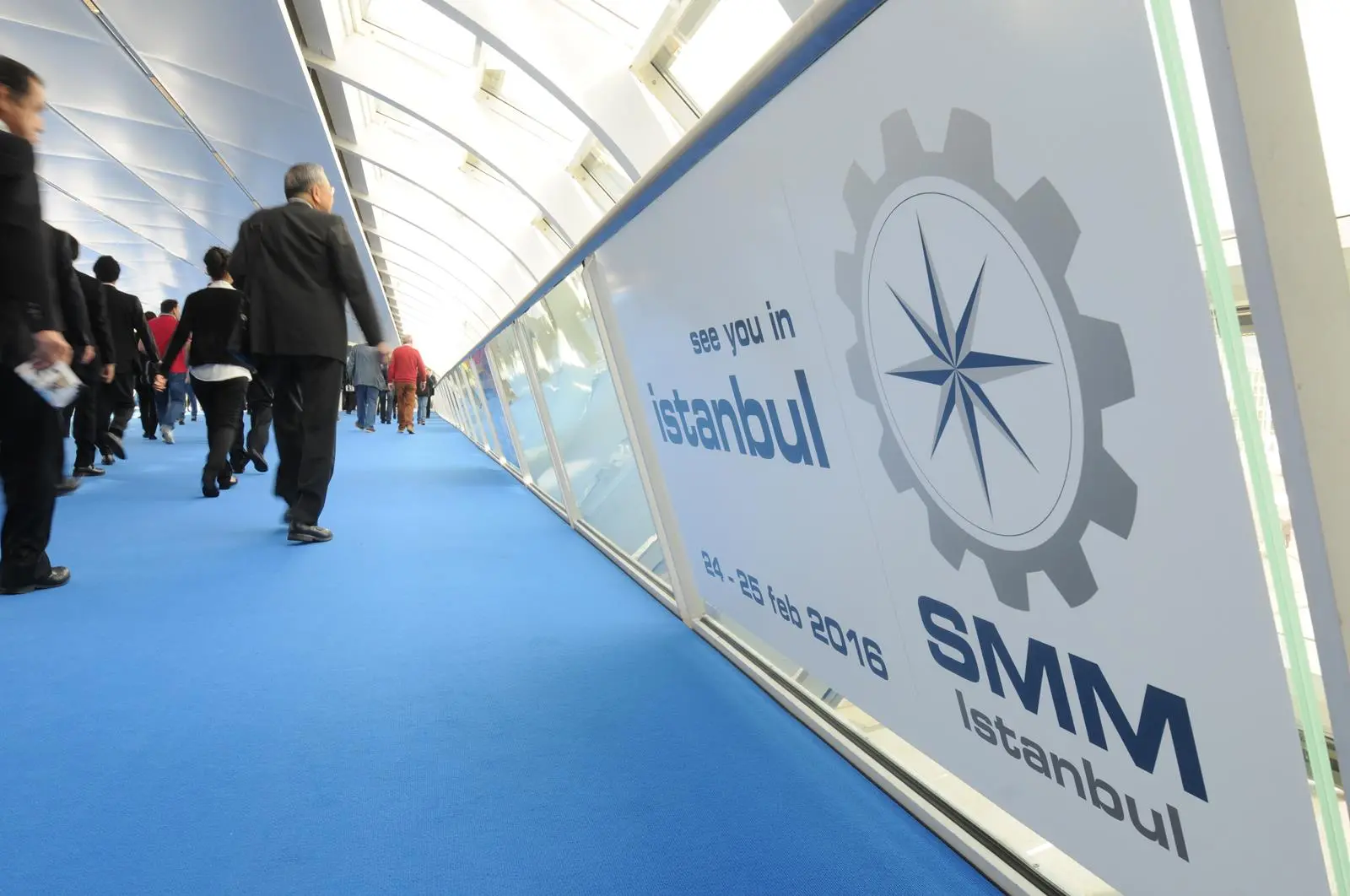
When the trade convenes on 6-9 September, it will find a new hall at the Hamburg Messe, with 3,500m2 dedicated exclusively to green propulsion technologies. But Hall A5 will not be just an extra promotional opportunity for the big propulsion players, insists Bernd Aufderheide, president and CEO of SMM organiser Hamburg Messe und Congress.
“You won’t find ‘old wine’ companies – our requirement is that the exhibitors in Hall A5 are really innovative,” he tells The Motorship. “They will be showing very new processes and are often fairly small companies, people who come up with software to advance technology, a lot of universities and institutions, and just a few classical propulsion companies. Commercialisation of green propulsion is important, but this is more about showing what is possible.”
One such company, Blue Technology, will use the SMM platform to launch a report, ‘Maritime Transport 2.0”, in which it will present ro-ro and containership concepts that it claims can reduce emissions and eliminate ballast water while cutting the cost of freight transport, improving manoeuvrability and enhancing crew safety. This is to be achieved by new hull designs, Sky Sails to harness wind power, a new wing sail concept and auxiliary/emergency propulsion power generated through solar panels and wind turbines. The compromise? A 20-30% increase in voyage times – something the group says the industry is already heading towards with the emergence of a movement from slow steaming (at 11 knots) to ‘super slow’ steaming at 8-9 knots.
Blue Technology will be among several wind propulsion focused projects on display in Hall A5 – several of which are in the running for the inaugural Wind Propulsion Innovation Awards, hosted by the International Windship Association and to be presented during SMM (see box). Elsewhere in the hall, LNG has a strong showing through companies including TGE Marine Gas Engineering, Marine LNG Zeebrügge, Network LNG Norway, ACD Cryogenics and Herose. Electrical propulsion and energy storage companies are also evident in abundance.
COMPLIANCE TECHNOLOGY
Also new, and supporting the green propulsion drive, is a conference on 6 September organised by Hamburg Messe und Congress in conjunction with Seatrade, the Global Maritime Environmental Congress. Across three sessions, the high-level conference will cover topics including the disconnect between environmental compliance and available ship technology; the role of big data in improving environmental performance; and the role of alternative fuels in the propulsion market of the future.
“This is all about tougher regulatory requirements and how to achieve compliance by means of alternative propulsion systems, digital transport control, more sophisticated measurement electronics and other solutions,” notes Aufderheide.
These additions to SMM’s green agenda will be supported by the introduction of a new ‘Green Route’ through the exhibition, taking visitors through selected parts of the Hall A5, the several environmental technologists presenting in Hall A1 and other green highlights throughout the fair.
Another pathway through the exhibition highlights digitisation, the other focus of SMM this year. The route encompasses ship systems, sensors, remote management software and hardware, data and network security and satellite communications systems. As The Motorship goes to press the routes and companies along them have yet to be printed, but as with the green technologies pathway the ‘Digital Route’ exhibitors will be visible through SMM’s mobile app, and represented with a symbol in the trade fair catalogue and hall maps.
Shipping, the experts tell us, is set to be transformed by the current ‘digital revolution’ – one of many technological catchphrases gradually emerging from the hedged bets of inverted commas. Among those experts is Martin Stopford, long-time shipping forecaster and non-executive president at Clarkson Research
TRANSPORT FACTORY
“Digital technology will change the way we manage ships,” Stopford told a pre-SMM press conference. “The vision is to manage a fleet of ships as a ‘transport factory’ not as individual vessels, as we have done for 5,000 years.”
It is an approach that Stopford believes will help ship owners confront the challenges of long-term growth in cargo volumes and demands for lower emissions, greater safety and improved overall efficiency of the transport system. But lack of technical capability is a potential hindrance. Thankfully the technology needed is becoming not only better, but also easier to use.
Ship builders must also be ready for the ship design and construction implications of this new era, Stopford warned. Speaking to The Motorship after a press conference for SMM 2016, he suggested that many yards have been caught napping by the increasing demands of ship owners for digital infrastructure.
“Most shipyards don’t have an awful lot of technical depth,” said Stopford. “If you’re selling bulkers, you don’t need a big design team. But we should be looking towards a digitally ready ship. You need a really good server room, well managed IT and a climate controlled place, and you need communications throughout the ship.”
A new wave of digital engineering specialists will need to be recruited by shipyards as they define the digitally ready ship, Stopford proposed. These skills will be in demand as digital technologies are planned into newbuildings as well as potentially being retrofitted some of the around 86,000 existing vessels, some with very old information infrastructure.
The established Maritime Future Summit, held on 5 September before SMM opens, will this year focus on directly on these challenges. Organised by Hansa International Maritime Journal in partnership with Hamburg Messe und Congress, the event will host software experts and propulsion manufacturers discussing the impact of digitisation – via ‘big data’ and ‘smart shipping’ concepts – on the maritime world.
The two themes of digitisation and green propulsion provide a forward-looking agenda for the trade’s leading exhibition. But it must also reflect the current state of the market, says Aufderheide.
STORMY WEATHER
“Shipping is facing stormy conditions. Shipping companies, shipyards, equipment suppliers and port operators currently have to deal with enormous changes. Their financial base is under attack from low freight and charter rates, increased cost pressure and dramatic changes in flows of goods. At the same time, requirements for safety and environmental protection are increasing, as are market expectations for performance.”
Against this challenging backdrop, it is perhaps no surprise that visitor and exhibitor numbers look set to remain strong this year – even in comparison with a record-breaking event in 2014 – as the industry takes advantage of its biggest global platform to meet, share ideas and do business. Organisers expect the event to be even more international this year, with two third of delegates coming from a total of 59 countries beyond Germany. This is reflected on the trade floor by new national pavilions from countries including Iran, Malaysia and Greece.
Challenges abound, but so too do opportunities. “Those in positions of responsibility in the industry know that it has to look to the future,” concludes Aufderheide. “It needs innovative solutions to changing business models. SMM can and will provide major stimuli and answers to pressing questions from the industry.”
Related Articles
 ALTERNATIVE FUELS & LUBRICANTS
 GENERAL NEWS
 GENERAL NEWS