



Eniram launches low-cost fleet optimisation
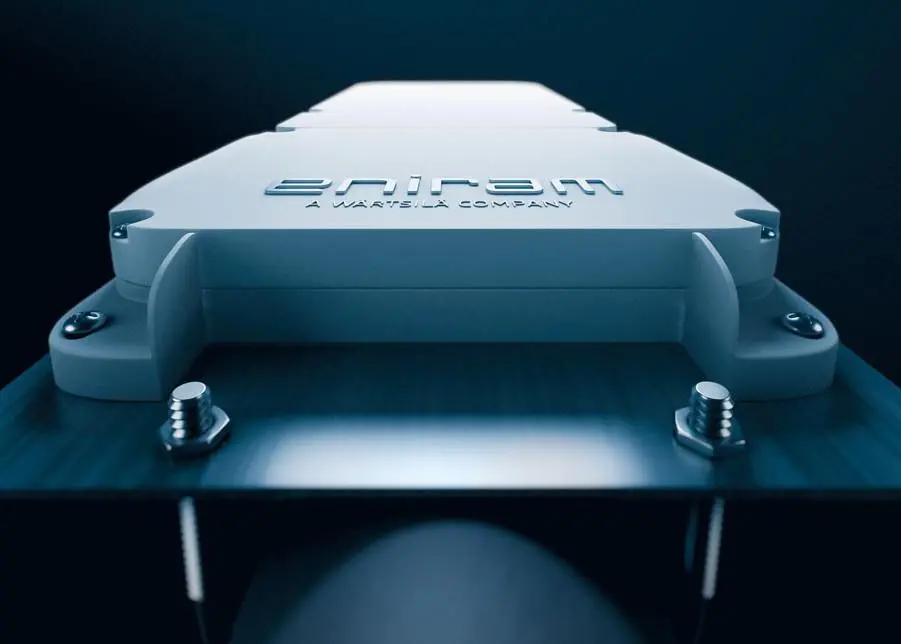
For a US$460 monthly subscription, Eniram’s Skylight service is able to produce a variety of fleet performance reports – including charter party monitoring, normalised fuel consumption and speed profile reports – that it claims would otherwise require companies to spend hundreds of thousands of dollars.
It achieves this through a dedicated transponder attached to a railing on the vessel. The transponder tracks vessel movement information, and sends the data along with noon reports (primarily the remaining onboard bunker level) to Eniram to be combined with meteorological and sea-state data and then be processed. The transponder and satellite link are included in the subscription fee.
Eniram claims that it can plot vessel information from these simple inputs with great accuracy as a result of the gradual refinement of its algorithms over the past decade. Those algorithms are based on modelling from an installed base of around 300 vessels (around 50% of which are cruiseships) for Eniram’s existing vessel optimisation products
Jan Wilhelmsson, vice president commercial marine, Eniram, explained that obtaining vessel speed in this way was far more accurate than most speed logs, which are often poorly calibrated.
“Sixty percent of speed logs are 5-10% off,” he said. “That is a lot of error for performance monitoring. By getting the track from the transponder and enriching it, we can build up an accurate picture in real time. The fact that we have so many big reference vessels that are helping us to build our model in the data centre is what allows us to create that value. That has taken us 10 years and about US$20 million to get right.”
The company is planning to expand the functionality of the transponder with plugins over the next year as well as expending the range of reports available, with fouling reports and fleet route benchmarking among the next steps. Henrik Dahl, CEO, Eniram also noted the condition-based maintenance expertise of new parent company Wärtsilä, and said the companies are considering how these elements can be integrated in future.
Eniram hopes that the low-cost model will bring its solution within reach for the vast majority of the merchant fleet that has so far not embraced fleet optimisation. Wilhelmsson noted that the prevailing shipping model – involving separate ship owners, commercial management and technical operators – did not encourage investment in technology. Ship owners do not want to invest for the benefit of charterers, charterers will not invest because they only want to charter a vessel for a year, while ship operators are severely restrained financially.
“How in this setting will we see an uptake of new technology? This is how we get to the situation today where 80% of ships are not connected,” said Wilhelmsson. “We need to find a way around this to give the industry a product it can use to solve the most basic problems in shipping.”
Related Articles
 ALTERNATIVE FUELS & LUBRICANTS
 GENERAL NEWS
 GENERAL NEWS