



Fuel cell systems for marine applications
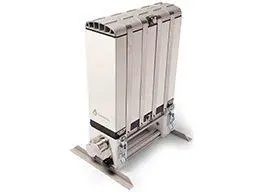
The application for EU funding through the Fuel Cells and Hydrogen 2 Joint Undertaking by the MARANDA consortium, has already been positively assessed and contract signing is expected late December 2016.
“This is a really exciting project and we look with confidence forward to start the cooperation with the other partners in the consortium to jointly develop a complete and competitive fuel cell system and adopt it for marine environment,” said Per Wassén, CEO, PowerCell Sweden AB.
“As an important part of the project, there is a business case analysis for hydrogen fuel cells in marine applications, taking into account the needs for development of regulations, codes and standards (RCS).”
The MARANDA consortium will develop a complete and competitive fuel cell system based on the PowerCell S3 (100kW) fuel cell stack. It will then be installed on board the arctic research vessel Aranda operated by SYKE Marine Research Centre, and it will be validated in demanding marine application during an 18 month period.
The PowerCell S3 is a scalable prototype in the 20-100kW range and is designed to use pure hydrogen as fuel. The fuel cell system entails high potential for reducing energy consumption and emissions from harbour boats and tugs.
This project joins a handful of other initiatives exploring the marine application of fuel cell technology.
As previously reported, the German e4ships project has demonstrator systems on two vessels – a general cargo ship and a large ro-pax ferry – while Meyer Werft, also a partner in e4ships, is to include fuel cells in four LNG-powered cruiseships to be built for Royal Caribbean.
Related Articles
 ALTERNATIVE FUELS & LUBRICANTS
 GENERAL NEWS
 GENERAL NEWS