



DNV GL offers asymmetric stern optimisation
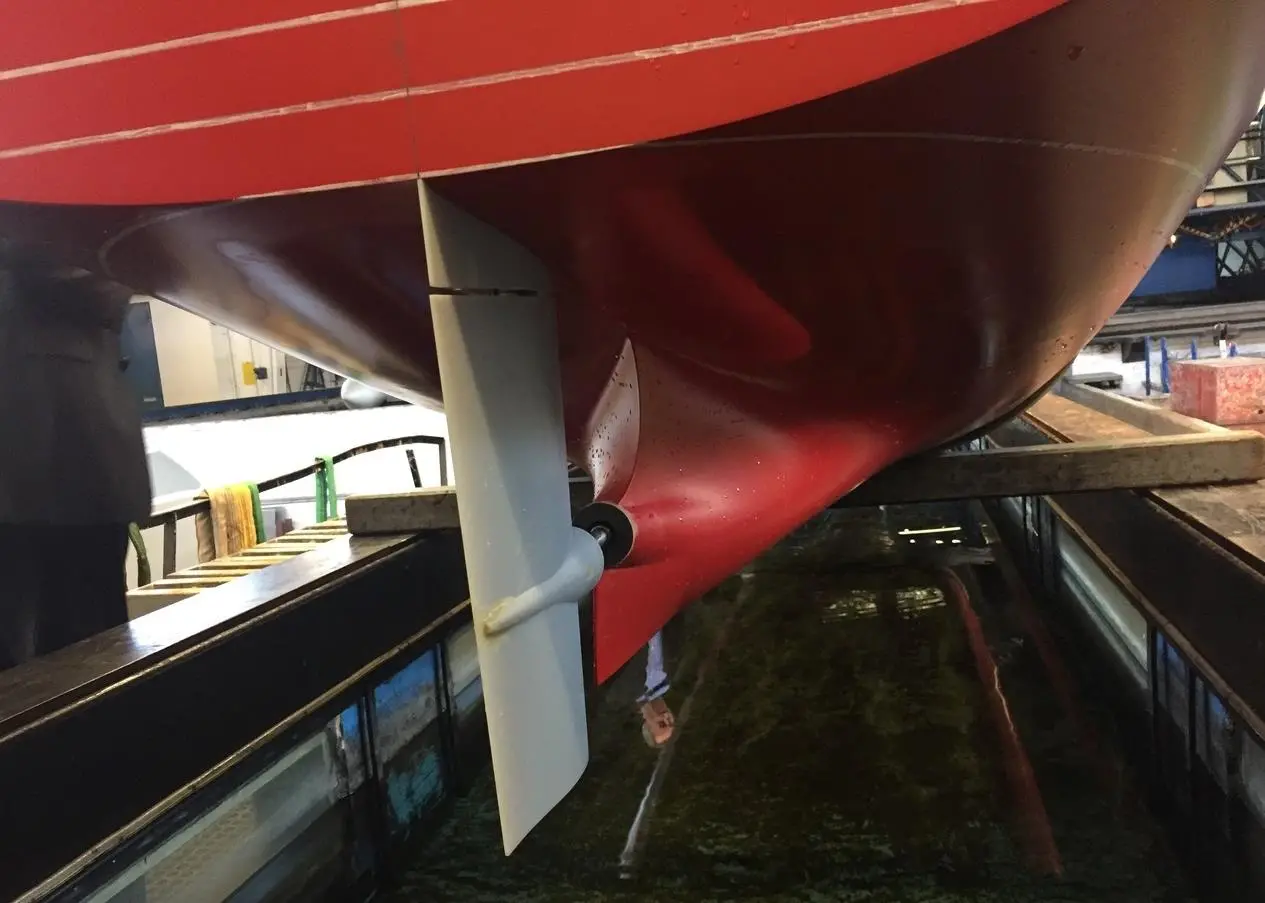
The twisted aft shape of the asymmetrical stern shapes allows ship designers to accommodate differing flow conditions on each side of the propeller. The classification society, which used high-fidelity computer fluid dynamics (CFD) and parametric formal optimisation to create the optimal stern shape for the stern, said that the asymmetric design enabled a propulsion power reduction of more than 3% for a 3,000teu containership.
Karsten Hochkirch, head of department, fluid engineering, DNV GL – Maritime, said: “What we are now able to do is model an aft shape that acts as a propulsion improving device, without the vibration and fatigue strength concerns that come with fins and nozzles. Using our in-house formal parametric optimisation procedure, we can assess hundreds of options until we find a design that strikes an optimal balance between pre-swirl and resistance, while meeting the design requirements of the customer.”
In another project to establish propulsion efficiencies in a 38,000dwt tanker, the company’s ECO Lines team used CFD optimisation to generate a design promising a 3.5% decrease in propulsion power compared to the symmetrical design.
Hochkirch added: “By accurately simulating the performance of these complex hull forms, we are achieving propulsion power improvements of up to 5%, with greater structural robustness. And because yards are now able to use advanced CAD/CAM techniques and modern, CNC-controlled fabrication methods, they can bring these designs into production much more easily and economically.”
Related Articles
 ALTERNATIVE FUELS & LUBRICANTS
 GENERAL NEWS
 GENERAL NEWS