



Wärtsilä hybrid propulsion for Eidesvik OSV
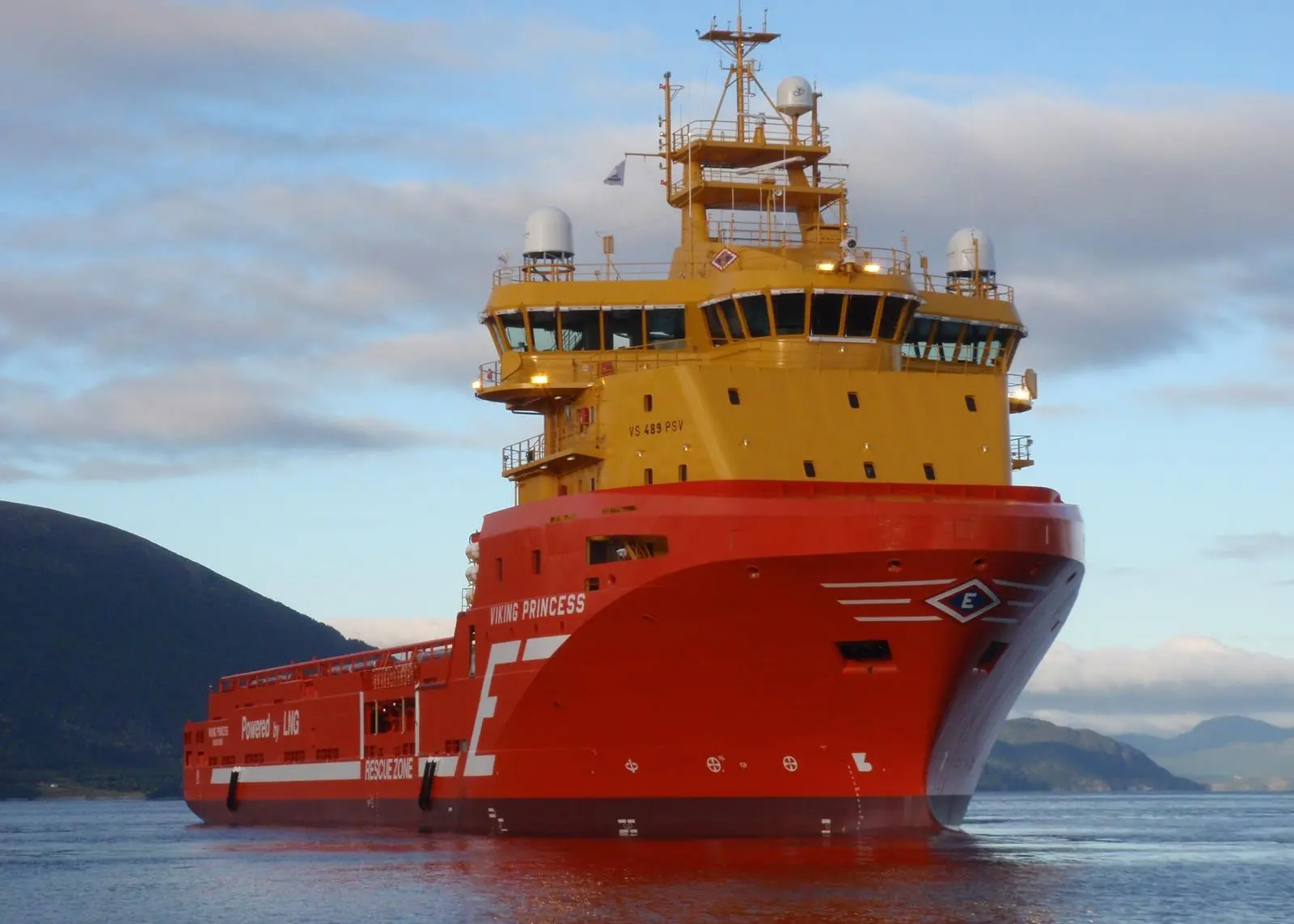
The five-year old vessel will remove one of its four LNG-powered Wärtsilä engines. Depending on the ongoing task and weather conditions, the engine load currently varies between 90% and 20%. The new energy storage solution will provide energy to cover the peak demand, enabling engines to operate at a more stable load.
In the dynamic positioning mode, when the battery is used as power redundancy and the engine runs at its most efficient load, the fuel saving potential is claimed to be 30%. Wartsilä said the propulsion system may cut CO2 emissions on the Viking Princess by 13-18% a year depending on the operating conditions.
Eidesvik and Wärtsilä have cooperated since 2003 when the world’s first LNG-driven supply vessel, Viking Energy, was launched. In 2015 the companies collaborated again to add batteries to support generators onboard Viking Lady.
Cato Esperø, sales director, Wärtsilä Norway, said: “We are confident that this project will have a positive effect on the industry. There is an increasing focus in shipping to reduce emissions and we believe that ship owners will continue to install hybrid solutions – both on existing vessels and newbuilds.”
Vermund Hjelland, vice president technical development, Eidesvik Offshore, said: “We are grateful to both Wärtsilä and the NCE Maritime Clean Tech, who made this important and progressive cooperation possible.”
Enova SF, a Norwegian state enterprise owned by the Ministry of Petroleum and Energy, supported the project with NOK6.5 million to accelerate sustainable energy production in the maritime sector.
Wärtsilä will install the new hybrid system in September 2017.
Related Articles
 PROPULSION
 GENERAL NEWS
 GENERAL NEWS