



A stable foundation: CCS classes worlds first SGISc-compliant vessel
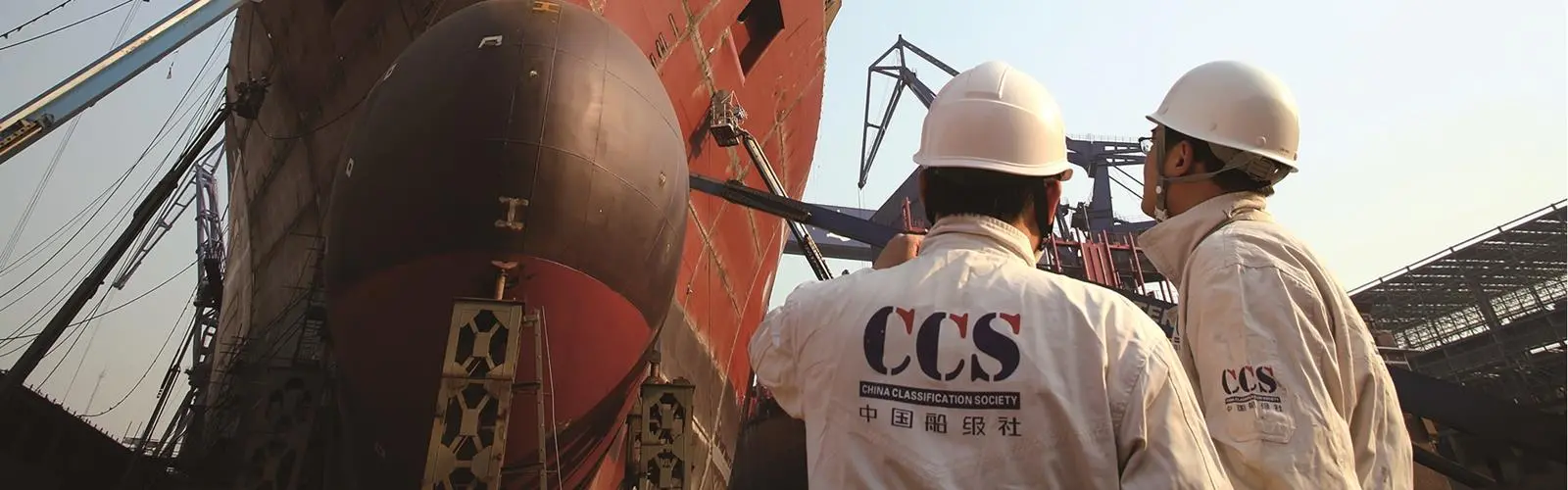
Working with the relevant technical requirements of CCS Rules and MSC.1/Circ.1627, the Shanghai Institute of Standards and Design (SDARI) used a verification calculation software, developed in-house, to conduct dynamic stability failure modes for the ship design plan.
The guidelines, which introduced a new criterion for intact stability, were adopted at the 7th session of the IMO’s Ship Design and Construction (SDC) in 2020. The guidelines focused on a number of complex phenomena, including parametric roll, pure loss of stability, dead ship condition, surf-riding and excessive accelerations. The guidelines use an updated model of ships’ behaviour in waves, based on the latest developments in hydrodynamics. The model was subject to ten years of model tests, simulations and iterative testing.
Storm ahead
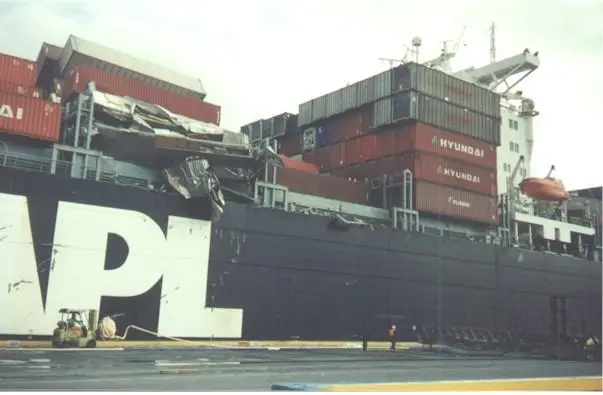
In late 1998, the 5316 teu APL China, one of the largest boxships on the water at the time, was carrying a major consignment of goods from Kaohsiung, Taiwan, to Seattle, in preparation for the holiday season. In due course however — with seemingly little warning — Typhoon Babs passed close by. Conditions around the vessel continued to worsen, soon exceeding Beaufort force 8, with waves exceeding eight metres.
The vessel began a 15-degree side-to-side roll, which reached its apex every ten seconds or so. It would have made for an uncomfortable ride, but was almost certainly nothing that a seasoned crew, like that of APL China, couldn’t handle.
However, the situation rapidly deteriorated. Wave heights increased to between 12 and 14 metres; the ship’s master, as was protocol in this scenario, slowed the engine and turned into the waves, in order to dampen the roll condition. But then, something unexpected happened. Despite facing the waves head on, and each wave travelling longitudinally along the hull, the vessel rolled much more violently than before, reaching an angle of 40 degrees. A massive crashing sound was heard.
Thankfully, the sound was not that of the vessel’s structure being compromised, and the APL China managed to limp into Seattle on 1 November, with all hands aboard. But what they had heard was the sound of the vessel’s container stacks collapsing at the apex of a particularly major roll, causing 407 of them to go hurtling overboard, and the cargo in many others to be irretrievably damaged. In total, more than US$100m in losses occurred, which would be the biggest single cargo loss in container ship history, until it was surpassed by the MOL Comfort incident in 2013.
The accident did not occur because of human error; the ship’s master and crew had acted in textbook fashion, steering into the waves to decrease roll, and reducing speed to diminish the vessel’s pitching motions. Nor was there any particular problem with securing the cargo – though, as the One Apus incident proved last year, resulting in US$200m worth of damage, container shipping is far from immune to concerns on that score.
Rather, APL China suffered something none of its crew could have anticipated; parametric rolling, whereupon the amplitude of the waves coincides with the roll period – or ‘natural period’ — of the vessel itself, causing these motions to cascade out of control. This is most intuitively understood in the comparison of pushing a child on a swing; as the waves hit the vessel at precise frequency, its rolling arc increases higher and higher.
This is called a resonant roll. Extending the playground analogy, because of the frequency of the pushing, the arc of the swing reaches higher and higher, despite the same level of effort being expended to push each time.
Experiencing this phenomenon, the crew of APL China had no procedure to rely on. They were at the mercy of the storm and were lucky to get to Seattle alive.
Inadequate rules
APL China’s experience with Typhoon Babs revealed shortcomings in the first-generation intact stability criteria, which are far wider-reaching than the sea states APL China weathered. In fact, Beaufort-12 wave heights are not required to produce a parametric rolling situation.
These assume a calm sea state with a level waterline and no waves; a static vessel; and a predictable rate of roll thanks to an unchanging statical stability or GZ curve. It had been the foundation of the understanding of hydrodynamics enshrined in contemporary naval architecture, explains Zhou Yaohua, a senior engineer at China Classification Society and technical expert of the International Association of Classification Societies (IACS).
“The old criteria was developed based on traditional hydrostatic methods, and only covered the ‘dead ship’ failure mode,” he said. “However, there are other stability failure modes, such as parametric rolling, excessive acceleration and pure loss of stability, which have been found … that may cause serious accidents when a ship is sailing in adverse sea conditions. Unfortunately, the old criteria can do nothing to fix it.”
Crucial to ship stability is the differential between the centre of gravity (G) and the metacentre (M) – the theoretical point at which the vessel’s centre line crosses an imaginary vertical line drawn upwards from the vessel’s centre of buoyancy. The vessel’s metacentric height (GM) is equal to BM–BG. Too low, and the ship will roll languorously in wide arcs from side to side, increasing the risk of capsize; but too high, and the vessel’s roll period will be much shorter, causing rapid side-to-side movements which can easily dislodge cargo and cause very uncomfortable conditions on board.
The IMO’s new criteria specify various levels of assessment to determine whether or not a ship will comply with the second-generation criteria. Crucially, this process takes into account the latest developments in CFD simulations and model-testing, both of which can – and should, in some events – be used to verify compliance with the criteria. This is used to determine how the vessel will behave in different wave states, at different speeds.
CCS has developed its own tools for evaluating the new criteria, Zhou Yaohua explains. “[Our] software has been verified and validated with model tests, and had been adopted as a research tool by Chinese delegation for the research and development of the second generation intact stability criteria.”
In the case of the AVIC International Holdings newbuild, “…fruitful contributions were made by using this software,” Zhou Yaohua says. The assessment by this software followed the procedure required by IMO, published in MSC.1/Circ.1627. The assessment software uses 3D model meshes, and the assessment covers all loading conditions of the vessel, many sea conditions and hull speeds.”
Boxes overboard
Vessels responding unpredictably to wave patterns is becoming a pressing problem, as the industry has seen major spikes in cargo overboard in recent years. The last year has seen a huge number of high-profile container stack collapses; in November 2020, ONE Apus lost some 1,860 containers in a storm; Maersk Essen, too, lost 750 containers in January on a voyage between Los Angeles and China. Meanwhile in other segments such as dry and liquid bulk, the risk of cargoes shifting or sloshing adds one another facet to an already complex equation.
“By applying the second generation intact stability criteria, the loading conditions contained in the loading manual are assessed for the vulnerability to these five stability failure modes, including parametric rolling, excessive acceleration, dead ship, surf-riding/broaching and pure loss of stability, thus the risks caused by these failure modes can be controlled,” Zhou Yaohua concludes.
New and more in depth forms of verification will not be able to solve every problem by themselves; concerns over lashings, container weights, and sloshing are yet to be addressed. But applying the IMO’s new criteria means that vessels could change shape, with new hull forms plying the waves, which would go some way toward providing a stable platform from which to solve these other issues.
AVIC’s 85,000dwt Kamsarmax is set to be the first of many. By taking into account a modern understanding of hydrodynamics, and leveraging technologies like cloud computing, computational fluid dynamics and iterative testing to develop and test new hull forms, stakeholders throughout the maritime industry are working together to create a new generation of safer, more resilient vessels.
Related Articles
 METHANOL
 MONITORING, CONTROL & DIGITALISATION
 MONITORING, CONTROL & DIGITALISATION