



ABS and DSME develop very large LCO2 carrier
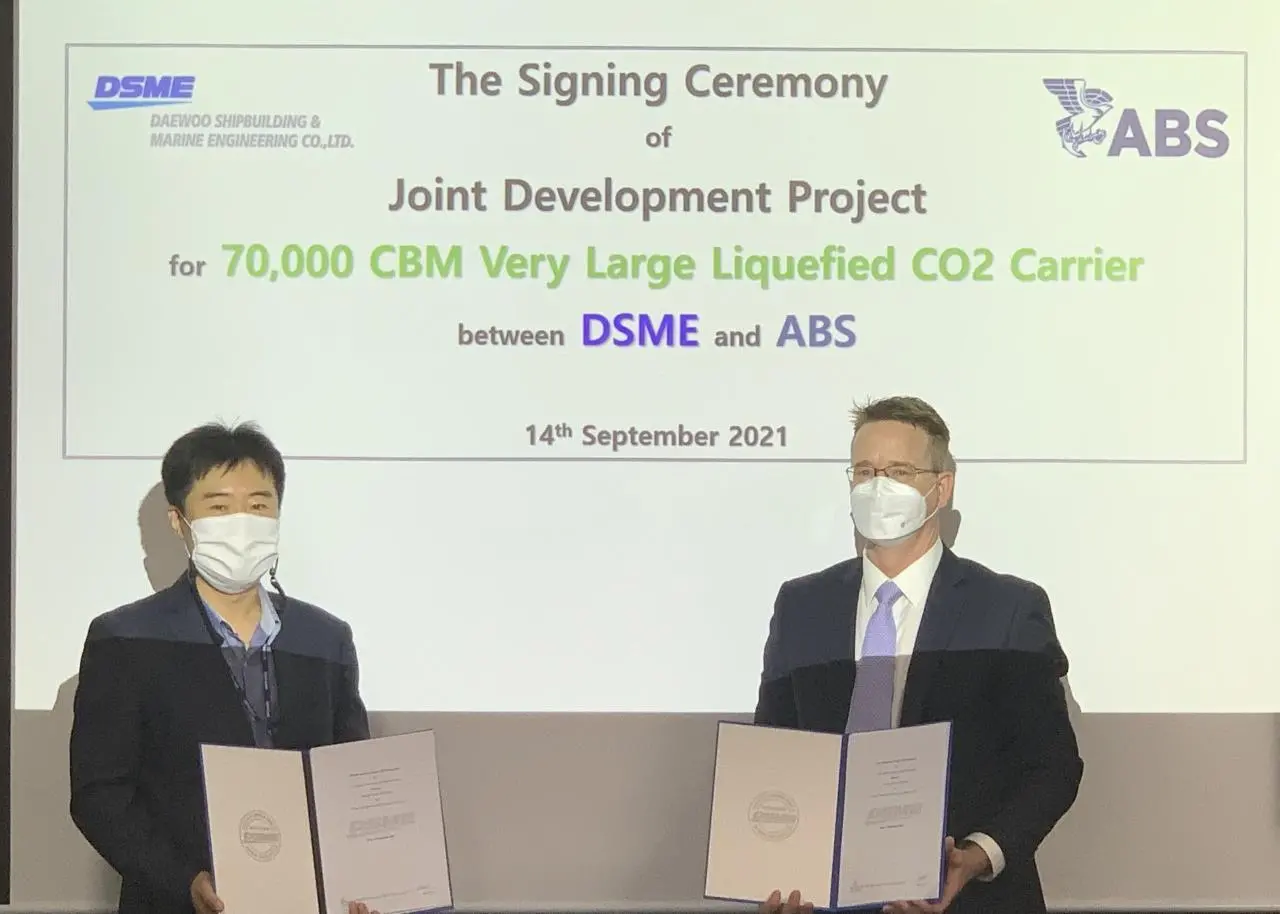
The joint development project is in response to the maturing of carbon capture utilisation and storage (CCUS) technology, which will ultimately require larger vessels for CO2 transport than currently in use today.
“CCUS can play a role in reducing emissions in a range of industries, but the supply chain will need vessels capable of transporting CO2 safely and efficiently,” explained Patrick Ryan, ABS senior vice president, global engineering and technology.
“That’s why this JDP with DSME is so important, not just for the maritime industry but for ambitions to reduce the carbon footprint of the entire global economy,” he added.
DSME, which has previously developed a conceptual design of a 100,000m3 LCO2 carrier, is developing a new design that can increase operational efficiency by increasing tank size. In order to achieve this, the JDP will study the application of various steel materials as well as existing low-temperature steel.
The new LCO2 vessels will comply with the ABS Rules for Building and Classing Marine Vessels and the ABS Guide for Liquefied Gas Carriers with Independent Tanks as well as the International Code for the Construction and Equipment of Ships Carrying Liquefied Gases in Bulk (IGC Code).
Related Articles
 ALTERNATIVE FUELS & LUBRICANTS
 GENERAL NEWS
 GENERAL NEWS