



ADDRESSING BOXSHIP CARGO SAFETY
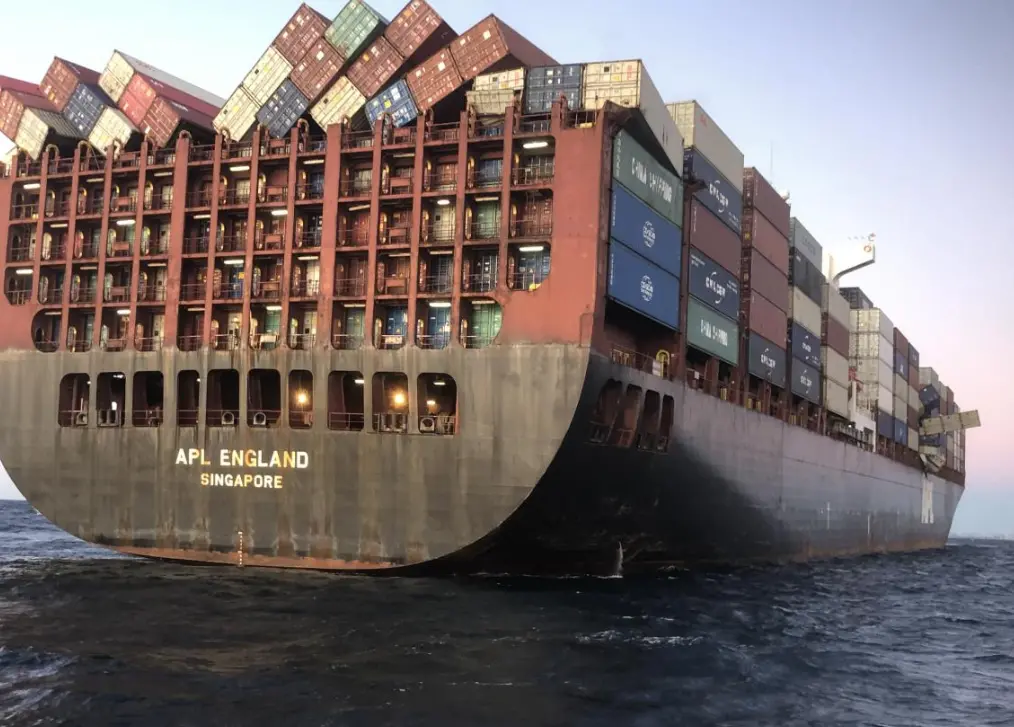
A new initiative by the Dutch maritime research institute MARIN aims to concentrate the minds of industry players, marine administrations and academia in reviewing all the factors bearing on shipboard container security. The primary objectives are to restore fidelity in the safety of seaborne container transportation by the current fleet, and to provide the requisite, deeper technical understanding to underpin future design and equipment development.
The TopTier project has been launched as a three-year endeavour, drawing together major carriers, class societies, shipbuilders, equipment and technology specialists, research bodies, and flag state authorities from around the world. The consortium currently numbers 34 partners.
TopTier will build on the Lashing@Sea collaborative study that ran from 2006 to 2009 under the aegis of MARIN. Since then, the largest vessels have grown from 10,000TEU to 24,000TEU, and a series of events involving major cargo loss and damage, suggest that scale effects and increased economic pressures are pushing container operations beyond safe boundaries. The project will identify shortcomings in current technical and operational practices, and propose improvements to rules, requirements and shipboard procedures.
A key element of the project approach is to ensure an accurate technical understanding and representation of ship motions and cargo securing mechanics as applied in design, plan approval and operational securing calculations. Accurate calculation models that take into account the large variations in loading conditions, GM (metacentric height), weather routing and the structural flexibility of modern ships and their high stacks of deck containers are pivotal to the whole.
As well as increasing awareness of, and the ability to deal with or avoid ‘off-design’ conditions such as parametric roll, loss of stability, and resonant roll, an important objective is to provide crews with practical insight into actually occurring loads in relation to prescribed safe limits.
The process aspects will address options and infrastructure requirements to improve tracking of container and corner casting condition, state of maintenance of the securing arrangements, and precise and accurate data as to the weight, content and stuffing of the containers.
The direct findings will be shared with the participants, who include leading market participants such as Maersk, MSC, Ocean Network Express (ONE), Hapag-Lloyd, CMA CGM, Evergreen, NYK line, Seaspan and Yang Ming. Results will also be submitted to international regulatory authorities, including IMO, ISO and IACS, in a bid to ensure top-down implementation in the interests of a level and safer playing field.
Related Articles
 ALTERNATIVE FUELS & LUBRICANTS
 GENERAL NEWS
 GENERAL NEWS