



Advanced container feeder for Japan
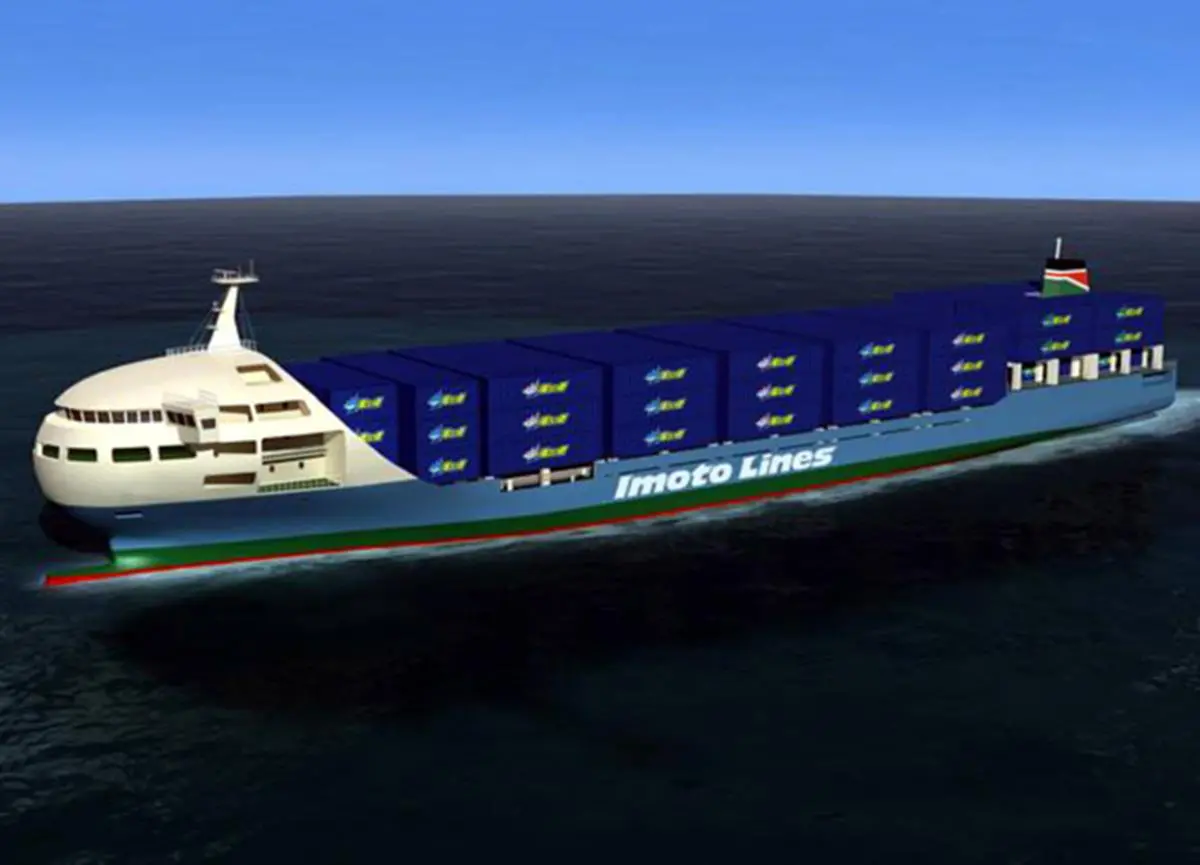
Developed to have reduced resistance both from the sea and from the wind, the new high capacity feeder ship is expected to consume at least 5% less fuel than a comparable conventional container feeder ship. The new design is being built for Imoto Lines, one of the leading companies operating on Japanese domestic routes.
When completed this vessel will be the biggest coastal container ship to have been built within the 499-749grt requirements. She will have a container capacity of 540teu and has been designed to bring a new measure of efficiency to feeder container traffic. The demand for maximising capacity of coastal container vessels stems from the increasing size of vessels being used on international routes.
The design features the bridge and accommodation block located right in the bow; this actually forms an integral part of the bow shape. This block is hemi-spherical in shape, in a design that has been optimised to reduce wind resistance and this alone is expected to reduce wind resistance by up to 30% – particularly in head winds. The bridge is integrated into the hemi-spherical shape with reverse angle windows, while side extensions give a clear view when docking. Another integral part of the bridge and accommodation block are recesses on each side, to house the ship’s lifeboats.
The hemi-spherical shape of the bow extends into the hull which then tapers down to a fine entry at the waterline with a bulbous bow below. This area has been shaped around Kyokuyo’s award-winning and patented bow design. The engine room is located right aft in order to maximise cargo space, and the long separation between the accommodation and the engines should give the crew a noise and vibration free environment.
The container cargo is stowed three high on deck with the envelope of the container stowage assisting the air flow over the vessel. In addition to reduced air resistance the vessel will have many other eco-friendly features such as a high efficiency propeller, fuel saving paint, fuel oil piping systems that will prevent oil spills during bunkering and an IMO PSPC compliant paint. At this stage of the development the make and the power of the engine have not been released.
A spokesperson for Kyokuyo commented: “With the scheduled delivery set for 2016 we are now busy tweaking the hull shape using tank testing and wind tunnel tests plus newly introduced ship design software. This ship will set the benchmark for the next generation of domestic container carrier.”
The design was developed in close cooperation with Imoto Lines. The concept for the advanced design was partly developed from the experience of designing and building the ro-ro car carrier vessel City of St.Petersburg that was named as the Japan Ship of the Year in 2010. Kyokuyo Shipyard is located at Kobe in Japan.
Related Articles
 ALTERNATIVE FUELS & LUBRICANTS
 GENERAL NEWS
 GENERAL NEWS