



Ammonia propulsion reaches commercial milestone
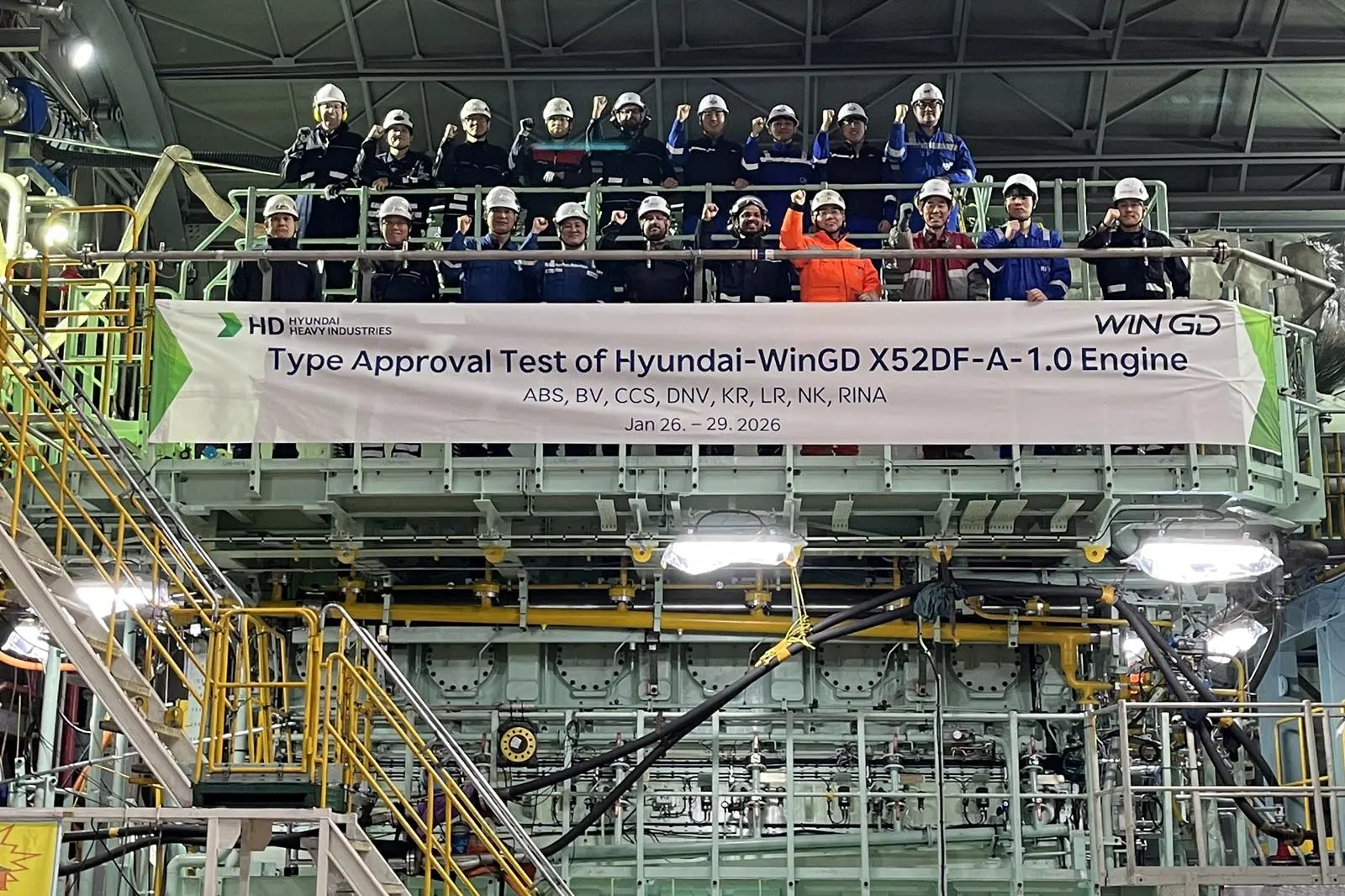
The testing programmes, witnessed by Lloyd’s Register and major classification societies under EXMAR supervision, mark a significant step towards deploying ammonia-based vessel power in commercial shipping.
“Completing Type Approval Testing and Factory Acceptance Testing with our joint development partner HHI-EMD represents a major technical milestone in the development of ammonia-fuelled two-stroke propulsion,” said Sotiris Topaloglou, global head of testing & validation at WinGD.
”As first movers, we are addressing a completely new fuel landscape, where safety, control and system integration are paramount.”
Industry first
Type Approval Testing and Factory Acceptance Testing of WINGD’s ammonia two-stroke X52DF-A-1.0 engine was completed in January 2026 at HD Hyundai Heavy Industries’ Engine & Machinery facility in South Korea.
The 52-bore engine will be installed onboard a 46,000m³ LPG/ammonia carrier ordered by EXMAR, with the vessel series expected to become the first ammonia-fuelled gas carriers entering commercial service.
Testing followed a multi-year validation programme demonstrating strong operational performance, with NOx emissions during ammonia operation recorded well below diesel levels and negligible N2O contribution to overall greenhouse gas emissions.
The ammonia two-stroke engine uses high-pressure fuel injection supported by a targeted pilot fuel dose of around 5% at full load while maintaining load response and efficiency comparable to conventional diesel engines.
Growing industry confidence in alternative fuels is reflected in WinGD securing an early orderbook of approximately 30 X-DF-A engines across gas carriers, bulk carriers, tankers and container vessels.
Sea trials on ammonia fuel are scheduled in the coming months, representing the next stage toward commercial deployment of ammonia-powered vessel power systems.
Related Articles
 2-STROKE & 4-STROKE
 2-STROKE & 4-STROKE
 2-STROKE & 4-STROKE