



Auto-ships promise industry shift
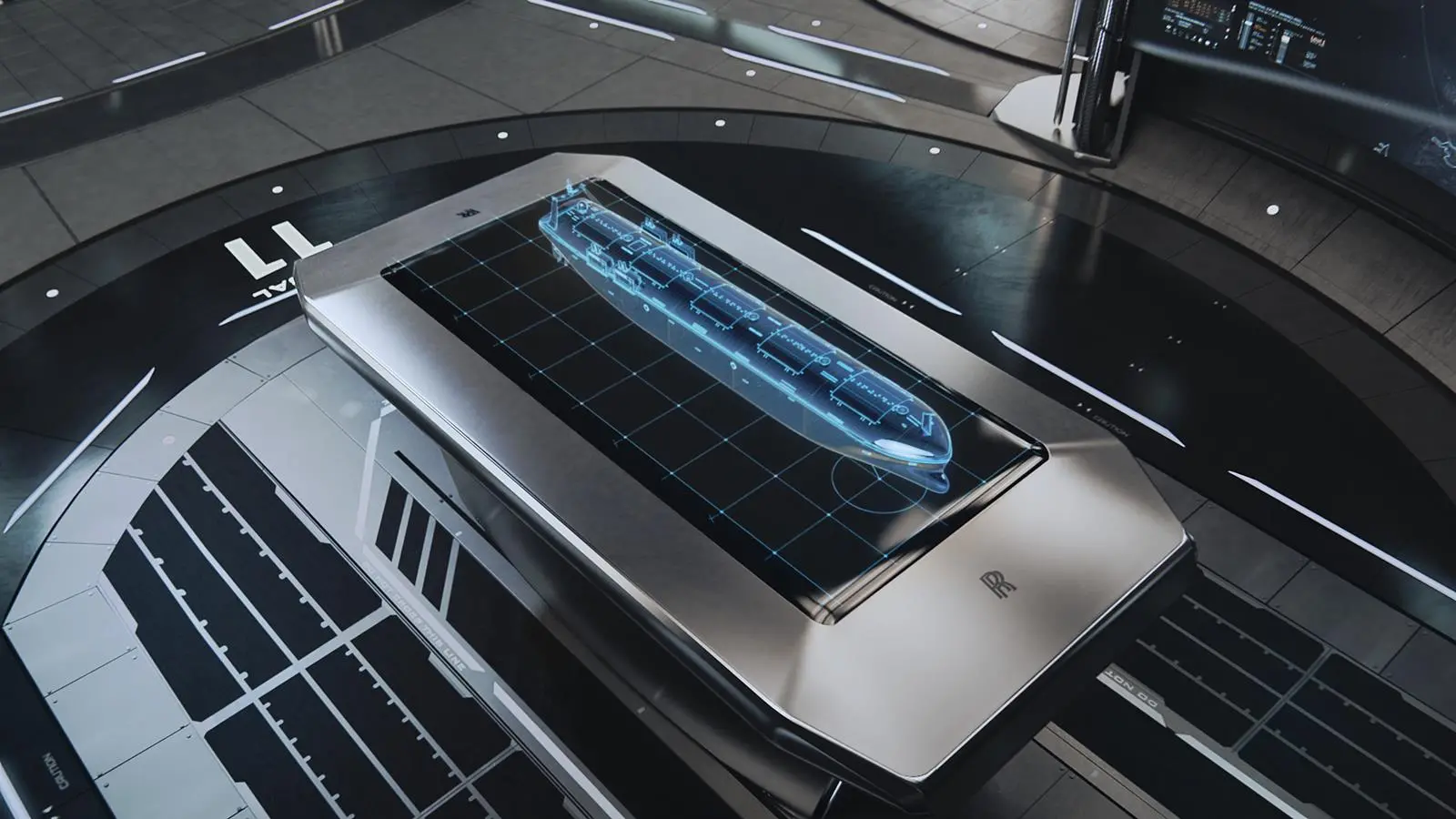
The evolution of autonomous vessels “is moving very fast, faster than anybody – even we – thought” says Luis Benito of Lloyd’s Register. But these ships promise more: they could fundamentally change the development landscape.
“Some of the design changes for autonomous ships are quite self-evident,” says Paivi Haikkola of Deltamarin, “But others have been a bit of a surprise”.
Rolls-Royce, Deltamarin, DNV GL and other partners have got together on the Advanced Autonomous Waterborne Applications Initiative (AAWAI), with interesting results.
“We were fairly certain we could gain some savings from reducing or eliminating the crew onboard, but we started to look at it as a whole, costs versus the benefits,” says Ms Haikkola. “On an autonomous ship you can start from scratch. In fact, you have the freedom to turn the GA completely around.” She adds that the new approach could result in savings or even extra income for the owner.
“First of all we looked at a box feeder: on a crude estimation taking away the crew areas meant we gained 3% more payload. It might not sound like much but it’s a significant amount.” There are operational benefits as well: “As you don’t have the crew directing from the bridge you can remove the wheelhouse entirely.” Plus when it comes to construction just being able to get rid of the HVAC and its associated pipework also looks like saving a lot of bother.
However, she says that some elements will retain their present shape: “One thing that won’t change much is the hull design.” Although there may be less in the way of a bridge or superstructure, as there is inevitably more engineering onboard the result is only a 3% reduction in steel weight “especially since the ships will need to keep the same – or even raise – hull integrity”.
What will definitely change are the machinery choices: “Traditionally box and bulk systems have gone for simple and cheap installations. But old fashioned diesel-mechanical won’t work efficiently alongside autonomous systems. You will probably have to go diesel-electric.”
Further she adds there may be a different spread to the propulsion: “For example it could be more efficient to berth with quad-type thrusters… manoeuvring probably will tend to be more precise when running autonomously as humans tend to do accomplish it by correcting and correcting again.”
But, according to Ms Haikkola, autonomy will also have a knock on effect on the robustness of the onboard systems. “Actually, we have to simplify the equipment and it will have to be more reliable. It’s a ball we are throwing out to the manufactures…”
However, she says this train of thought inevitably led to another revelation – autonomy will give another push to the advent of modular ship design. “We were surprised… after all, our company, like many others, at present designs one particular ship for one particular need.”
But the required dependability means “it all has to be much more replicable than at present”.
So, what will it look like? Ms Haikkola believes that the owners will choose from a number of standardised units that will jigsaw together. “The different elements will be ready on the shore, built and pre-tested at the factory.” She adds: “We do already know that is how you achieve the best reliability”, but till now the habit of “creating ‘unique’ shipyard solutions” has not really been challenged.
Above all, getting the focus right at the concept stage is even more important as this determines the balance of costs taken throughout the ship’s life-cycle. Therefore says Ms Haikkola, “an owner will have to look carefully at what level of autonomy is wanted – totally autonomous, or partially autonomous.”
This is where Lloyd’s Register comes in with its defined Autonomy Level (AL) scale says Mr Benito. The aim, he explains, has been to provide a solid framework for everyone from owners and designers to manufacturers starting up the AL ladder; after all, accurate specification clarifies the opportunity-to-risk equation.
These levels move stepwise from AL0, entirely manual, all the way up to the fully autonomous AL6 level. Interestingly they almost fall into pairs, AL1 and 2 provide ‘decision support’, onboard or onshore respectively. AL3 and 4 have the ship running by itself but keep the human “in”, or “on” the loop – AL3 running can be interrupted by a human at any time, AL4 is more difficult to stop, although there is still a ‘safety case’ which could conceivably come from an onshore override or onboard.
Implicit in levels AL5 and AL6 is the expectation of AI-driven machinelearning: the vessel will be able to respond appropriately even in emergencies. It may sound far-fetched, says Mr Benito, “but it’s predicted that by 2030 there will be a computer that will have the brain power of a human”. He adds this development “is interesting – and a bit scary, nevertheless exciting”.
Despite a cyber-enabled future Mr Benito admits a certain part of the regulation will come down to operational areas: even if a ship was able to run autonomously for a greater part of its route, if it was transiting, say, the Malacca Strait as it stands today, then it probably wouldn’t be given clearance to run on AL6 when surrounded by ships operating under a much lower level of autonomy.
Mr Benito echoes Ms Haikkola when he says: “The client needs to decide from the start what level of autonomy they want to operate at,” adding those higher levels “will need all the stakeholders working collaboratively very early on – much earlier than you’d expect for a normal shipping project”.
Ms Haikkola also points out that there may be another dynamic at work: owners that can do without onboard crew generally stand to reap the greatest benefits as fully autonomous ships lend themselves to far greater freedoms when it comes to design. There are exceptions: the ferry operator participating in the AAWA project already pointed out that it still wants crew onboard – although their focus would be to serve the passengers. For cruise operators the focus on applying these technologies would be on added safety, rather than decreasing crew onboard.
Looking into the near future, there may be a need to keep the vessel’s options open. For example an autonomous ship may have most of its journeys taking place in regions that have come to terms with both technology and regulations. “But maybe outside that route autonomy might not have been accepted” says Ms Haikkola.
“So, because a new ship won’t want a huge deckhouse that will be empty most of the time, we have developed a concept which takes the ship out of auto-mode, providing crew facilities by using containers for plug-and-play command modules, accommodation, galley, bathroom and sanitary facilities,” explains Ms Haikkola (there is also some similar consideration for maintenance workers who might need to spend time onboard).
Interestingly, she says that because there will be no bridge as such, the various regimes will have to work out their response to (human) navigation from data presented on number of screens inside a box.
Despite inevitable industry questions, she believes “the quality of information will prove better than you get on an ordinary bridge”.
Related Articles
 PROPULSION
 GENERAL NEWS
 GENERAL NEWS