



Autonomous vessels can meet COLREG rules
The project found that use of newly developed algorithms allowed existing COLREGs to remain relevant in a crewless environment. It was discovered that artificial Intelligence-based navigation systems were able to enact the rules to avoid collision effectively, even when approaching manned vessels were interpreting the rules differently.
Rolls-Royce Future Technologies Group’s Eshan Rajabally, who led the project, said: “Through MAXCMAS, we have demonstrated autonomous collision avoidance that is indistinguishable from good seafarer behaviour and we’ve confirmed this by having WMA instructors assess MAXCMAS exactly as they would assess the human.”
Bridge simulators
A key aspect of the research, which Rolls-Royce carried out with project partners Lloyd’s Register, Warsash Maritime Academy (WMA), Queen’s University Belfast and Atlas Elektronik (AEUK), was the use of WMA’s networked bridge simulators.
During the project a commercial-specification bridge simulator was adapted as a testbed for autonomous navigation. This was also used to validate autonomous seafarer-like collision avoidance in likely real-world scenarios.
Various simulator-based scenarios were designed, with the algorithms installed in one of WMA’s conventional bridge simulators.
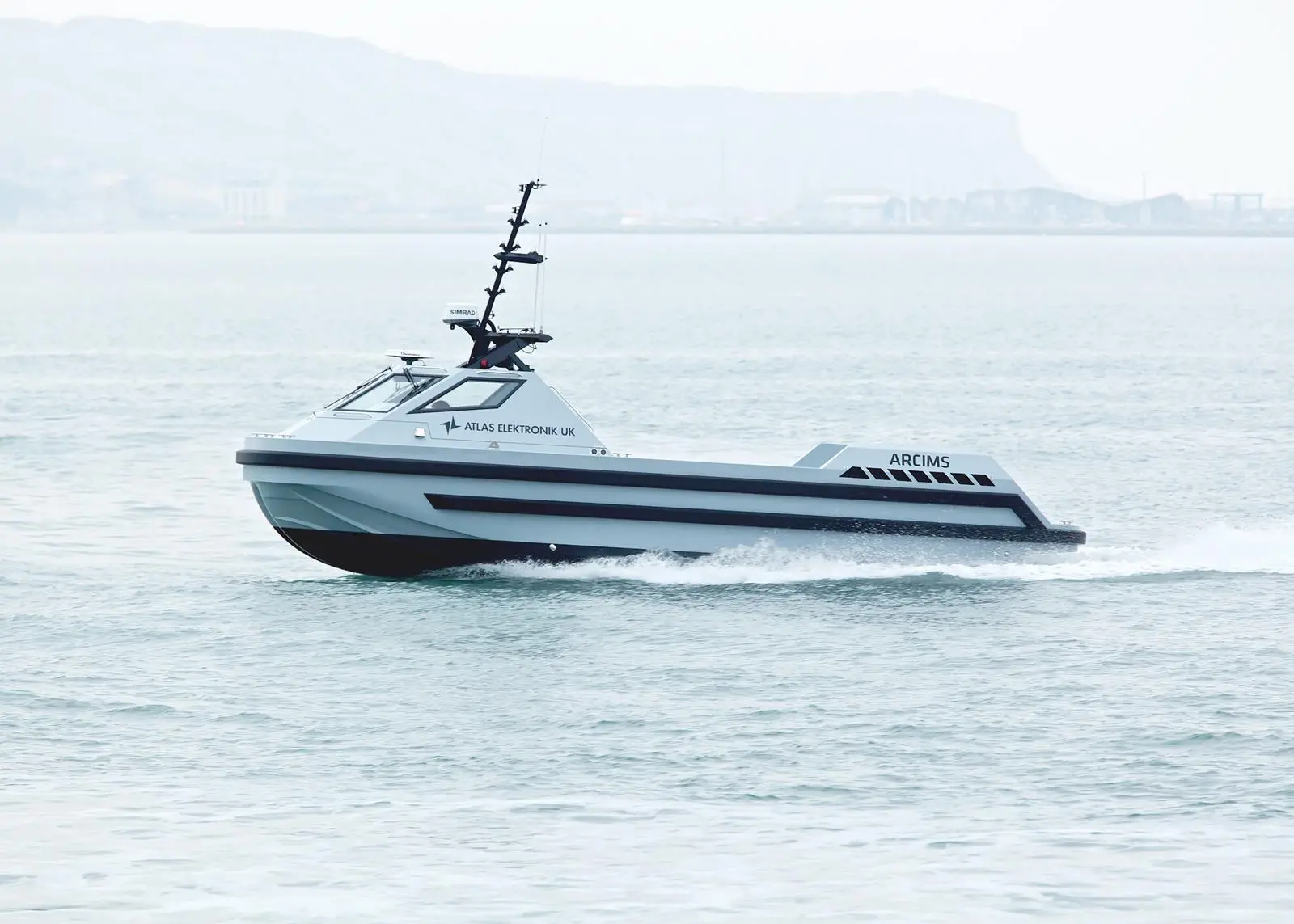
During sea trials aboard AEUK’s ARCIMS Unmanned Surface Vessel (USV), collision avoidance was successfully demonstrated in a real environment under true platform motion, sensor performance and environmental conditions, said Rolls-Royce.
Related Articles
 ALTERNATIVE FUELS & LUBRICANTS
 GENERAL NEWS
 GENERAL NEWS