



Bakker Sliedrecht develops CDG protection for DF DP2 vessels
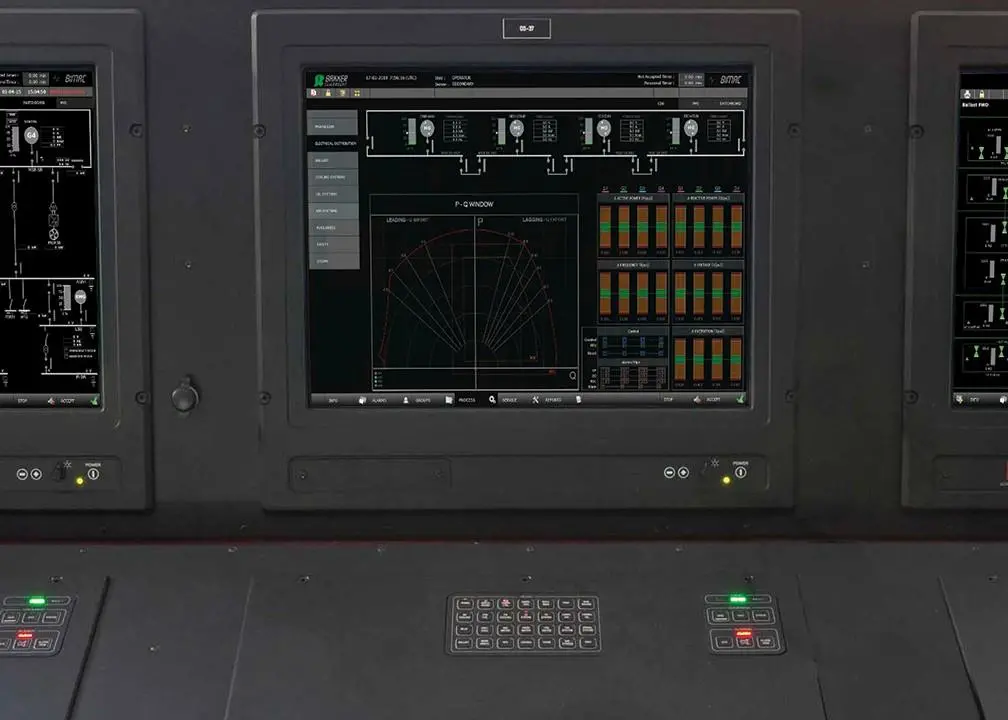
The Common Diesel Generator (CDG) protection system will be deployed for the first time on an offshore heavy lift vessel, which is currently under construction. The ship is equipped with a power plant of 4 generators of 10 MW each, which run on both diesel and LNG. According to the classification society, the heavy lift vessel will be the first dual-fuel DP2 ship to be classified with a generator protection system.
Generator protection is essential to prevent a blackout or failure in the power plant, causing the ship to lose its position during operations.
Vessels that sail in DP 2 or 3 mode have to maintain their position at all times, even in case of failures or malfunctions in the fuel system, a diesel, a generator, the switchboard, or the control system. To prevent such malfunctions ships nowadays operate with generators operating in parallel, as this offers greater energy efficiencies than dividing power plants into independent isles.
To prevent generators operating in parallel from interfering with each other, a generator safety system is necessary. Bakker Sliedrecht’s CDG-protection system uses software to detect and disable an ‘unhealthy’ generator before it can affect the ‘healthy’ generators, making the entire power plant unstable.
For power plants equipped with dual-fuel generators, this creates extra complexity because duel fuel engines can switch between gas and diesel modes unexpectedly and behave differently to diesel engines.
Without generator protection, a complex DP vessel will therefore not receive a certificate to operate in DP2 or DP3 closed bus mode. Bakker Sliedrecht began to develop its own CDG protection system for complex work vessels in 2017, and it is now ready for deployment in the heavy lift vessel. During the last months, it has been extensively tested in a test set-up of four generators against the requirements of ‘DNV GL Rules: DNV-RP-D102 closed busties’ with underlying rules ‘Part 4: Ch8 Electrical installations & Ch9 Control and monitoring systems’. The system has passed these tests with flying colours even under dual fuel conditions.
Related Articles
 OTHER EQUIPMENT
 LNG
LNG
 GENERAL NEWS