



BID TO IMPROVE RO-RO FIRE SAFETY
The initiative has been prompted by the large number of serious fires that have occurred on ro-ro ships in the past decade or so, and by concerns that the situation will not improve without positive action.
Under the acronym LASH FIRE (Legislative Assessment for Safety Hazards of Fire and Innovations in the Ro-ro ship Environment), the project has a four-year timescale and the remit of developing cost-effective solutions to mitigate fire risks in all types of vessel equipped for ro-ro vehicle and cargo handling.
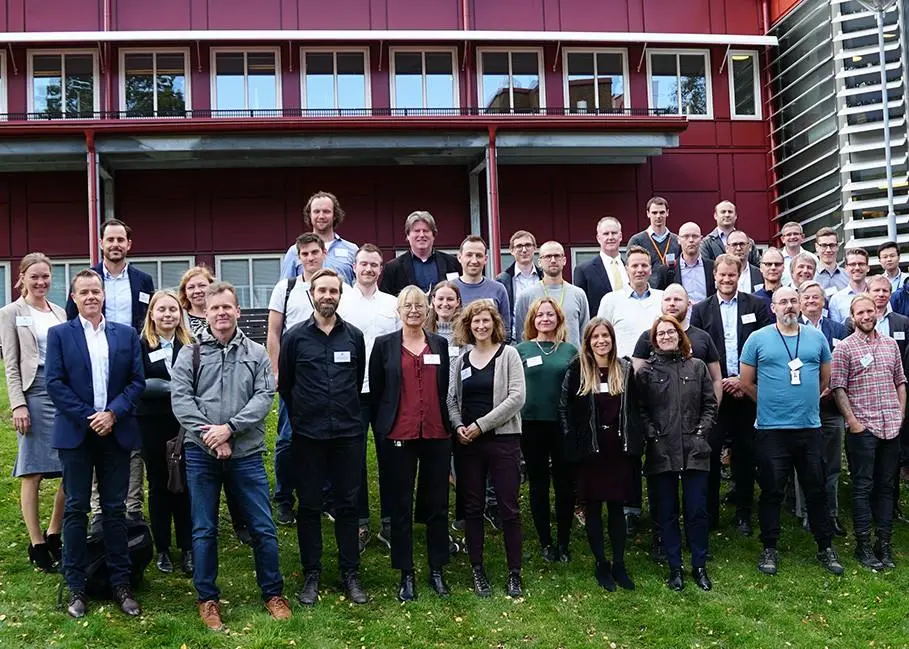
The study consortium comprises 26 partners from 13 member states, coordinated by RISE Research Institutes of Sweden. With grant allocations totalling EUR12.2 million (US$13.6m) drawn from the Horizon 2020 research and innovation programme, the EU is covering 90% of the overall budget of EUR13.5 million (US$15m).
The participants represent a broad swathe of European interest and know-how, including industry, trade and regulatory bodies, research institutes, and universities. The shipowning sector is represented by Stena, DFDS, Hoegh Autoliners, and Belgium-based association Interferry.
The LASH FIRE consortium is tasked with devising and demonstrating new procedures and technical advances that can enhance ro-ro ship safety, giving due regard to future technical challenges and laying down a practical basis for legislative changes and amendments.
Drawing on the comprehensive experience of vessel operators, and on ongoing work by expert groups for the European Maritime Safety Agency (EMSA) and IMO, critical aspects of ro-ro fire safety have shaped the scope and content of the project.
LASH FIRE aims to provide a recognised technical basis for the revision of IMO international regulations, to substantially improve fire prevention and ensure onboard management of ro-ro vessel fires without recourse to external intervention. This is to be achieved by the development and demonstration of design and operational solutions which enhance fire protection at all stages of a fire, starting with increased fire detection and control at an early stage.
New and unfolding technology and procedures will be assessed for feasibility, performance, validation and demonstration, drawing input from the ship operators and shipbuilding industry representatives party to the project. Innovative concepts and systems will need to be evaluated with due regard to cost, crewing, and environmental aspects, and the impact on risk reduction will be gauged, before being considered for regulatory uptake.
In its outline for the undertaking, the EU states that “The project is expected to significantly strengthen the independent fire protection of ro-ro ships and reduce the frequency of ro-ro ship fires by 35% and the number of fatalities by 45%.” To put the situation into perspective, it is understood that about 32 fires of a serious nature occurred in the ro-ro spaces of ro-pax ferries alone over the 10-year period to 2015.
LASH FIRE’s remit encompasses the broadest range of tonnage, embracing ro-pax ferries, ro-ro freight vessels, ro-ro equipped cargo ships, con-ros, and vehicle carriers.
Project coordinator RISE emphasised the holistic approach of the endeavour, and highlighted the various areas of investigation as follows:
· Effective practical operations. More effective fire management at all stages of a fire, including risk-based screening and management of cargo, more efficient fire patrols and first response as well as effective firefighting;
· Inherently safe design. Improved design for critical operations in the event of fire, reducing the potential for human error, accelerating time-sensitive tasks, and providing more comprehensive and effective decision support;
· Detection. Quicker, more reliable and more robust technical means of fire detection, confirmation, localisation, and assessment of fire events on all types of ro-ro decks;
· Extinguishing. Rapid extinguishment regardless of deck and system type or size/existence of crew;
· Containment. Elimination of significant containment weaknesses, considering smoke, fire and heat integrity.
If adopted, it is felt that the time-to-market for new solutions will be short, given the participation of the whole value chain in the project.
Related Articles
 METHANOL
 MONITORING, CONTROL & DIGITALISATION
 MONITORING, CONTROL & DIGITALISATION