



BIMCO revises IMO greenhouse gas emissions forecast
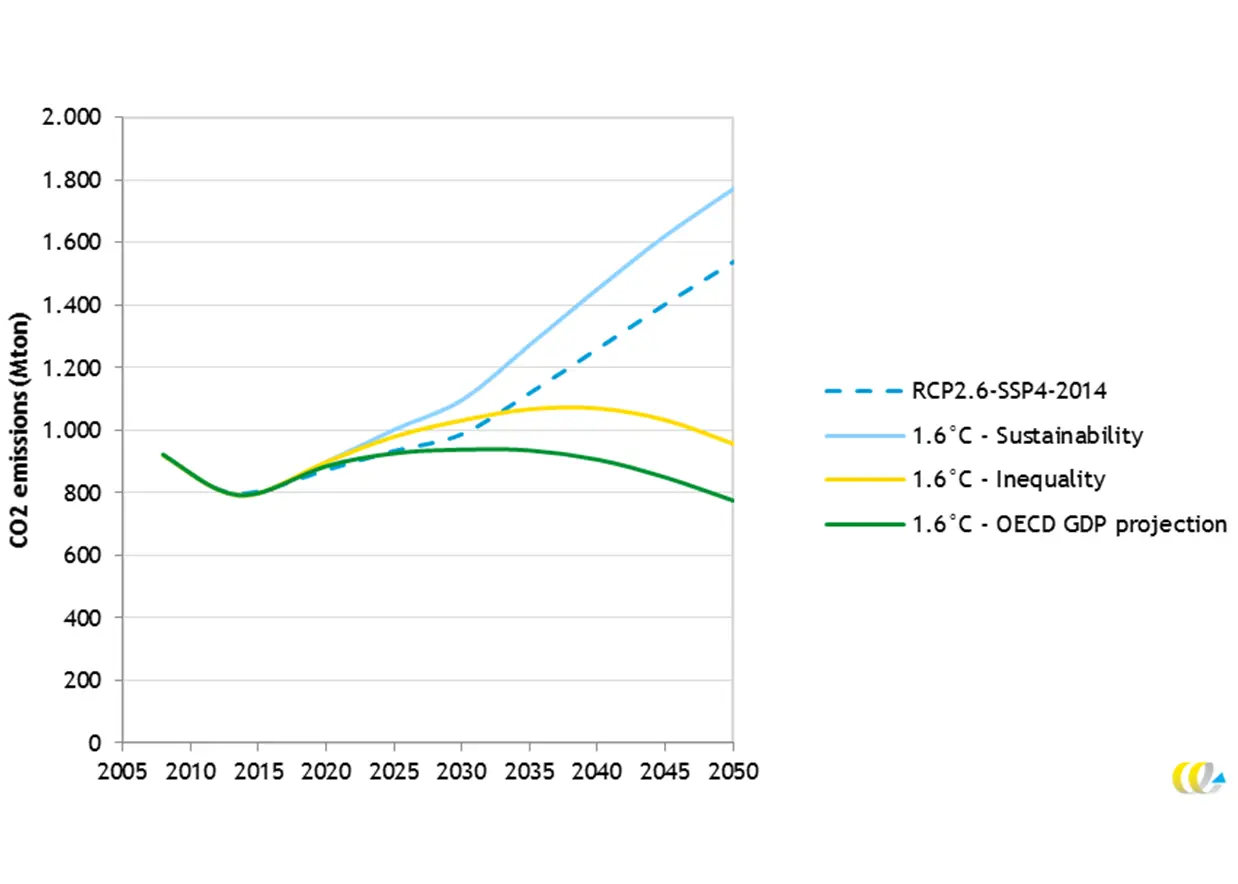
BIMCO argues that the IMO’s third GHG study, published in 2014, was based on incomplete data on seaborne trade in 2008, the base year. In one scenario under this study, shipping emissions are projected grow by 250% between 2008 and 2050 – a figure that is now widely cited. When complete data is used in the new study, emissions under the same scenario rise by only 200%.
The organisation further suggests that this SSP5-RCP8.5 scenario – which assumes no action to prevent climate change and relies on very high gross domestic product (GDP) forecasts – is inappropriate, and that another scenario, relying on more realistic GDP forecasts should be considered. Under this OECD-RCP2.6 scenario with complete data, emissions fall by 20% by 2050 compared to 2008 levels.
“We firmly believe that shipping’s emissions have peaked,” said Lars Robert Pedersen, deputy secretary general, BIMCO. However, he noted that more still needs to be done if the industry is to meet IMO targets of reducing GHG emissions by 50% (on 2008 levels) by 2050.
“The focus should be on making new ships more efficient rather than improving the existing fleet,” he said, “as the vast majority of ships in operation by 2050 will be built from 2022 onwards.”
The completed data include a shipping sector that was missing from the IMO study (the non-coal dry bulk sector, representing 20% of global seaborne trade), meaning that tonne-miles in the base year are 20% higher than in the original study. Containerised trade has also been separated from other unitised cargoes.
The IMO GHG emissions studies provide important context for policy-making with regard to shipping emissions. A fourth study is due to be completed by 2020.
Related Articles
 ALTERNATIVE FUELS & LUBRICANTS
 GENERAL NEWS
 GENERAL NEWS